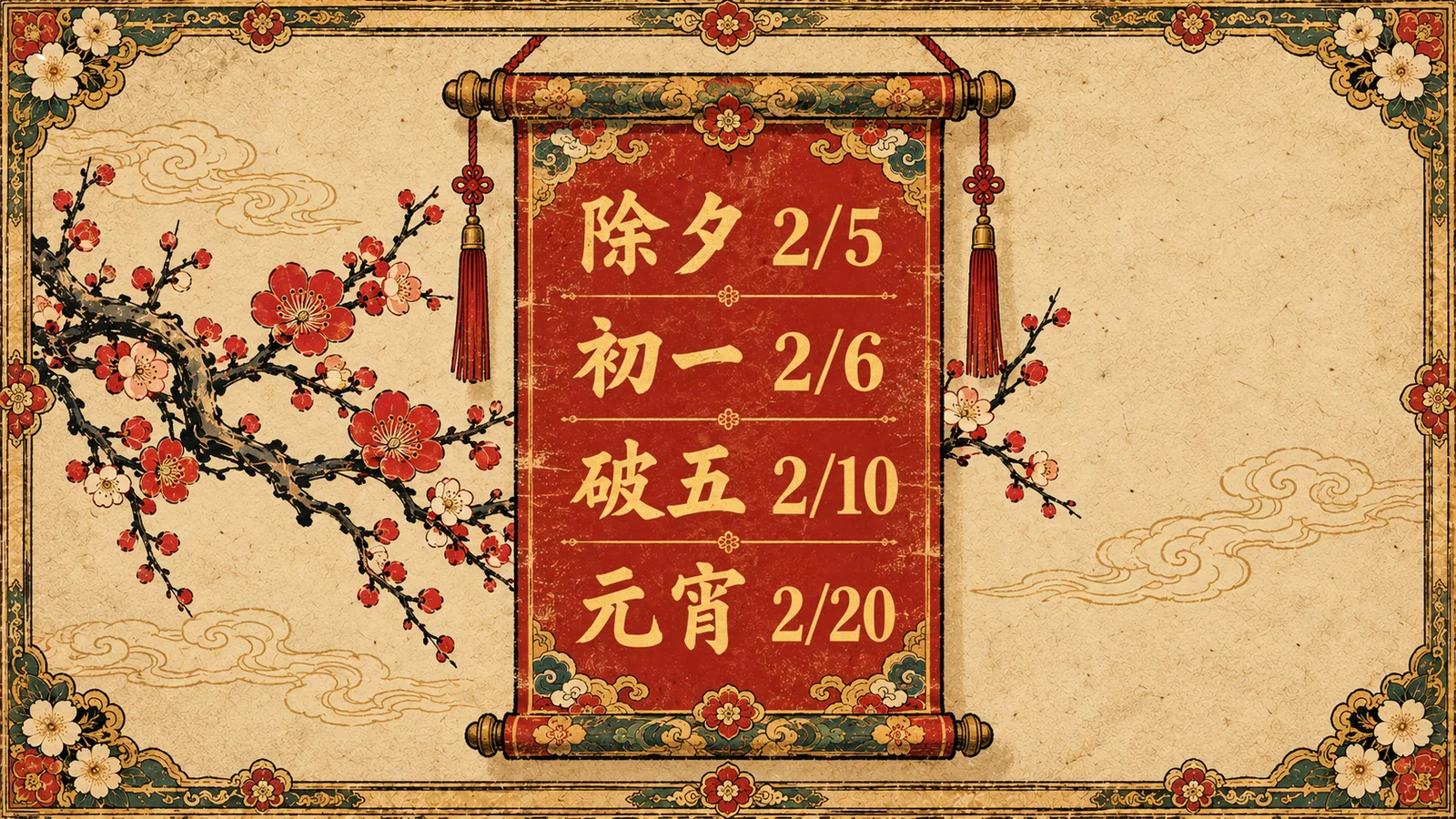
Chinese New Year 2027 falls on Saturday, February 6, with New Year's Eve on Friday, February 5 and the Lantern Festival on Saturday, February 20. The best-known taboos: don't sweep or take out the trash on New Year's Day, don't wash your hair that day, skip haircuts for the first lunar month, avoid breaking dishes or using knives and scissors, and keep quarrels and unlucky words out of the house. The dos are just as simple: clean before the Eve, wear something new and red, give red envelopes in even amounts, and eat together.
What are the key Chinese New Year 2027 dates?
The festival season runs for about three weeks, from Little New Year in late January to the Lantern Festival on February 20. Here are the dates that matter for customs. All are local calendar dates, the same in Asia and North America.
| Day | Lunar date | 2027 date | What happens |
|---|---|---|---|
| Little New Year (north) | 12th month, day 23 | Sat, Jan 30 | Kitchen God farewell, start of preparations |
| Little New Year (south) | 12th month, day 24 | Sun, Jan 31 | Kitchen God farewell in much of southern China |
| Lichun, Start of Spring | 12th month, day 28 | Thu, Feb 4 | Solar new year in BaZi |
| New Year's Eve (除夕) | 12th month, day 29 | Fri, Feb 5 | Reunion dinner, staying up late |
| New Year's Day | 1st month, day 1 | Sat, Feb 6 | The strictest taboo day |
| Day 2 | 1st month, day 2 | Sun, Feb 7 | Married daughters visit their parents |
| Day 3 | 1st month, day 3 | Mon, Feb 8 | "Red Mouth" day, a quiet day at home |
| Day 5 (破五, Po Wu) | 1st month, day 5 | Wed, Feb 10 | Many taboos lift; welcoming the God of Wealth |
| Renri, Everyone's Birthday | 1st month, day 7 | Fri, Feb 12 | Celebrating everyone's birthday together |
| Jade Emperor's Birthday | 1st month, day 9 | Sun, Feb 14 | Big in Hokkien and Taiwanese communities |
| Lantern Festival (元宵) | 1st month, day 15 | Sat, Feb 20 | Lanterns, tangyuan, the end of New Year |
The twelfth lunar month has only 29 days this year, so New Year's Eve falls on day 29 rather than day 30. Our Chinese New Year 2027 and Lichun guide explains how the date is set.
What should you do before Chinese New Year's Eve?
Clean, settle up and get ready to welcome the new year. The week before February 5 is the time for a big clean: sweeping the house clears out the old year's bad luck and makes room for the new. Here are the classic preparations:
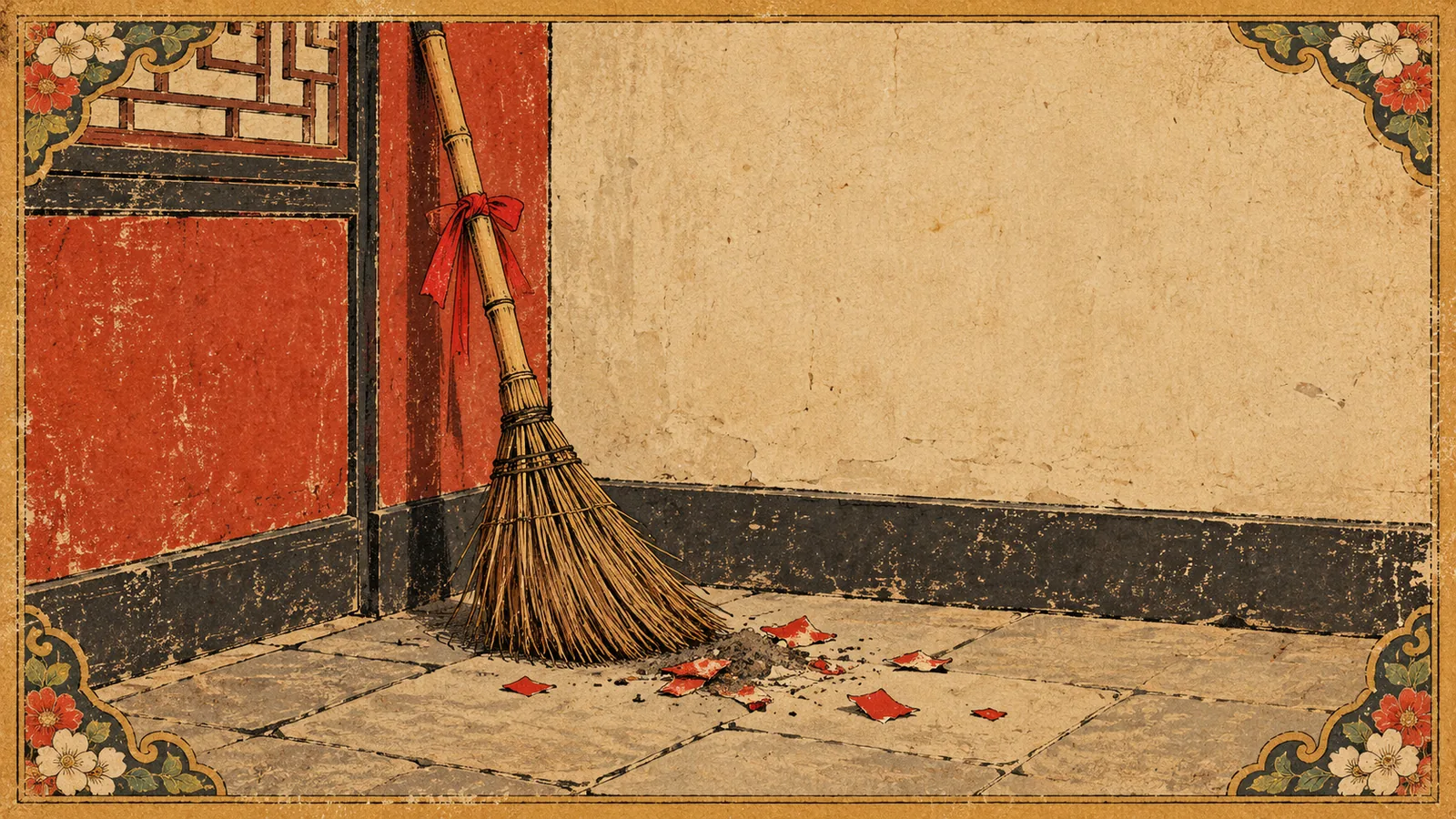
- Deep clean before the Eve, not after. Once New Year's Day arrives, the broom goes away.
- Get your haircut now. Haircuts are traditionally avoided during the whole first lunar month, so book one before February 5.
- Pay off debts and return borrowed things. Starting the year owing money is said to set the tone for the year.
- Put up couplets and the 福 character. Many families hang 福 (fortune) upside down, because "fortune is upside down" (福倒了) sounds like "fortune has arrived" (福到了).
- Send off the Kitchen God on Little New Year (January 30 in the north, January 31 in much of the south) with something sweet, so his report to heaven about your household is a kind one.
What are the dos and don'ts on New Year's Eve, February 5?
New Year's Eve is about togetherness and abundance. Its customs are mostly dos:
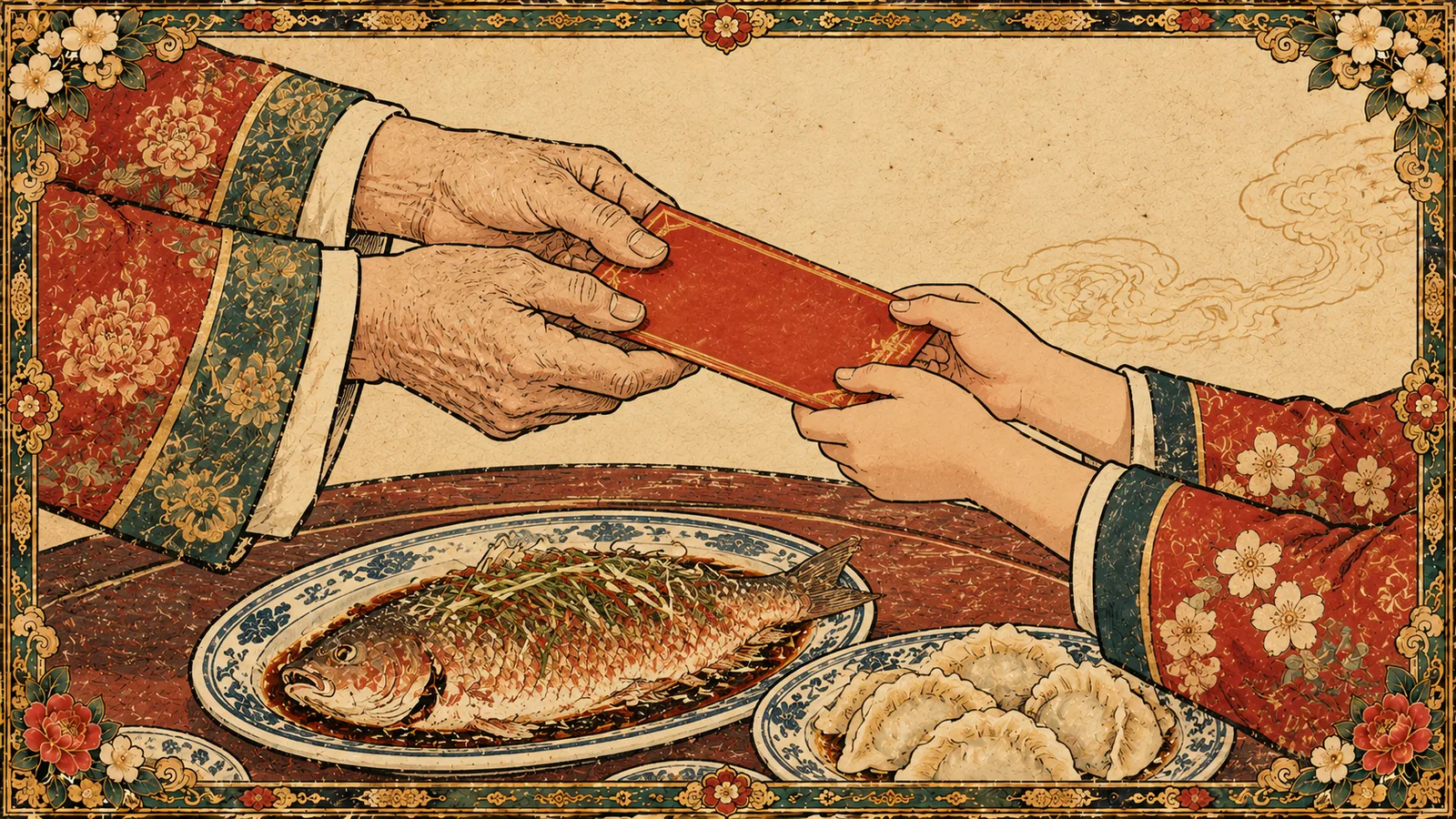
- Eat the reunion dinner together. Fish is served because 鱼 (yú, fish) sounds like 余 (yú, surplus), and many families leave a little uneaten for "surplus every year". Northern families wrap dumplings shaped like old gold ingots.
- Stay up late (守岁, shou sui). Keeping the lights on and staying awake past midnight is said to bring long life to parents, and it welcomes the new year awake.
- Give red envelopes. Elders give red envelopes (红包) to children and unmarried younger relatives. Use crisp new notes in even amounts, and avoid amounts with the number 4, which sounds like "death" (死).
- Keep words kind. Avoid talk of illness, death, breaking or losing, and don't argue. Whatever fills the house on the Eve is said to fill the year.
What are the taboos on Chinese New Year's Day, February 6?
New Year's Day has the strictest taboos of the whole season. Each one protects the luck that arrived overnight.
| Don't | Why | What to do instead |
|---|---|---|
| Sweep or take out the trash | You would sweep away the new year's good luck | If you must, sweep inward into a pile and leave it until day 5 |
| Wash your hair | 发 (fà, hair) sounds like 发 (fā, to prosper), so you would wash away fortune | Wash it on the Eve |
| Break dishes or glasses | Breaking suggests a broken year | Say 碎碎平安 (suì suì píng ān), "peace every year", since 碎 (broken) sounds like 岁 (year) |
| Use knives and scissors | Cutting is said to cut off luck | Prepare food on the Eve |
| Quarrel, cry or swear | The first day sets the tone for the year | Laugh it off and change the subject |
| Lend or ask for money | It suggests a year of money going out | Settle debts before the Eve |
| Wear black or white | Both are colors of mourning | Wear something new, especially red |
Many families also eat vegetarian food on the morning of day 1, and visit the oldest relatives first to wish them a happy new year.
What are the customs from Day 2 to Day 5?
The first days of the new year each have their own custom, and Day 5 (February 10) is when most taboos lift:
- Day 2, Sunday, February 7: a daughter comes home. Married daughters traditionally return to their parents' home with their husbands and children. In Cantonese communities it is also 開年 (hoi nin), the "opening of the year" feast.
- Day 3, Monday, February 8: Red Mouth Day (赤口). This day is said to bring arguments, so many people stay home and skip visiting. "Red Mouth" is also one of the six palaces of Xiao Liu Ren, where it stands for friction and sharp words.
- Day 4, Tuesday, February 9: welcoming the gods back. The Kitchen God and other household gods return from heaven, and families light incense to receive them.
- Day 5, Wednesday, February 10: Po Wu (破五), "breaking the five". The old restrictions end. Sweep out the dirt from the past days, take out the trash, set off firecrackers to welcome the God of Wealth and reopen the shop. Northern families eat dumplings again.
What happens on Day 7 and Day 9?
Day 7, Friday, February 12, is Renri (人日), everyone's birthday. Legend says the goddess Nüwa created people on the seventh day, so everyone turns one year older together. In Singapore and Malaysia it is the classic day to toss yusheng, a raw-fish salad tossed high for luck. In parts of China people eat a soup of seven vegetables.
Day 9, Sunday, February 14, is the Jade Emperor's Birthday (天公生). In Hokkien and Taiwanese communities it is one of the biggest days of the season, with offerings of sugarcane, sweets and incense, often starting at midnight. This year it also falls on Valentine's Day, so a family temple visit and a romantic dinner can share the same date.
What happens at the Lantern Festival on February 20?
The Lantern Festival on Saturday, February 20, 2027, closes the New Year season. It is the first full moon of the lunar year. Families eat tangyuan or yuanxiao, sweet rice balls whose round shape stands for reunion. People hang lanterns, solve riddles written on them and watch lion dances. In older times it was one of the few nights young people could go out freely, which is why it is sometimes called the original Chinese Valentine's Day.
After the Lantern Festival, the New Year decorations come down and daily life returns to normal. Some families keep one last custom, the haircut rule, a little longer.
Why are haircuts avoided in the first lunar month?
The best-known reason is a homophone legend. Cutting your hair in the first month is said to bring bad luck to your mother's brother, because 思旧 (sī jiù, "remembering the old") sounds like 死舅 (sǐ jiù, "uncle dies"). A popular explanation goes back to the early Qing dynasty, when men were ordered to shave their heads in the Manchu style. Some refused to cut their hair during the first month to show they were "remembering the old" days, and over time 思旧 was heard as 死舅.
The practical answer: get a haircut before February 5, then wait for the second lunar month. The traditional day for the first haircut of the year is Longtaitou, the Dragon Raises Its Head, on the second day of the second month, which is Tuesday, March 9, 2027. A haircut that day is said to bring good luck for the whole year.
What if you accidentally break a taboo?
Don't worry. Every tradition has a quick fix, and laughing it off is part of the custom. If a bowl breaks, say 碎碎平安 and wrap the pieces in red paper. If you swept, sweep the pile inward and leave it in a corner until Day 5. If you washed your hair, call it a fresh start. The spirit behind all these taboos is care: protecting a good beginning for the people you love.
Customs also vary a lot between regions and families. A Cantonese household, a Beijing family, a Taiwanese temple and a family in Kuala Lumpur may each keep different days and rules, so follow your elders' version and enjoy the differences. If you are celebrating your own Ben Ming Nian this year, our Year of the Goat 2027 guide adds the red-wearing customs for Goat-year people, and what Xiao Liu Ren is explains the quick day-reading method many families use for holiday plans.
Frequently asked questions
When is Chinese New Year 2027?
Saturday, February 6, 2027, with New Year's Eve on Friday, February 5. It begins the Year of the Fire Goat.
Can I sweep on Chinese New Year's Day?
Traditionally no. Sweeping on Day 1 is said to sweep away good luck. Clean before the Eve, and wait until Day 5 (February 10) to sweep and take out the trash.
When can I get a haircut after Chinese New Year 2027?
Most families avoid haircuts for the whole first lunar month, from February 6 to March 7, 2027. The traditional first haircut day is Longtaitou on March 9, 2027.
How much should I put in a red envelope?
Any even amount in new notes, avoiding the number 4. Amounts with 8, like 88 or 888, are especially popular because 8 sounds like "prosper".
What should I wear for Chinese New Year?
Something new, ideally red or another bright color. Avoid all-black or all-white outfits, which are linked to mourning.
When does Chinese New Year end?
At the Lantern Festival on Saturday, February 20, 2027, the 15th day of the first lunar month.