Learning Tarot often starts the same way. You pull a card, look it up, and try to remember what it means.
The Lovers means love. The Tower means disaster. The Sun means happiness. Death means transformation.
That works until you actually start doing readings. The Hermit appears in a relationship question. The Lovers shows up in a career spread. The Tower appears when nothing obviously dramatic seems to be happening.
Suddenly, the keywords are not enough. That is because Tarot cards do not behave like dictionary definitions. A card has a core symbolic theme, but its meaning changes according to the question, the spread position, the cards around it, whether you use reversals, and the real situation being asked about. A useful Tarot interpretation is not:
card = fixed meaning
It is closer to:
card meaning + question + position + context
That is the difference between memorizing Tarot and reading it. If you already have a question in mind, you can start a free Tarot card reading and use this guide alongside the cards you draw.
How Many Tarot Cards Are There?
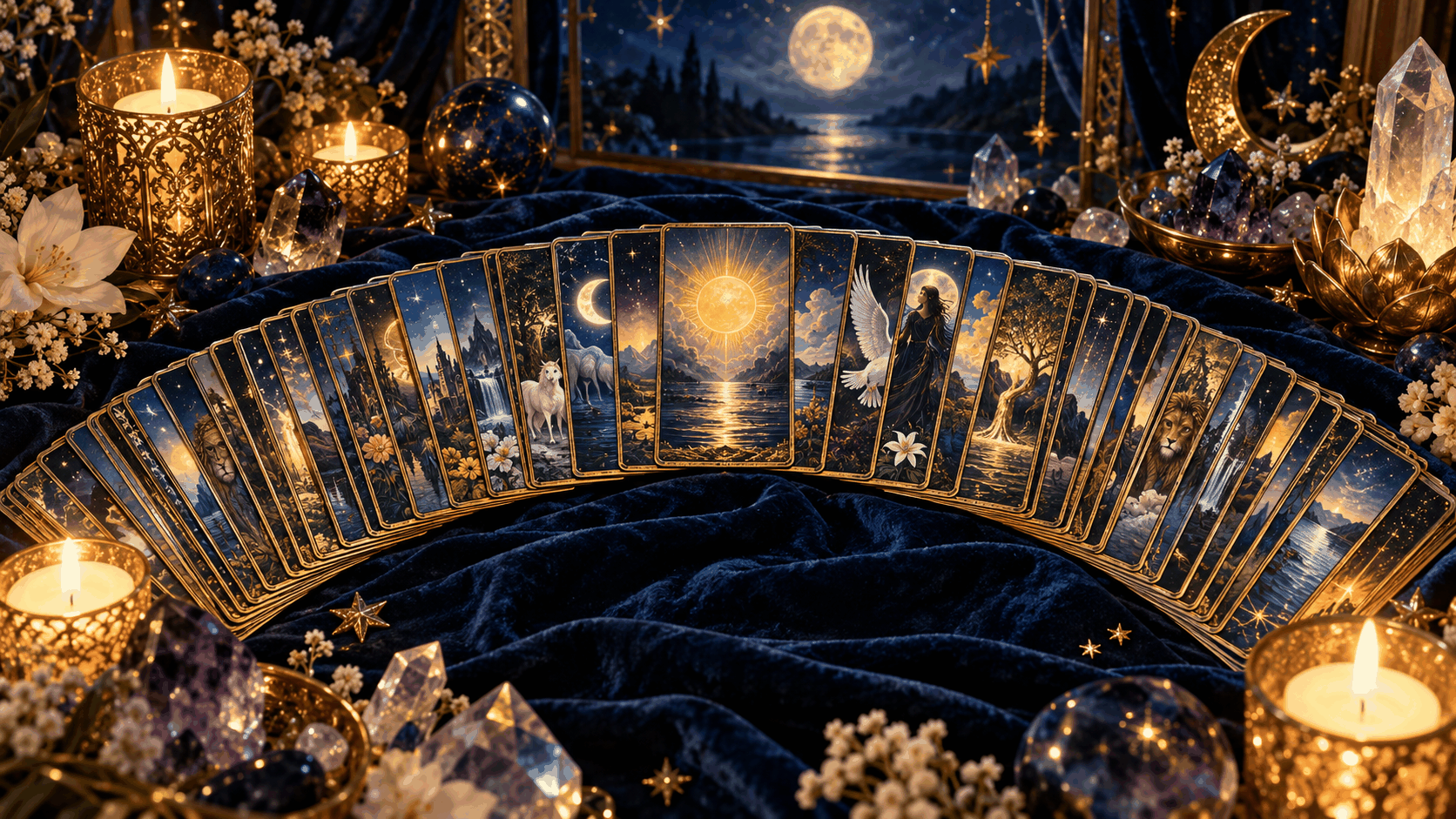
A standard Tarot deck contains 78 cards, divided into two main groups. The Major Arcana contains 22 cards and tends to describe larger themes, turning points, transitions, lessons, and major phases. The Minor Arcana contains 56 cards divided across Wands, Cups, Swords, and Pentacles. These tend to describe more everyday experiences: action, emotion, relationships, thought, communication, work, money, and practical circumstances.
Major Arcana vs. Minor Arcana
Major Arcana
The Major Arcana runs from 0 — The Fool to XXI — The World. When several Major Arcana cards appear in one spread, the reading may be dealing with something that feels larger than a routine everyday event: an important choice, a change in direction, an ending, a new chapter, or a deeper personal pattern.
Minor Arcana
The Minor Arcana contains four suits.
Wands
Action, desire, creativity, ambition, motivation, momentum.
Cups
Emotion, love, relationships, connection, intuition.
Swords
Thought, communication, truth, decisions, conflict, mental pressure.
Pentacles
Work, money, resources, skill, stability, physical and material concerns. Each suit contains Ace through Ten, followed by Page, Knight, Queen, and King.
Tarot Card Meanings Are Contextual
Before learning all 78 cards, there is one rule worth remembering:
The question changes the interpretation.
Suppose you draw The Hermit.
Its core themes include introspection, solitude, searching, withdrawal, and wisdom. In a love reading, it may describe emotional distance or a need for space. In a career reading, it may point toward independent work, research, or stepping away from external noise. As advice, it may suggest thinking before acting. In a timing reading, it can slow the situation down.
It is still the same card. The meaning changes because the context changes. This is also why better questions usually create more useful readings. If you want to improve the way you phrase yours, see Free Tarot Card Reading Online: How to Get a Better Reading.
Upright vs. Reversed Tarot Card Meanings
Some Tarot readers use reversed cards and some do not. Both methods can work. One common beginner mistake is assuming:
reversed = exact opposite
That is often too simplistic. A reversed card may show the upright energy becoming blocked, delayed, internalized, weakened, excessive, distorted, or beginning to release. For example, The Sun reversed does not automatically mean misery. It may suggest confidence that is harder to access, optimism that is muted, or something positive that has not yet become fully visible.
Likewise, The Devil reversed may describe recognizing or beginning to release an unhealthy attachment. The question is not simply:
“What is the opposite of this card?”
It is:
“How is this card's energy being expressed differently?”
Major Arcana Tarot Card Meanings
0 — The Fool
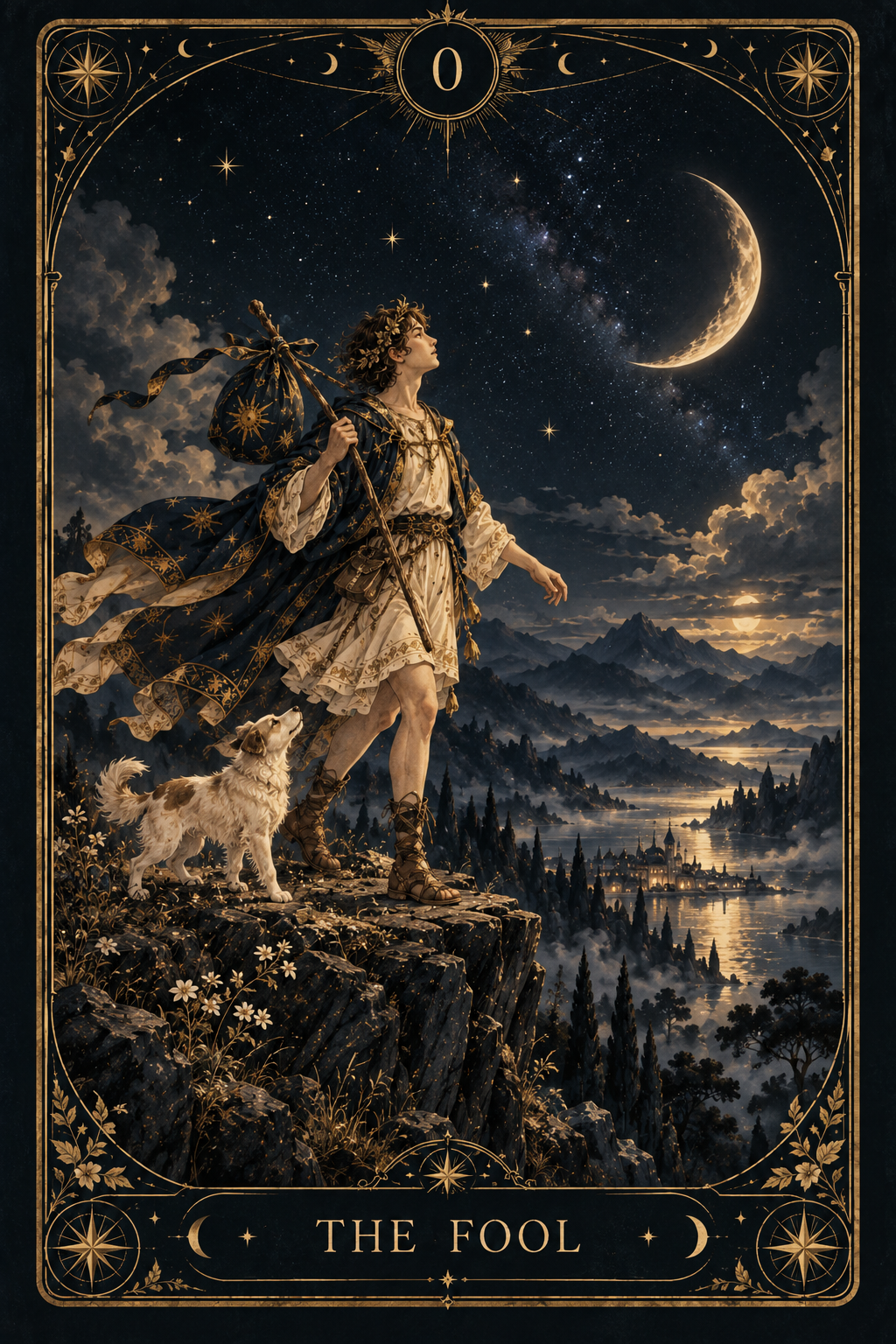
Upright: New beginnings, openness, spontaneity, possibility, taking a leap.
Reversed: Poor preparation, hesitation, recklessness, or fear of beginning.
The Fool often appears at the edge of something not yet fully known.
I — The Magician
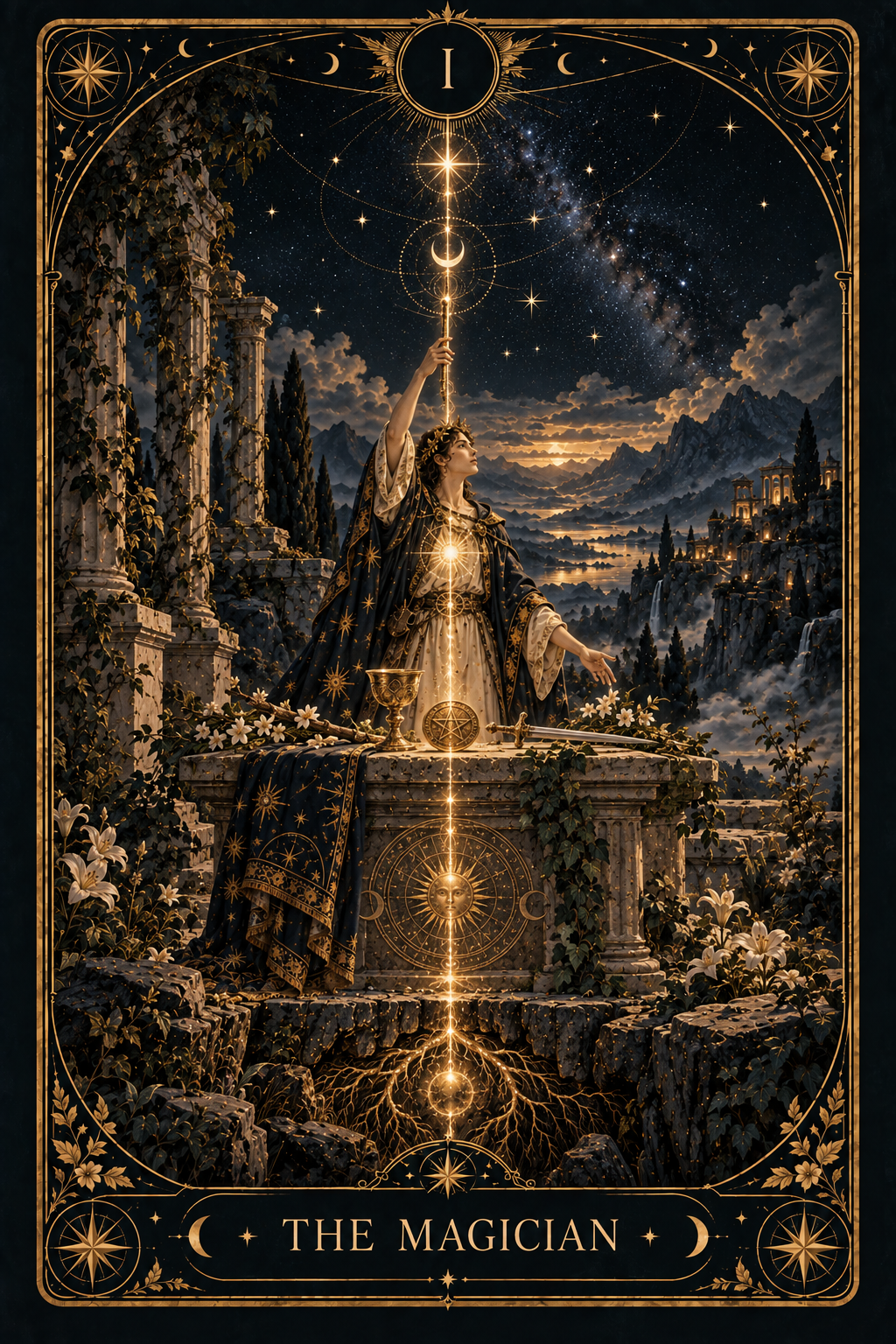
Upright: Initiative, skill, focus, resources, turning intention into action.
Reversed: Scattered effort, unused ability, manipulation, difficulty acting on intention.
II — The High Priestess
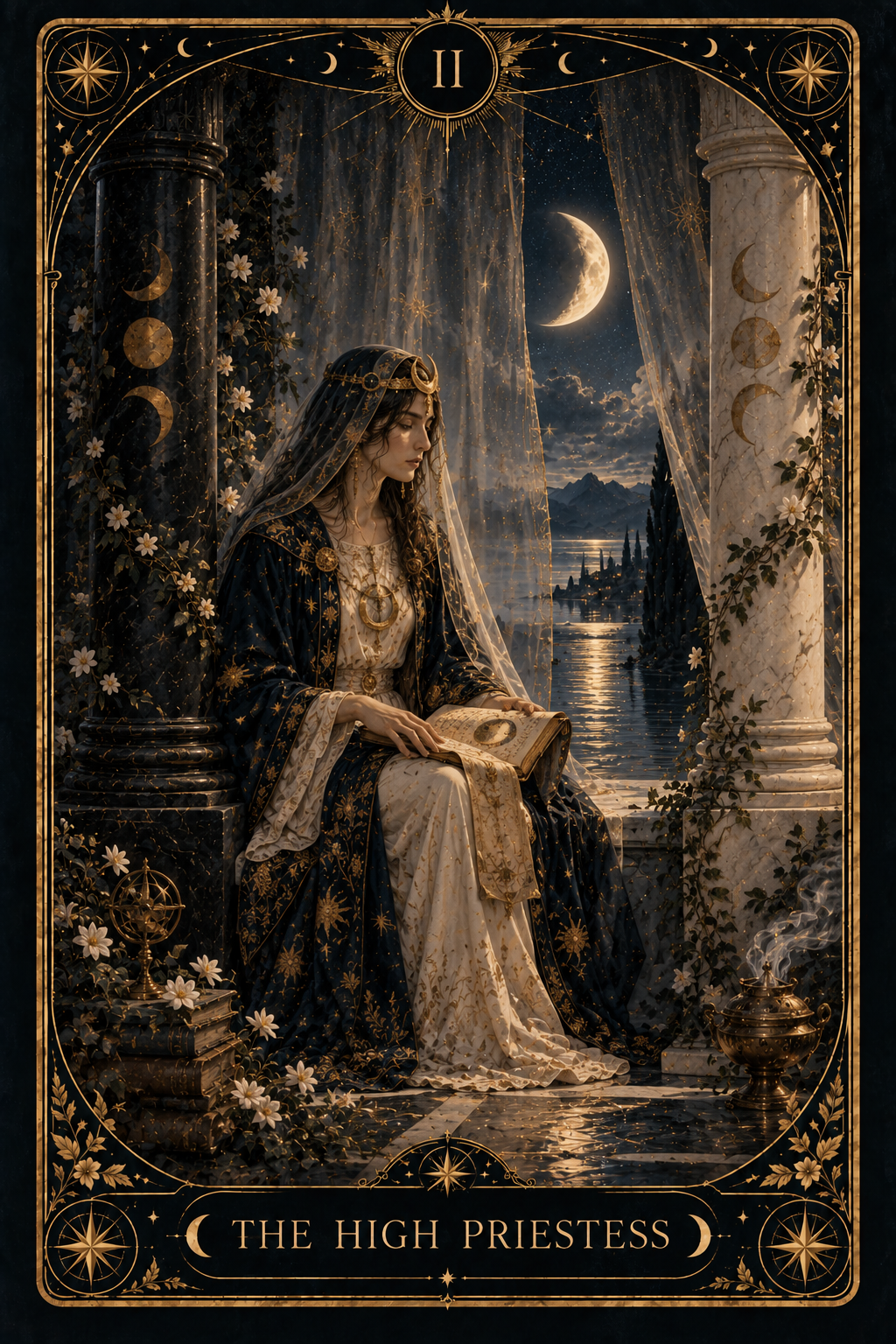
Upright: Intuition, hidden information, inner knowing, mystery, observation.
Reversed: Ignoring intuition, confusion, excessive secrecy, difficulty accessing information.
III — The Empress
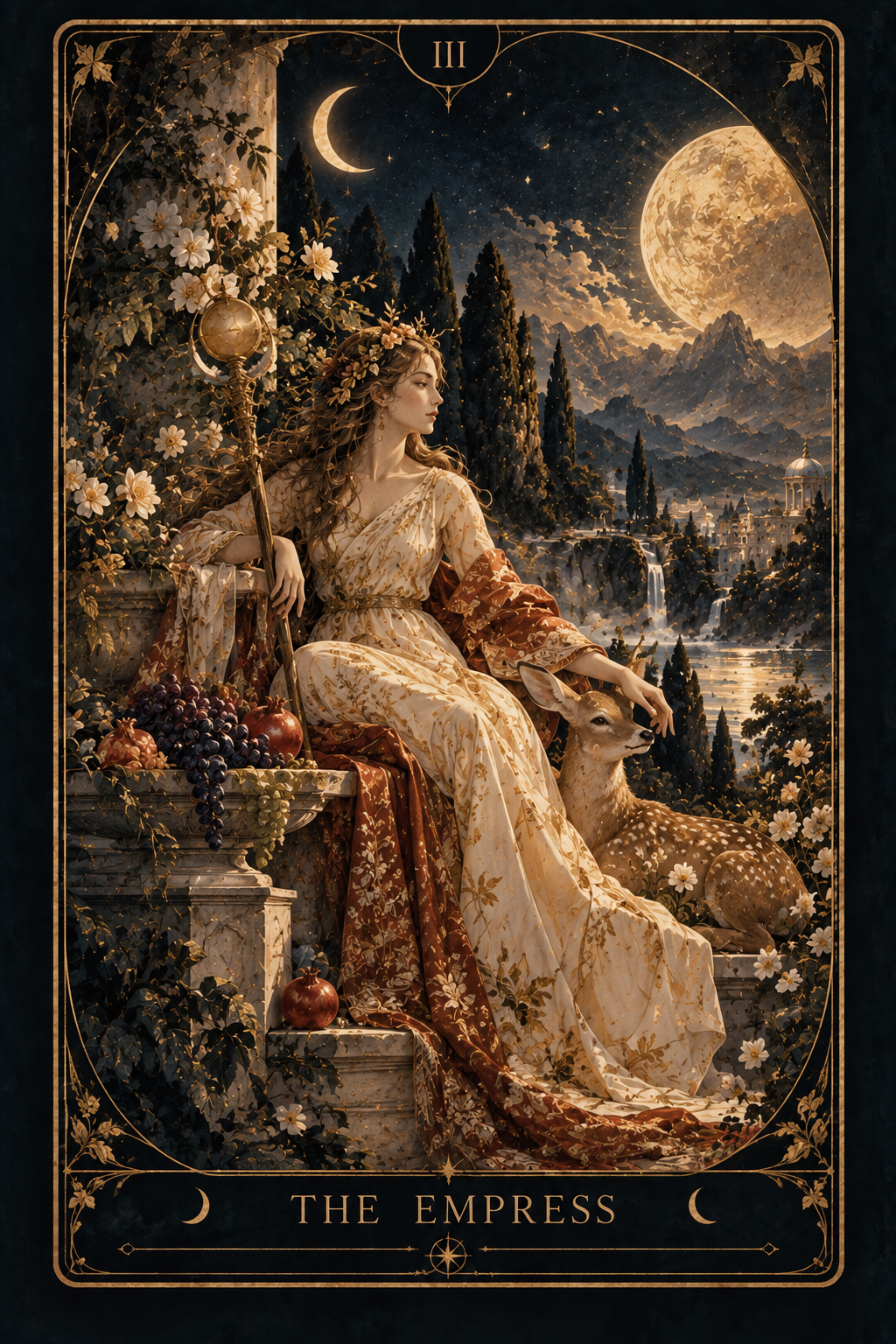
Upright: Growth, nurture, abundance, creativity, sensuality.
Reversed: Creative blockage, overgiving, neglecting yourself, unsupported growth.
IV — The Emperor
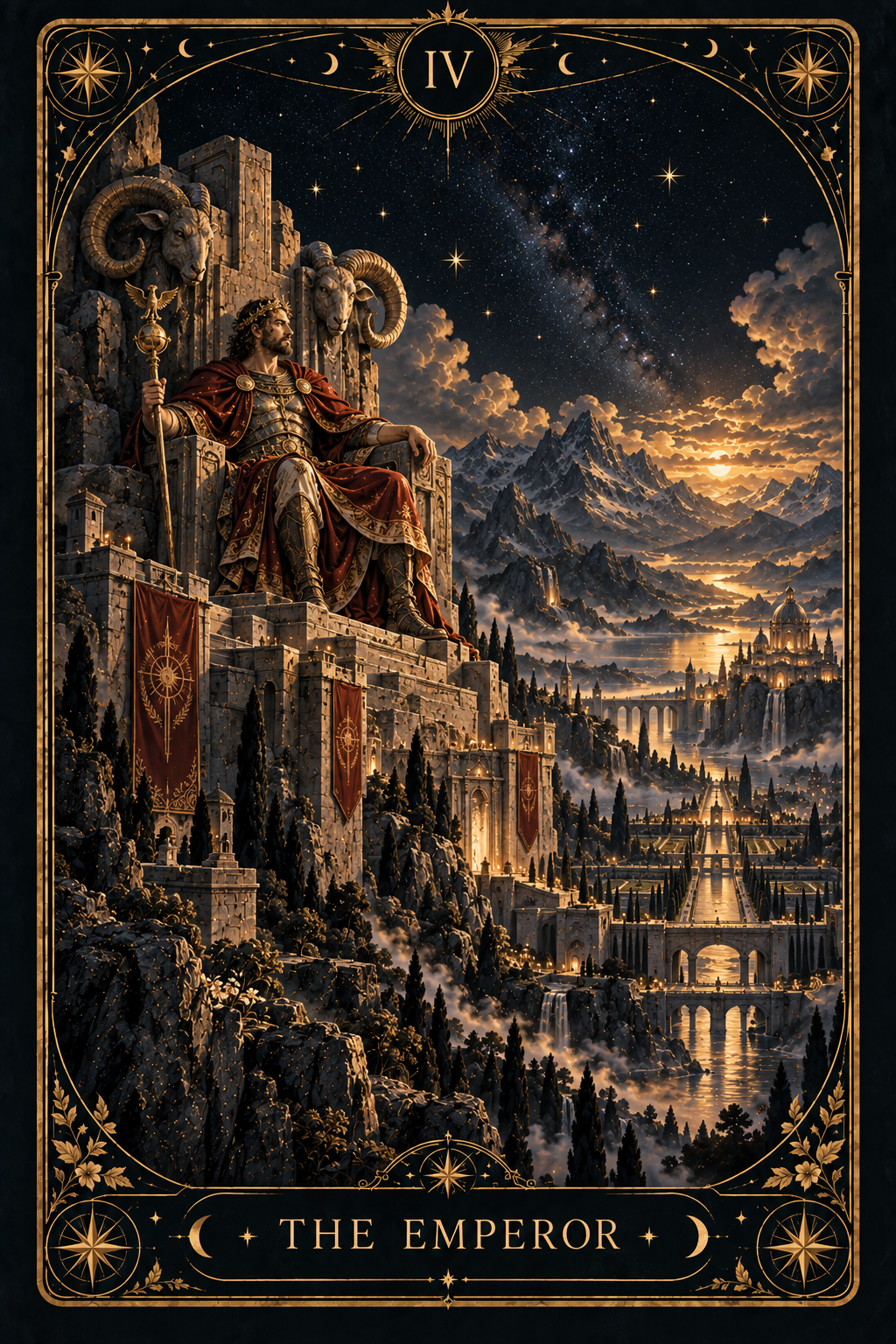
Upright: Structure, authority, stability, leadership, boundaries.
Reversed: Rigidity, control problems, weak structure, misuse of authority.
V — The Hierophant
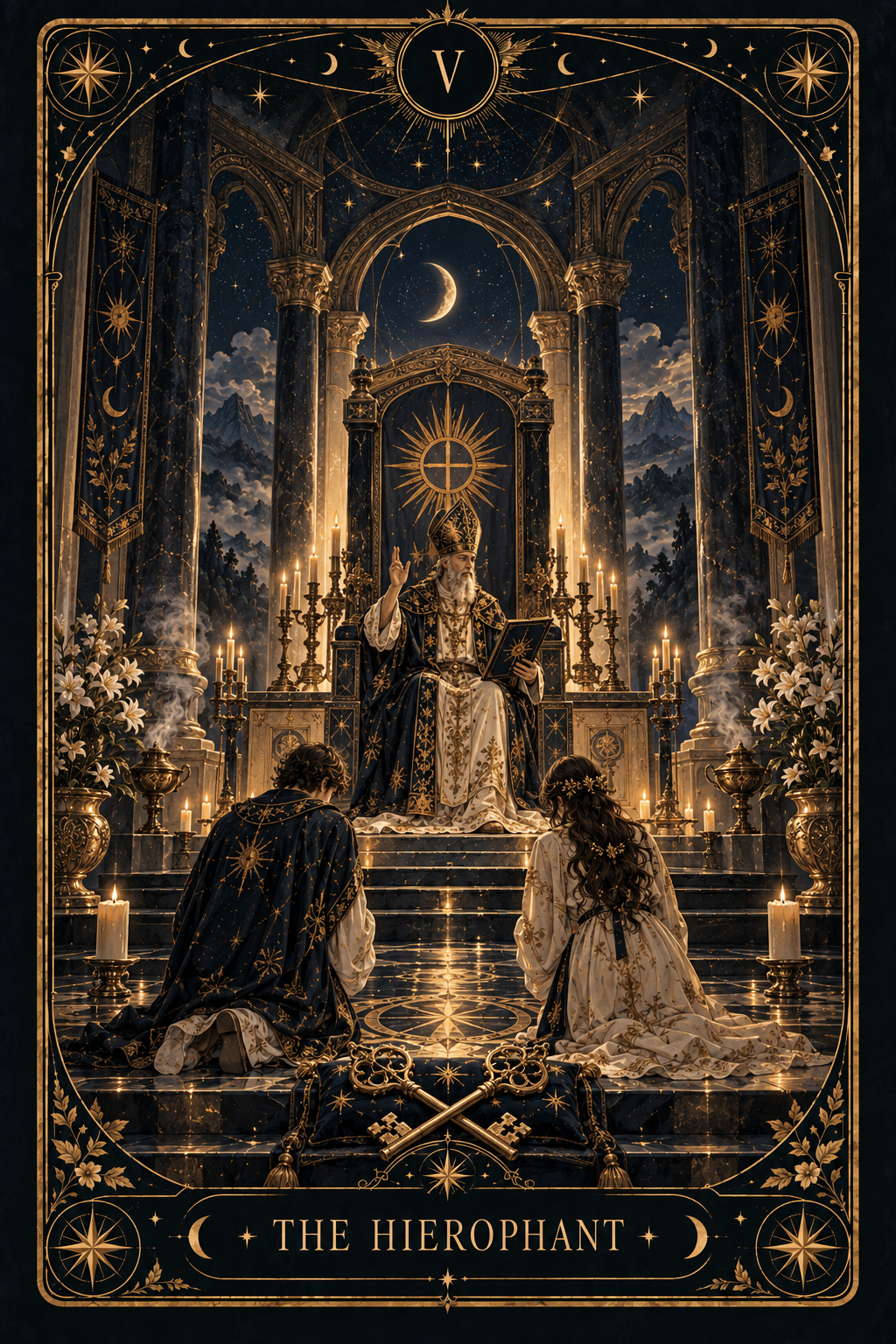
Upright: Tradition, institutions, teaching, established systems, shared values.
Reversed: Questioning convention, rejecting expectations, unconventional approaches.
VI — The Lovers
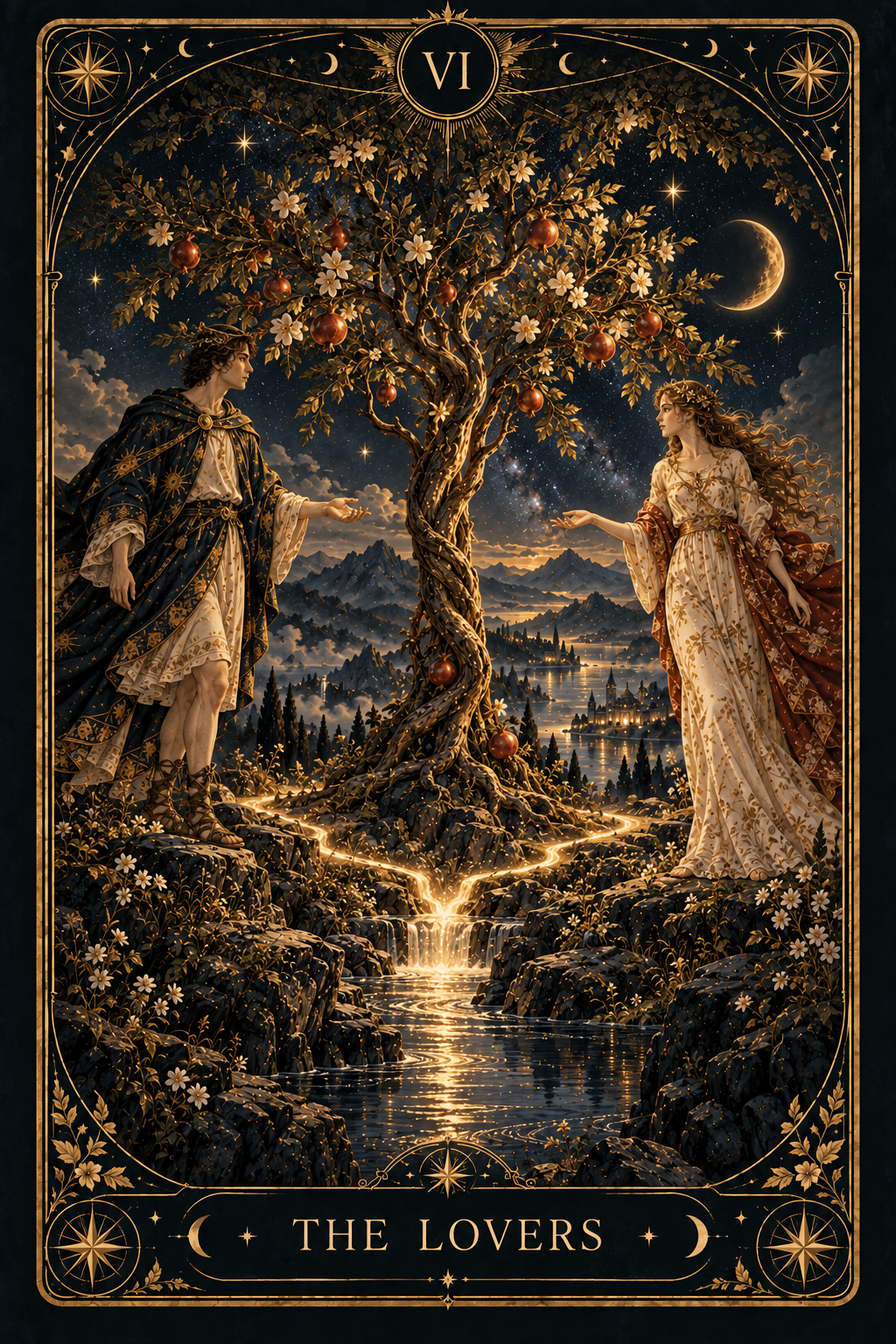
Upright: Connection, attraction, alignment, important choices, shared values.
Reversed: Misalignment, conflict in values, difficult choices, imbalance in connection.
The Lovers does not always mean romance. It can be a card about what you choose because it aligns with what matters to you.
VII — The Chariot
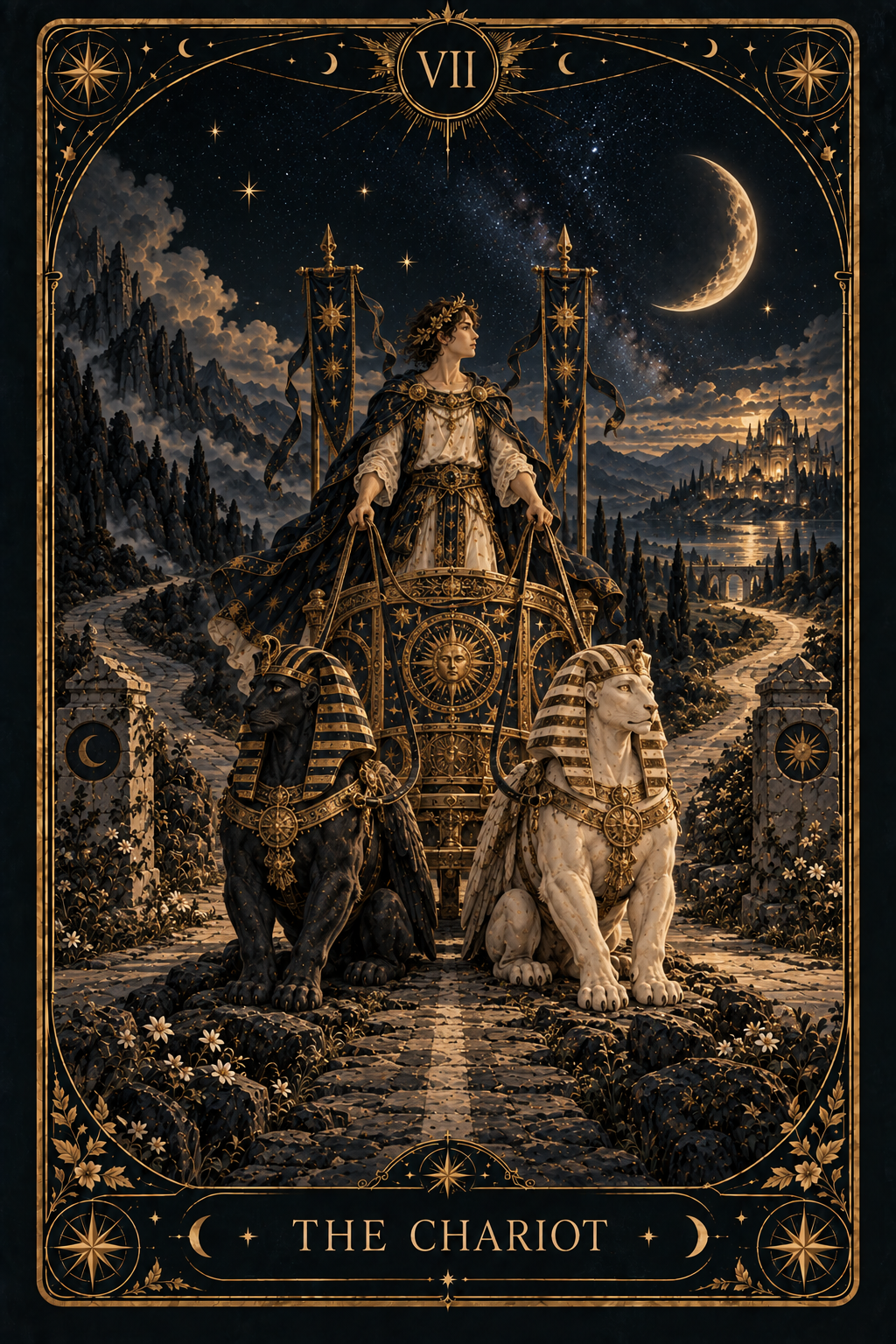
Upright: Momentum, determination, control, movement, pursuing a goal.
Reversed: Loss of direction, conflicting drives, stalled momentum, forcing progress.
VIII — Strength
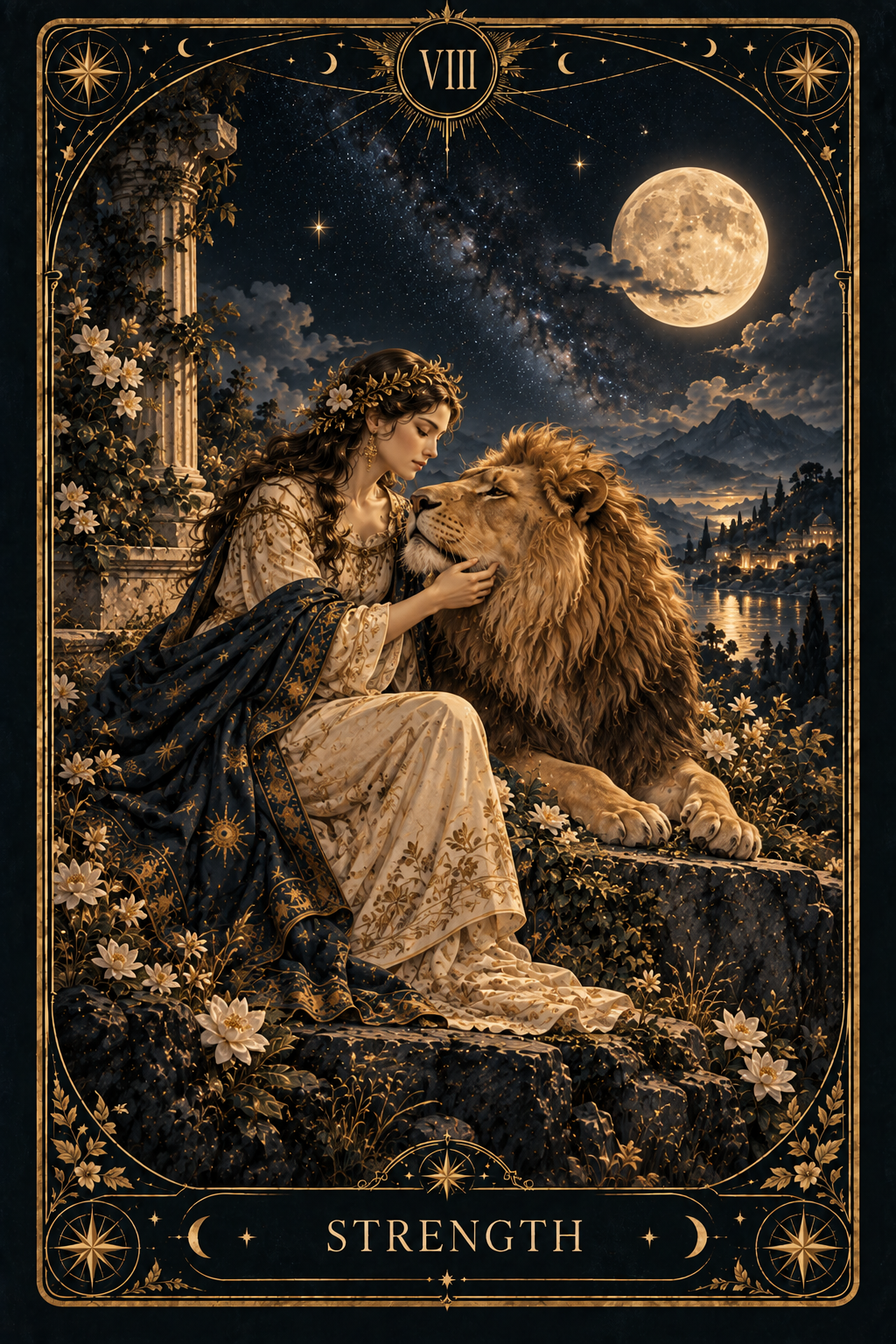
Upright: Courage, patience, self-control, compassion, inner resilience.
Reversed: Self-doubt, depleted confidence, emotional overwhelm.
IX — The Hermit
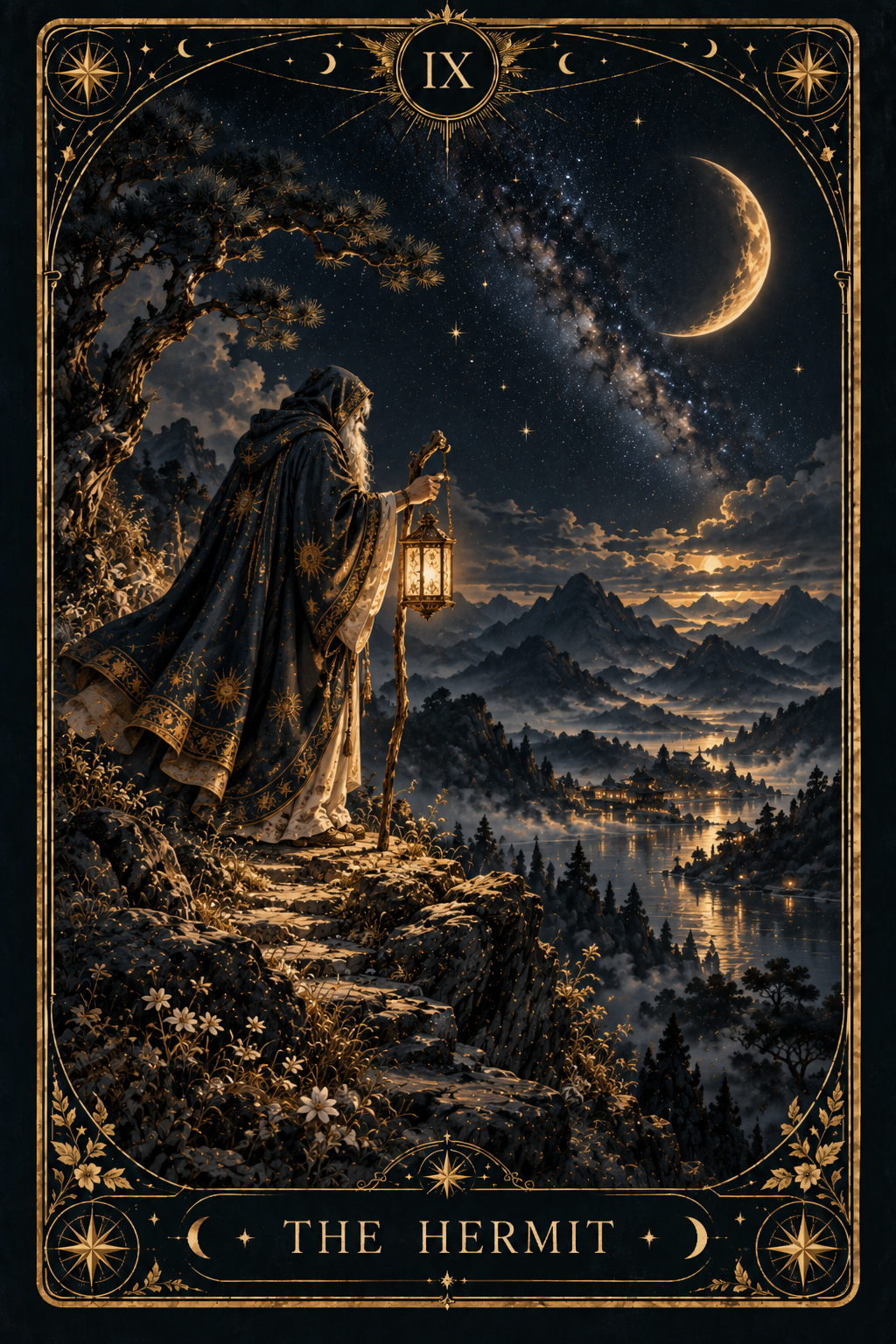
Upright: Solitude, introspection, searching, wisdom, stepping away.
Reversed: Isolation, avoidance, loneliness, difficulty hearing your own guidance.
X — Wheel of Fortune
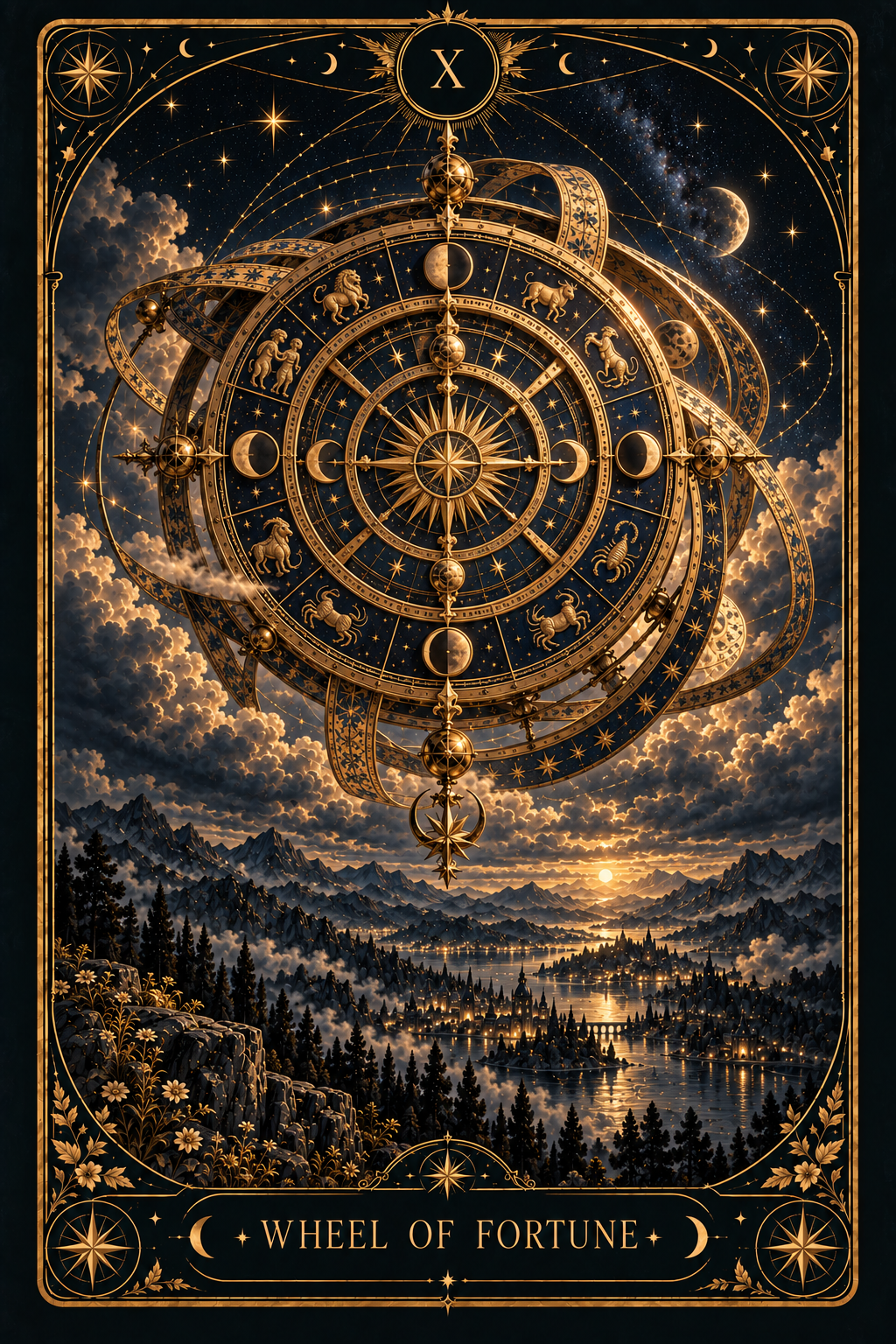
Upright: Change, cycles, turning points, shifting circumstances, opportunity.
Reversed: Resistance to change, repeated patterns, inconvenient timing, feeling stuck in a cycle.
XI — Justice
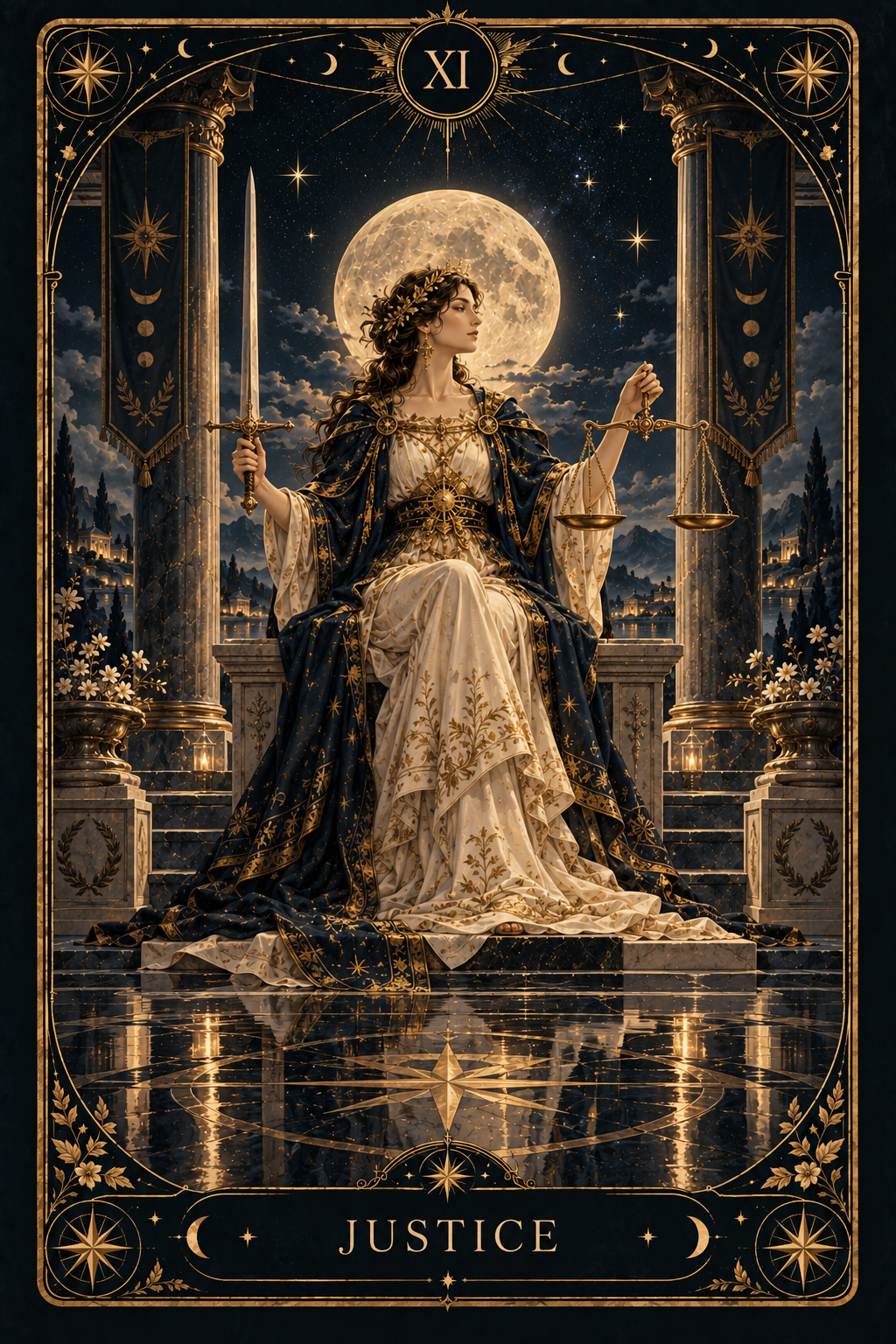
Upright: Fairness, accountability, truth, consequences, decisions.
Reversed: Avoiding responsibility, imbalance, unfairness, incomplete information.
XII — The Hanged Man
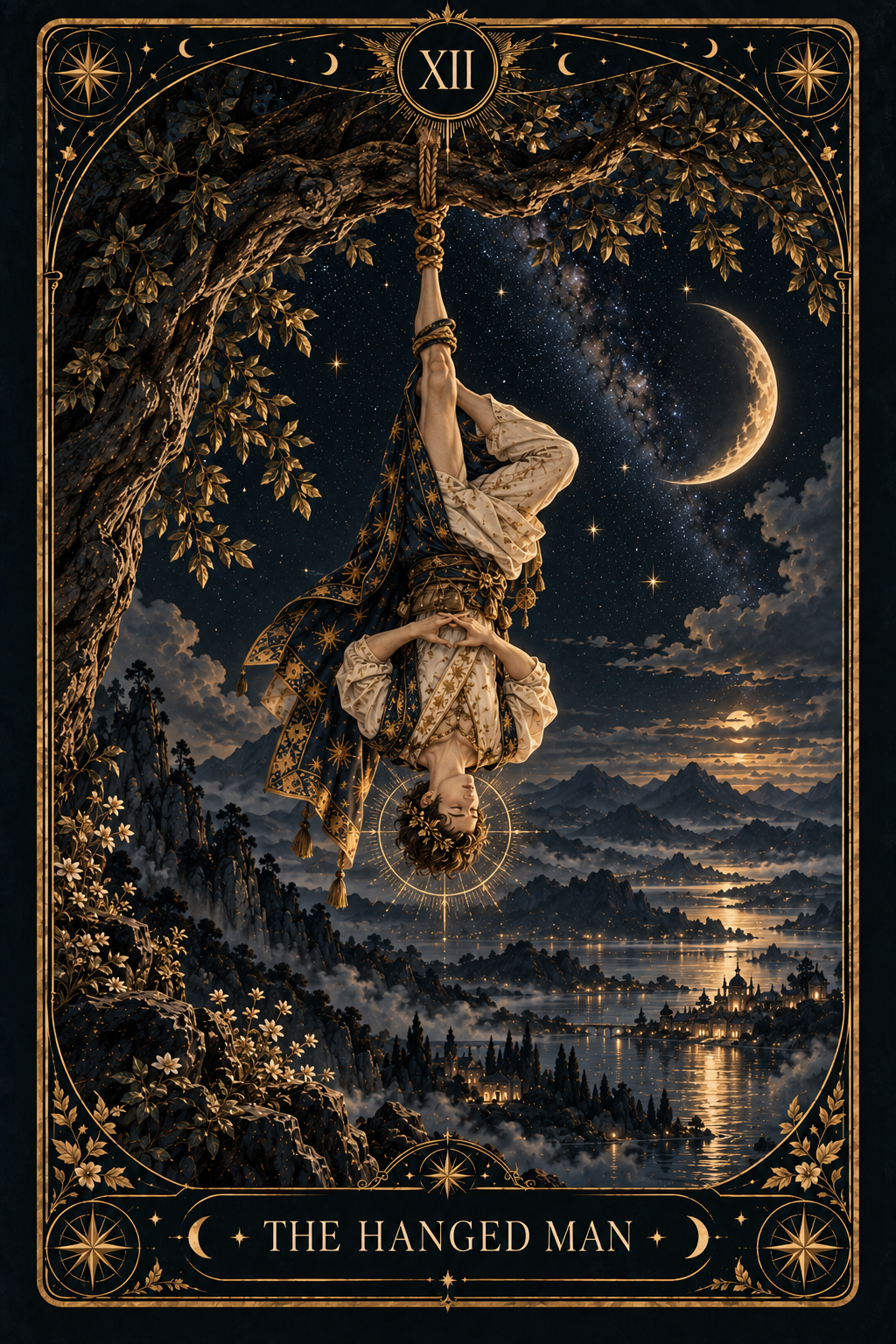
Upright: Pause, suspension, surrender, waiting, seeing differently.
Reversed: Resistance to the pause, prolonged stagnation, inability to let go.
XIII — Death
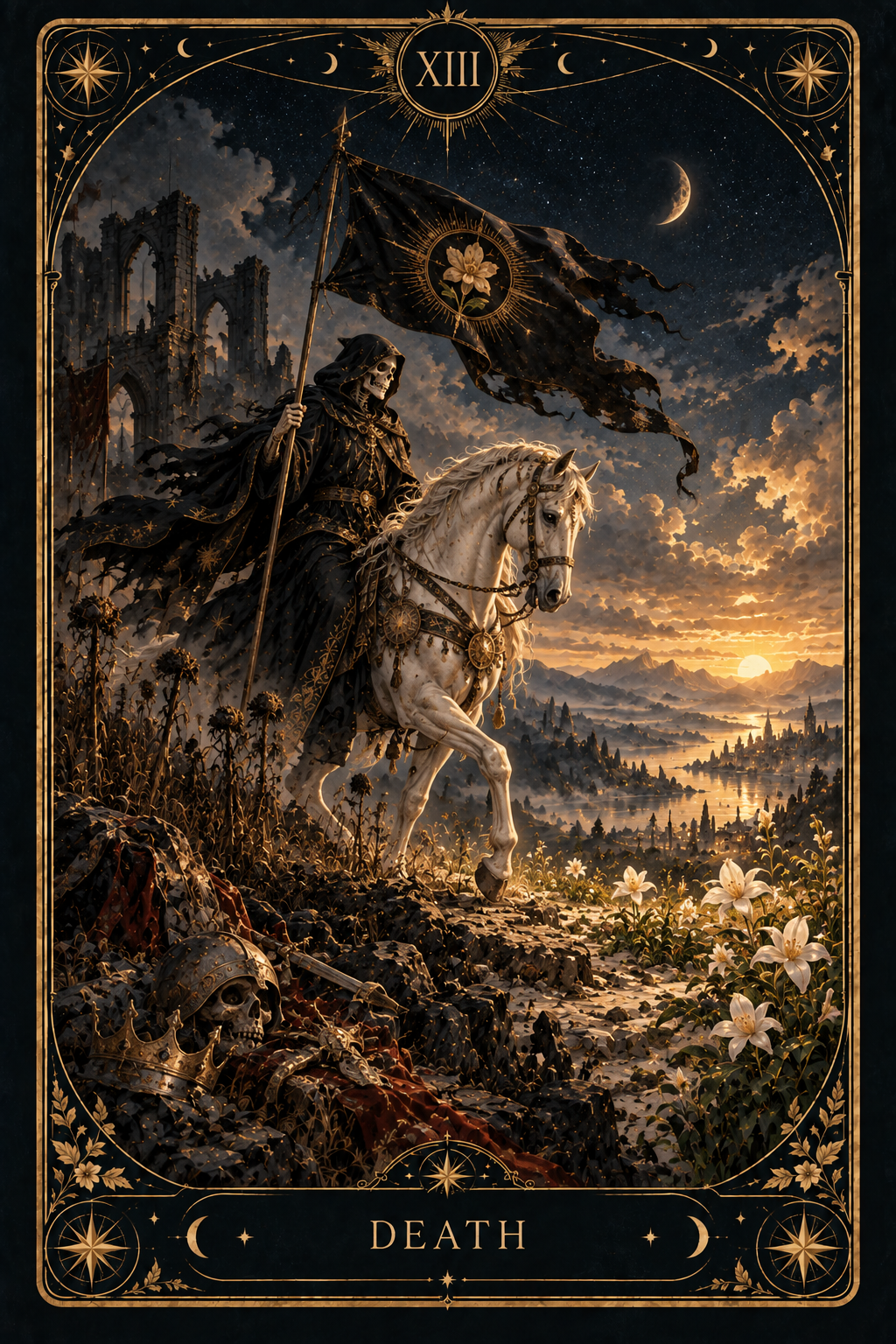
Upright: Ending, transition, release, transformation, closing one phase.
Reversed: Resistance to ending, difficulty moving on, delayed transition.
XIV — Temperance
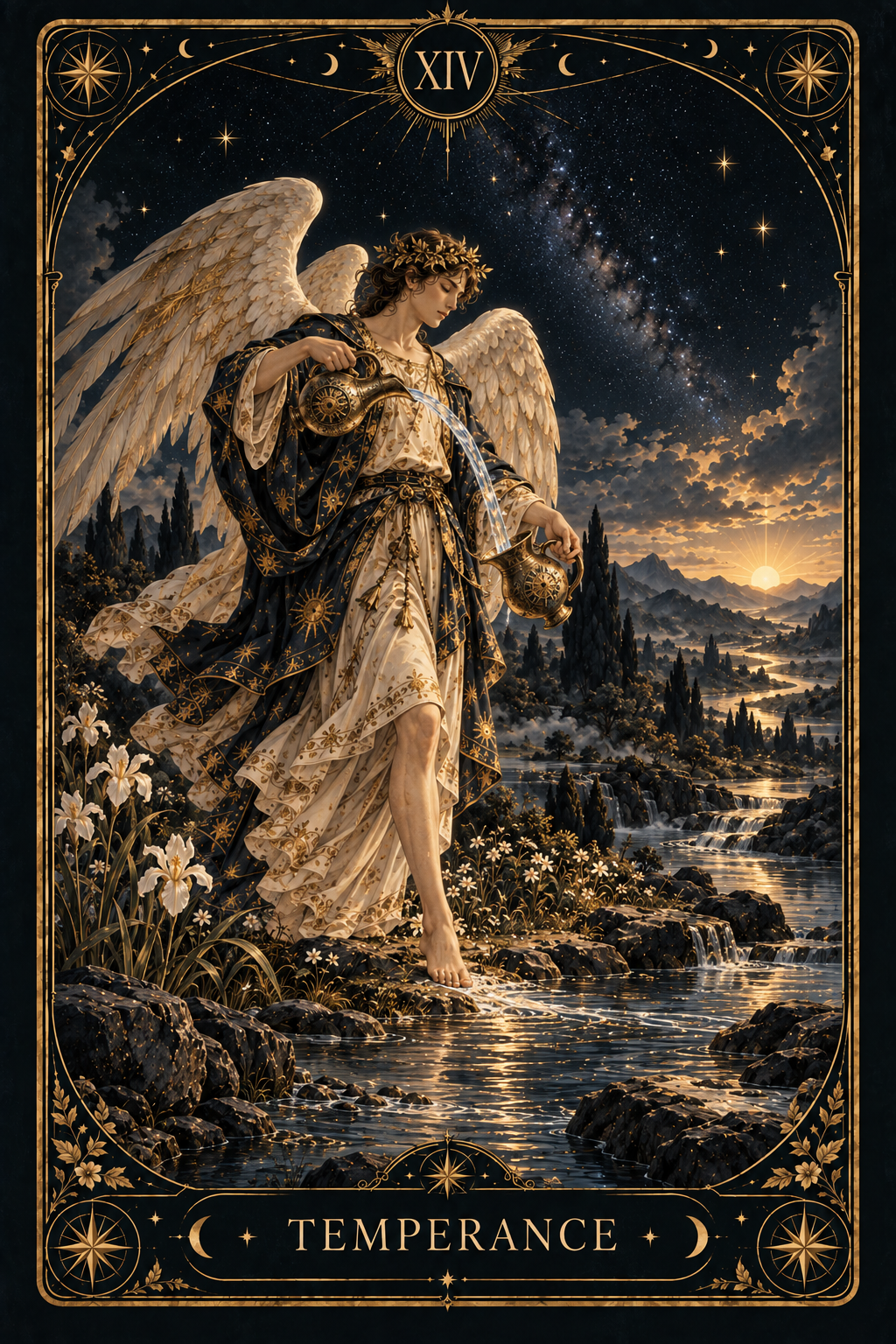
Upright: Balance, moderation, integration, patience, gradual progress.
Reversed: Excess, imbalance, poor integration, impatience.
XV — The Devil
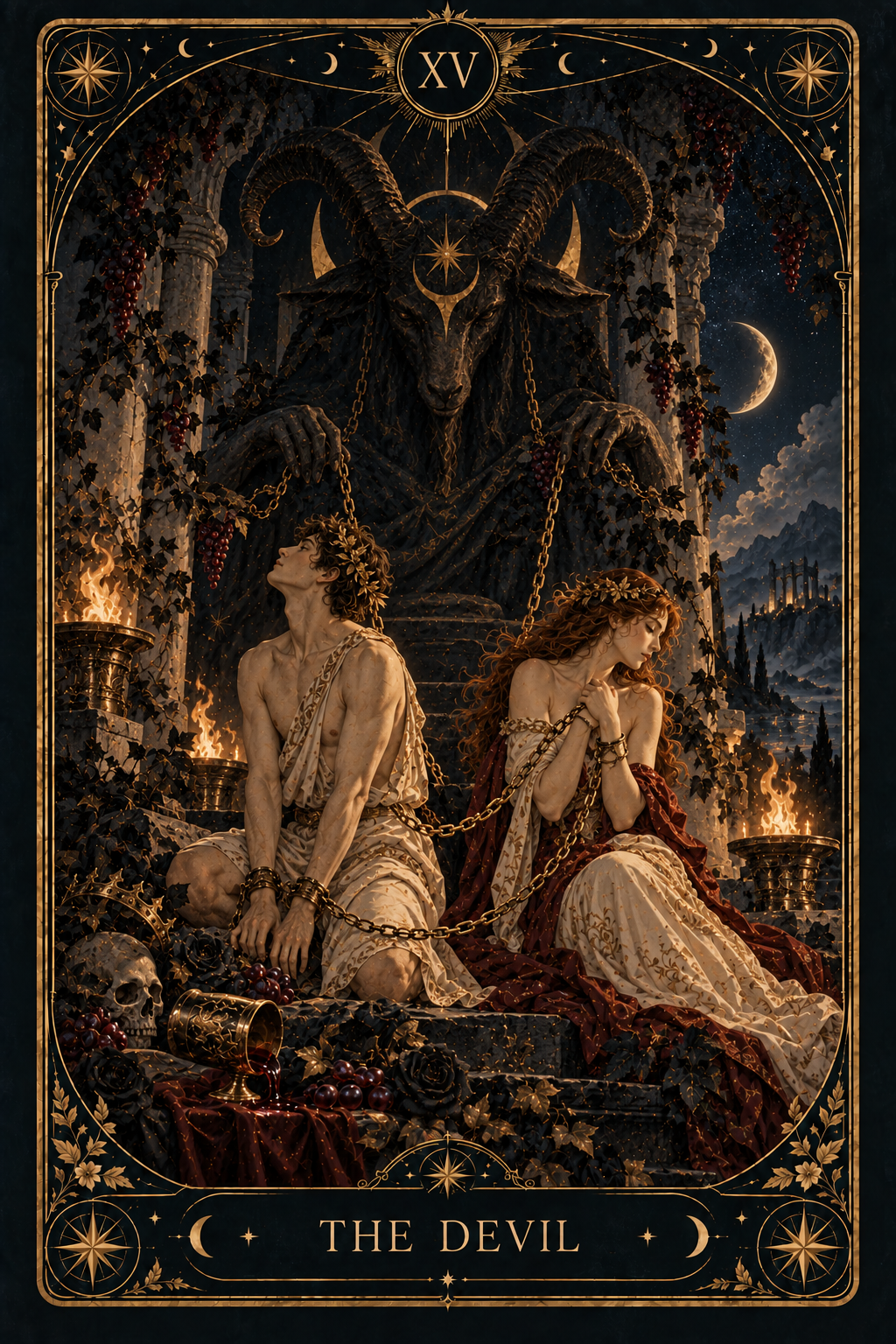
Upright: Attachment, temptation, unhealthy patterns, dependency, feeling trapped.
Reversed: Recognizing an attachment, releasing a pattern, reclaiming agency.
XVI — The Tower
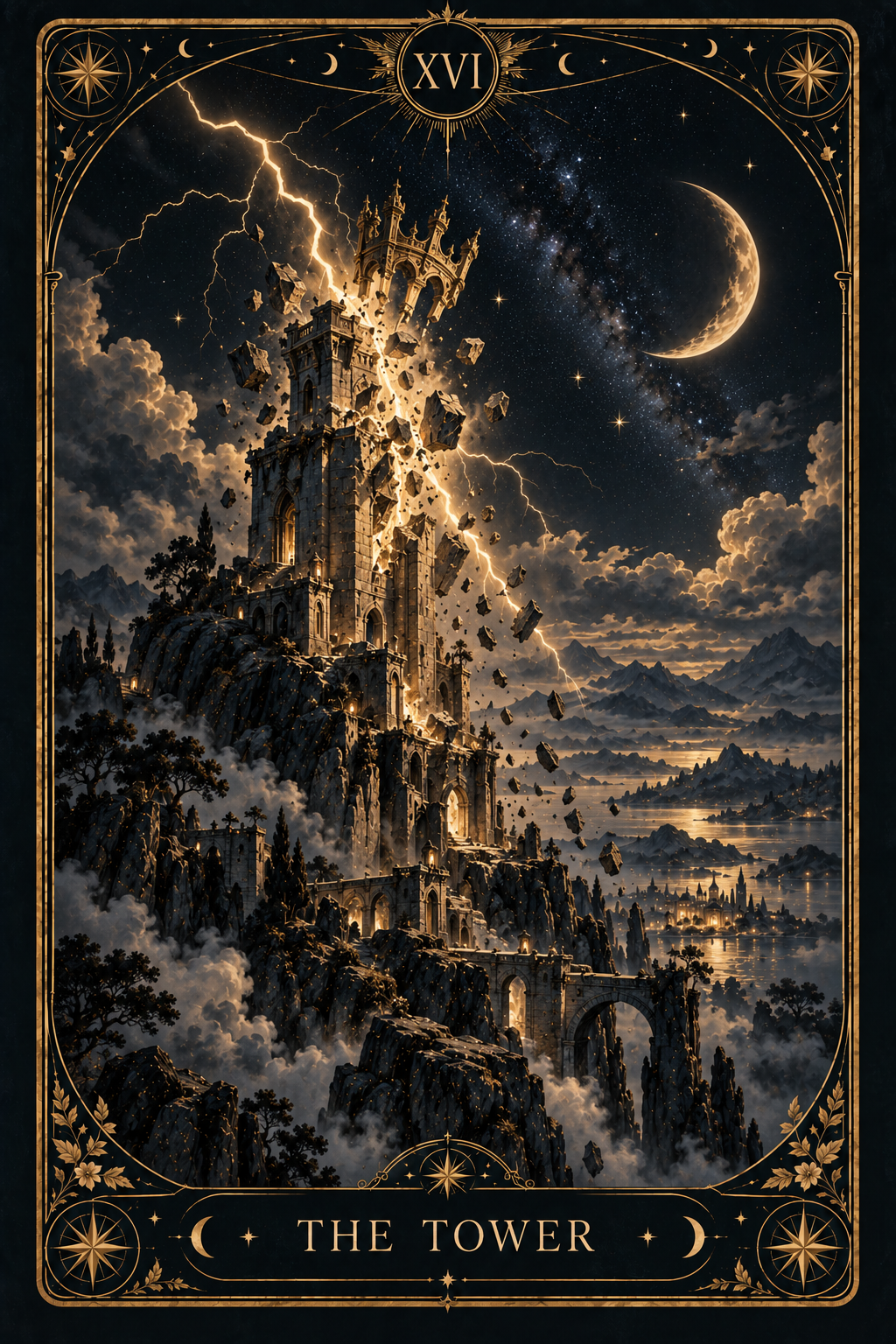
Upright: Disruption, revelation, collapse of unstable structures, sudden change.
Reversed: Avoided upheaval, internal disruption, resistance to necessary change.
The Tower is not automatically catastrophe. It often shows something that can no longer remain stable in its current form.
XVII — The Star
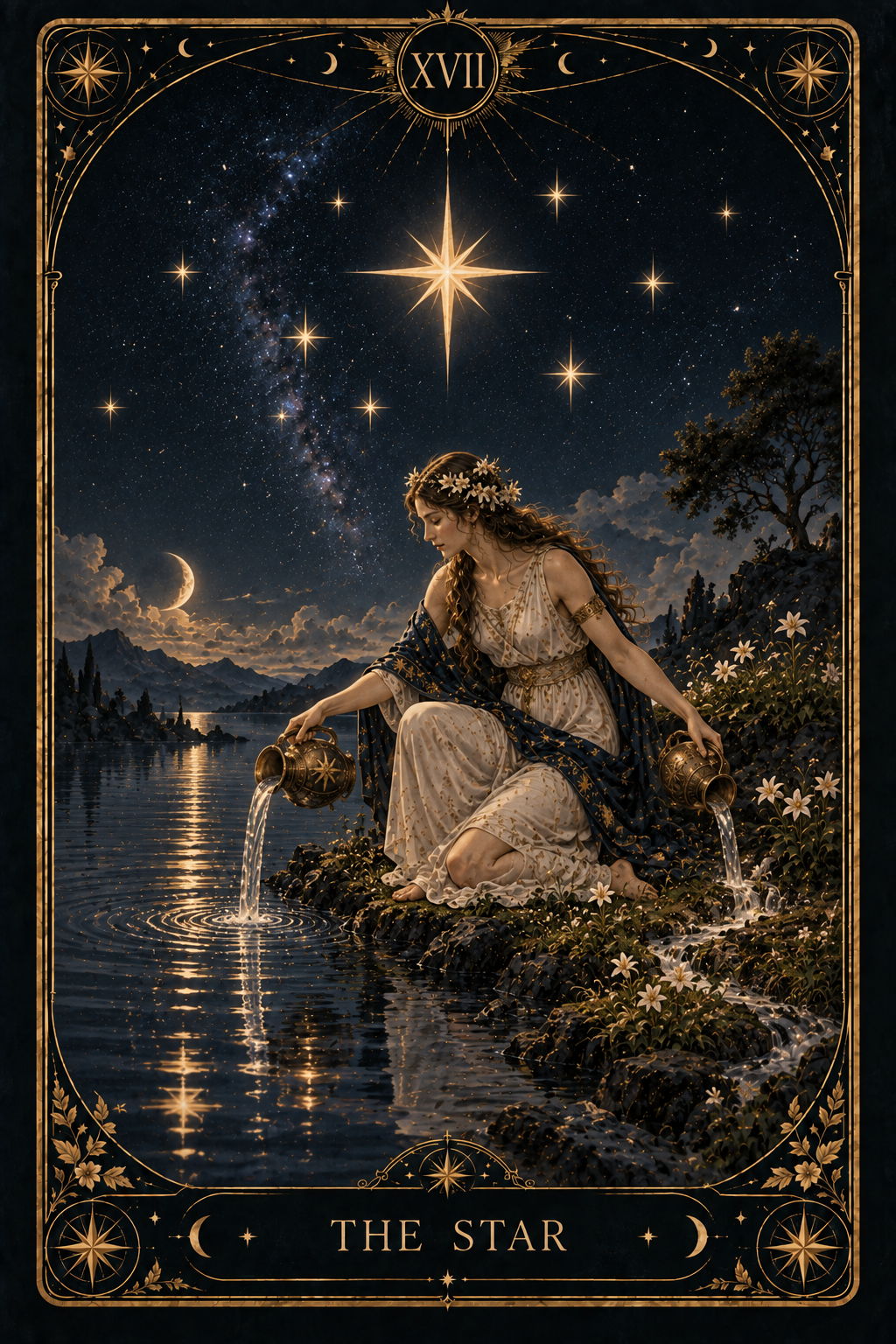
Upright: Hope, renewal, healing, openness, trust in what comes next.
Reversed: Discouragement, loss of faith, difficulty seeing possibility.
XVIII — The Moon
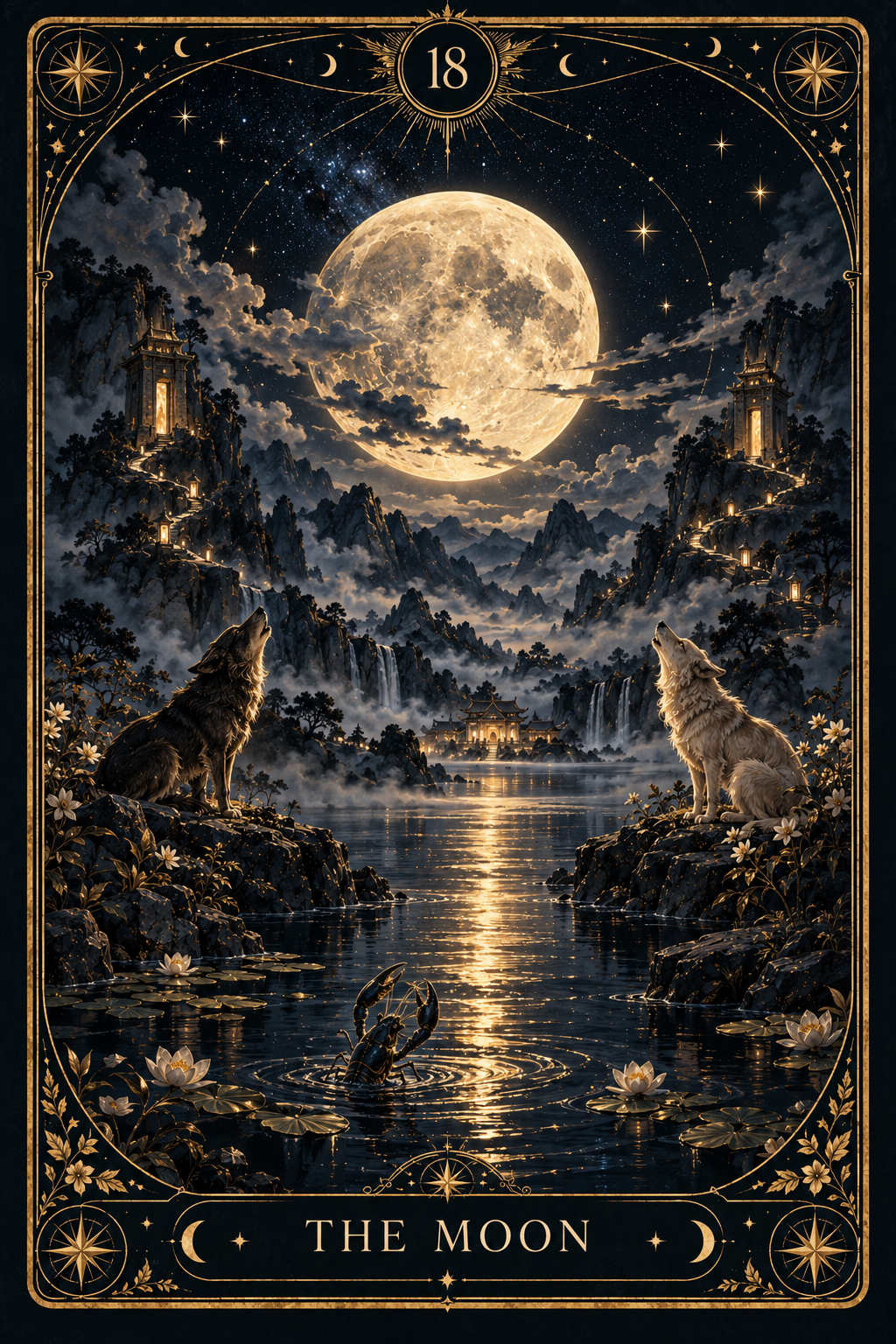
Upright: Uncertainty, intuition, ambiguity, fear, imagination, hidden factors.
Reversed: Confusion beginning to clear, suppressed fear, information emerging.
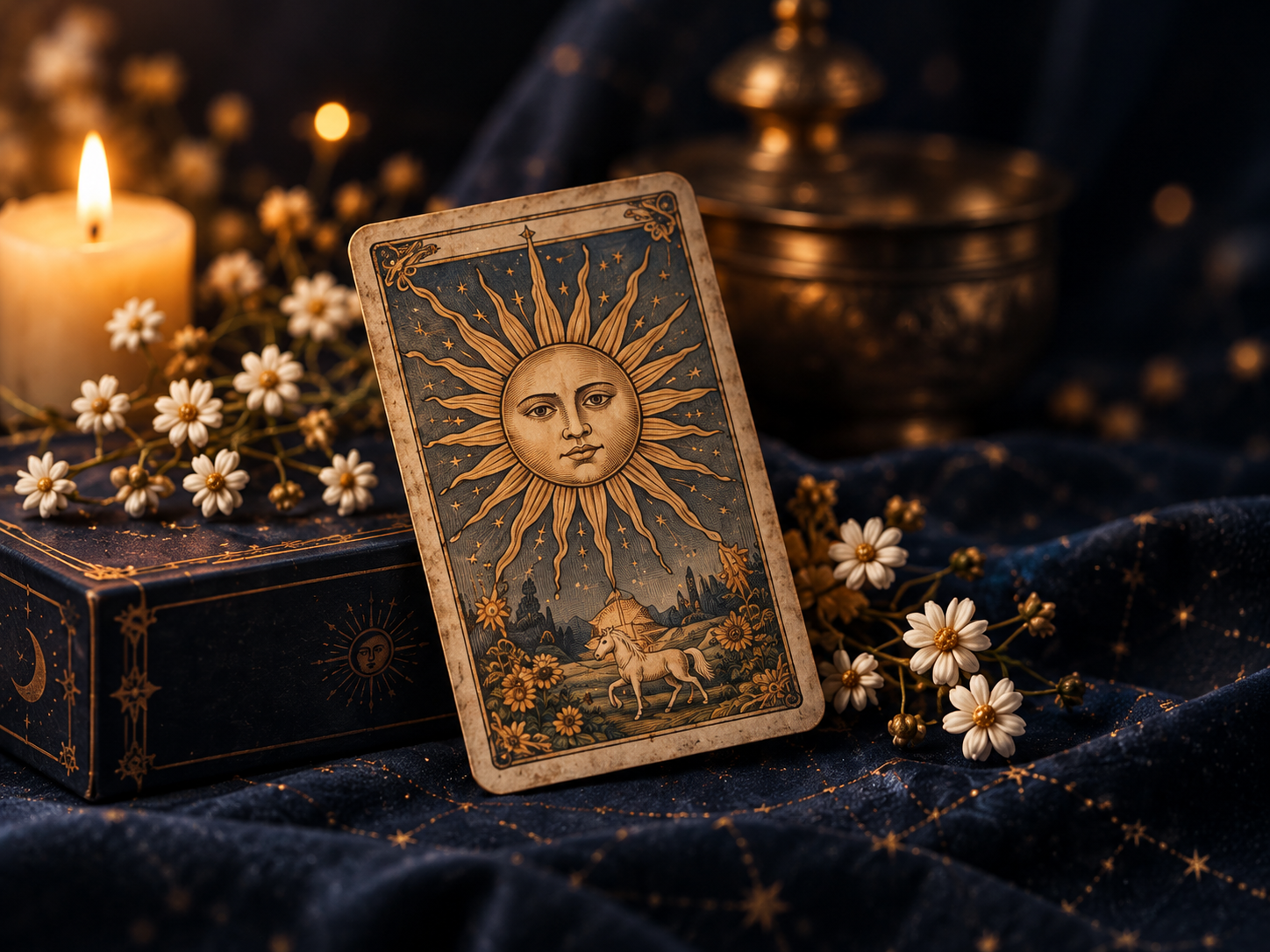
XIX — The Sun
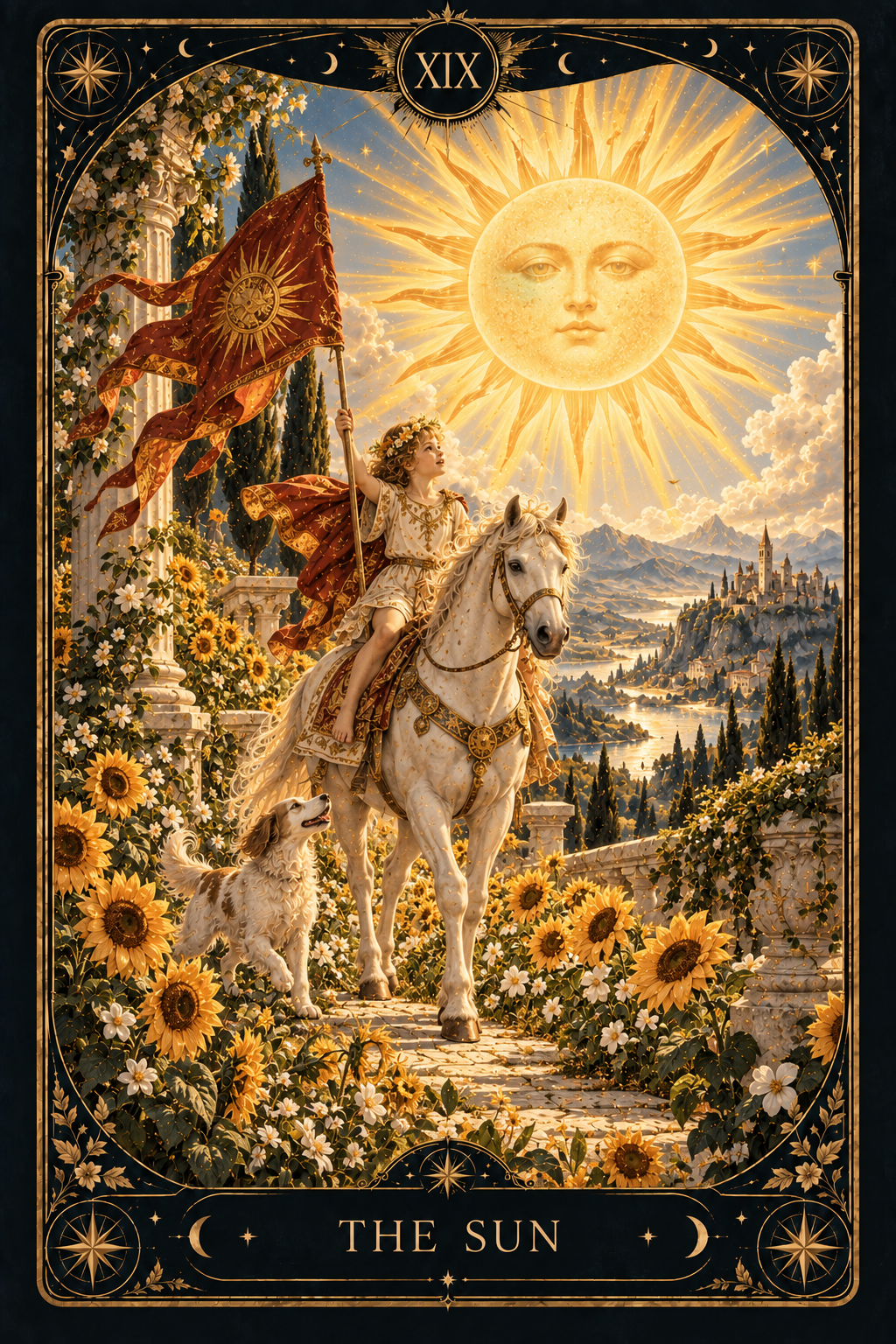
Upright: Clarity, vitality, confidence, joy, visibility, success.
Reversed: Muted optimism, temporary doubt, delayed recognition.
XX — Judgement
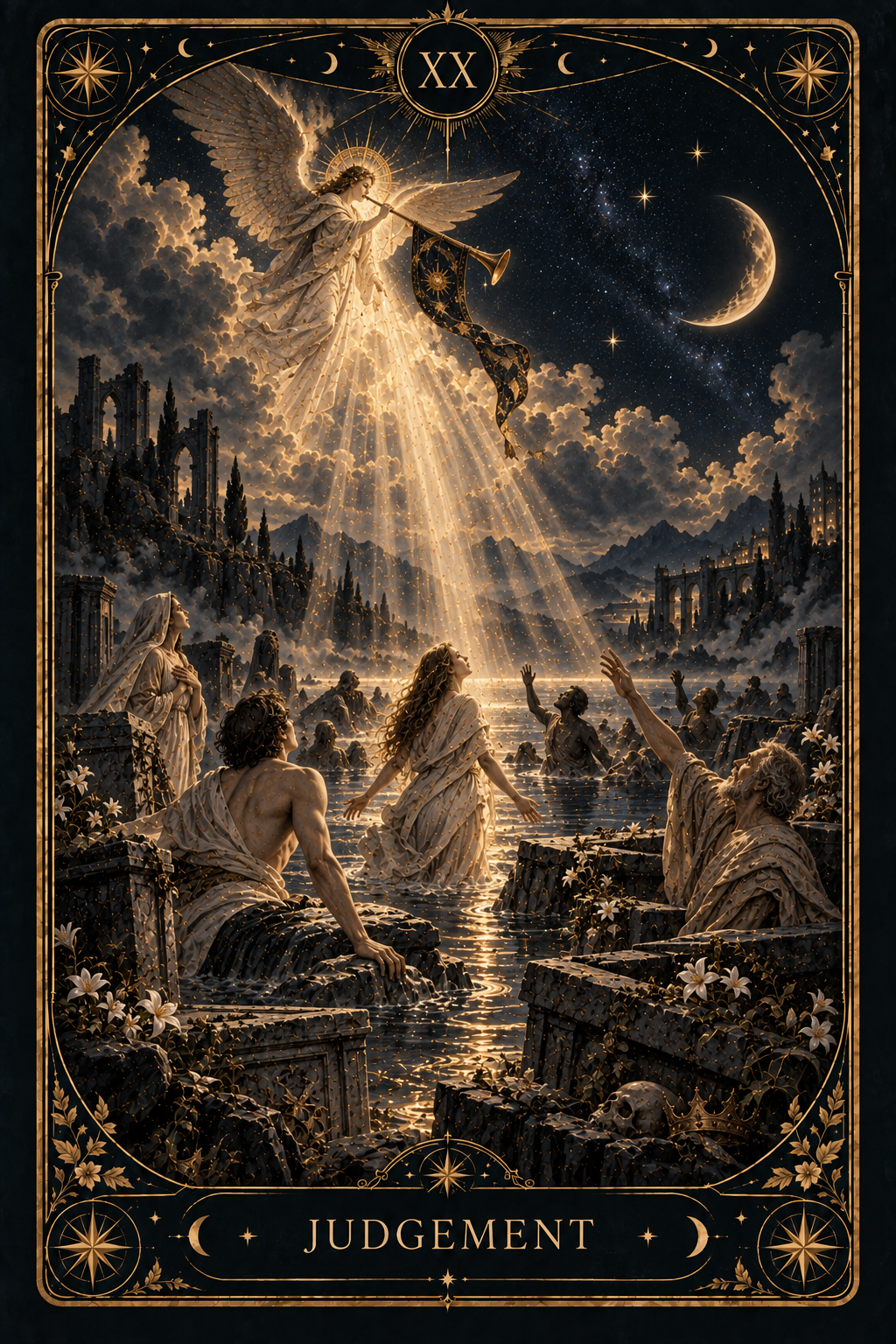
Upright: Evaluation, awakening, reckoning, answering a call, realization.
Reversed: Self-doubt, avoiding a decision, resisting accountability.
XXI — The World
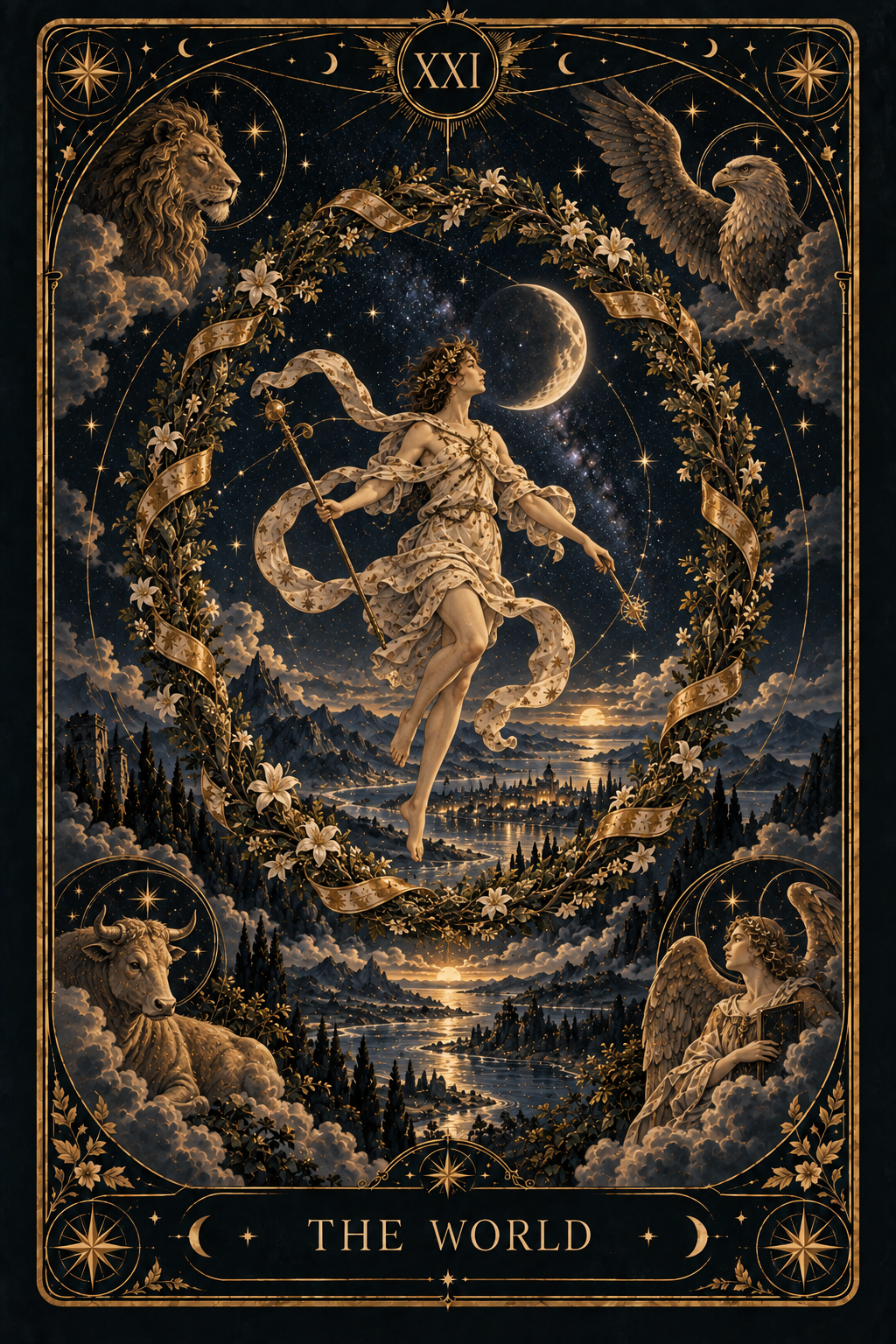
Upright: Completion, integration, achievement, closure, end of a cycle.
Reversed: Incomplete closure, unfinished business, delayed completion.
Start Your Free Tarot Reading →
Suit of Wands Tarot Card Meanings
Wands are associated with action, energy, creativity, ambition, desire, and movement.
Ace of Wands
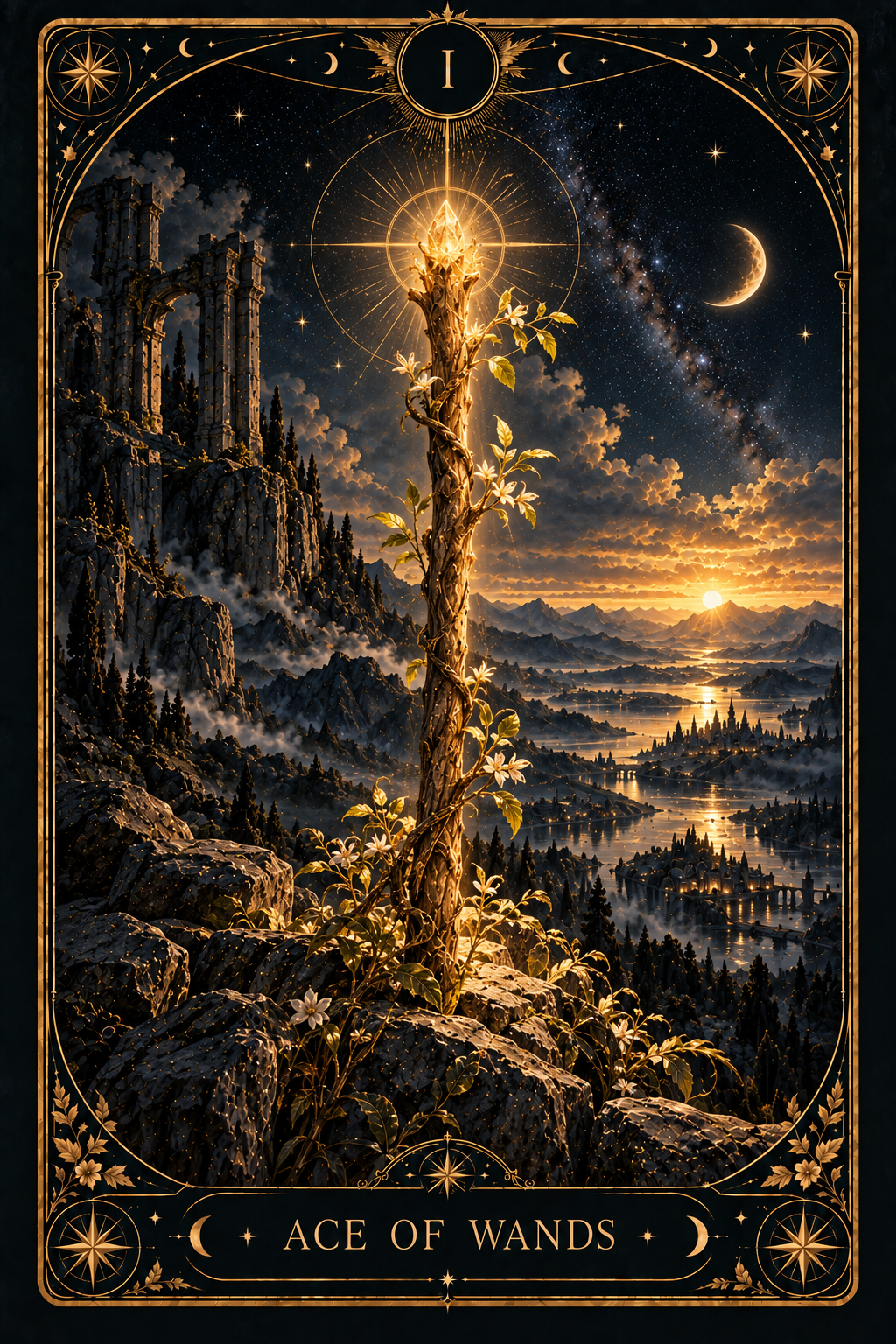
Upright: Inspiration, opportunity, creative spark, new energy.
Reversed: Delayed start, lack of direction, blocked motivation.
Two of Wands
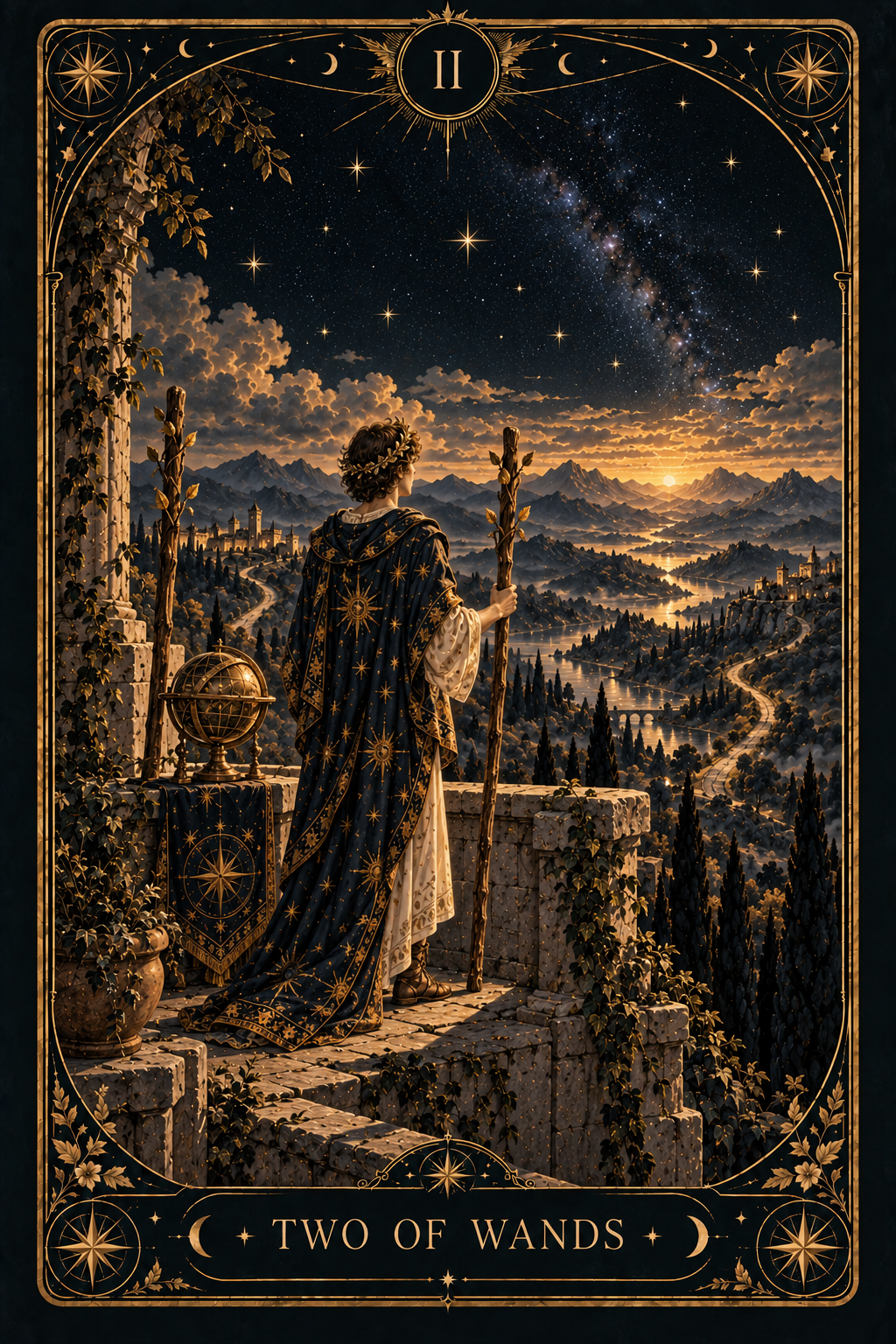
Upright: Planning, possibility, deciding what comes next.
Reversed: Fear of expansion, weak planning, staying with the familiar.
Three of Wands
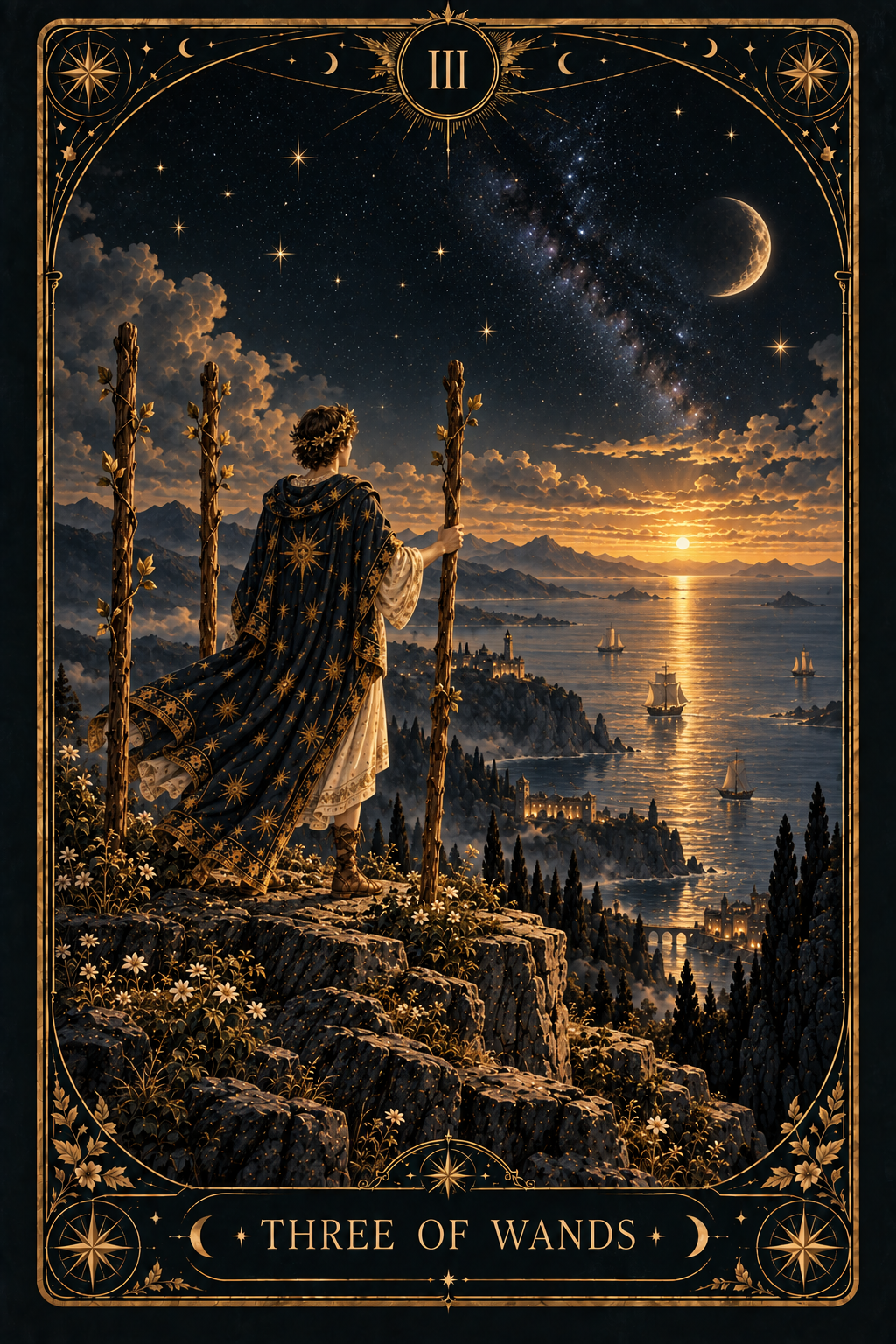
Upright: Expansion, progress, looking ahead, results developing.
Reversed: Delays, limited progress, expectations not yet met.
Four of Wands
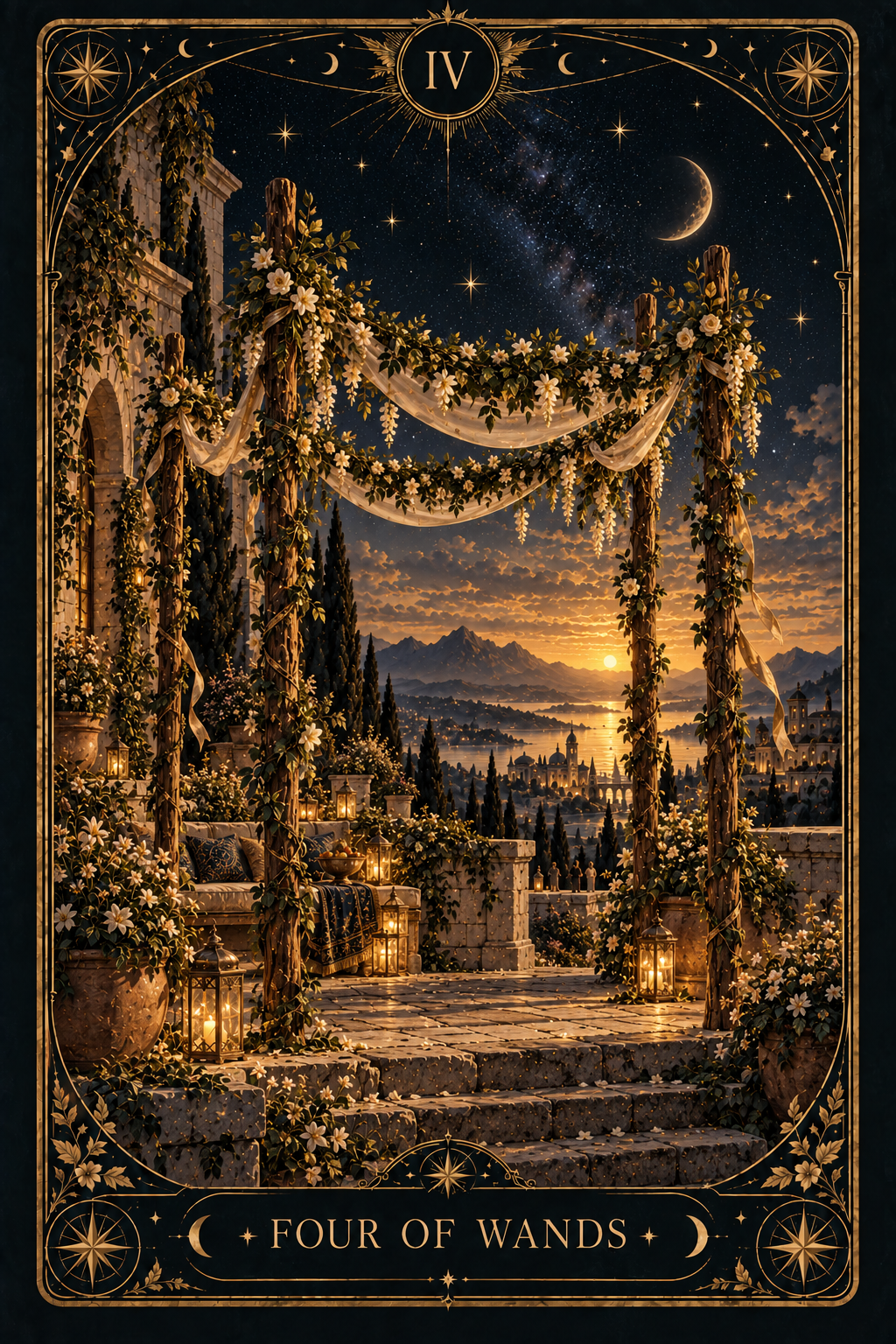
Upright: Celebration, milestone, stability, shared joy.
Reversed: Instability, complicated group dynamics, delayed celebration.
Five of Wands
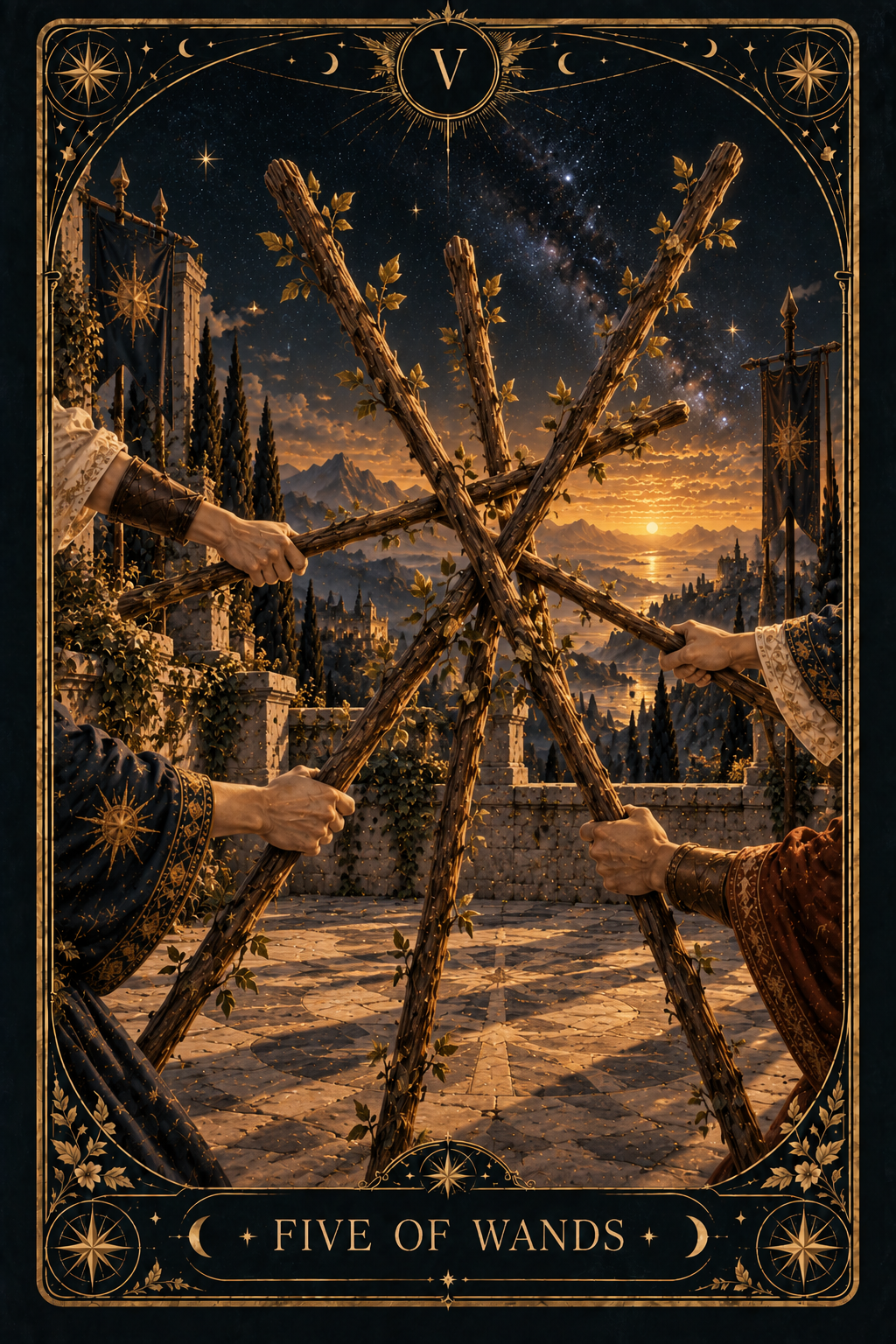
Upright: Competition, friction, disagreement, conflicting agendas.
Reversed: Conflict avoidance, easing tension, internalized disagreement.
Six of Wands
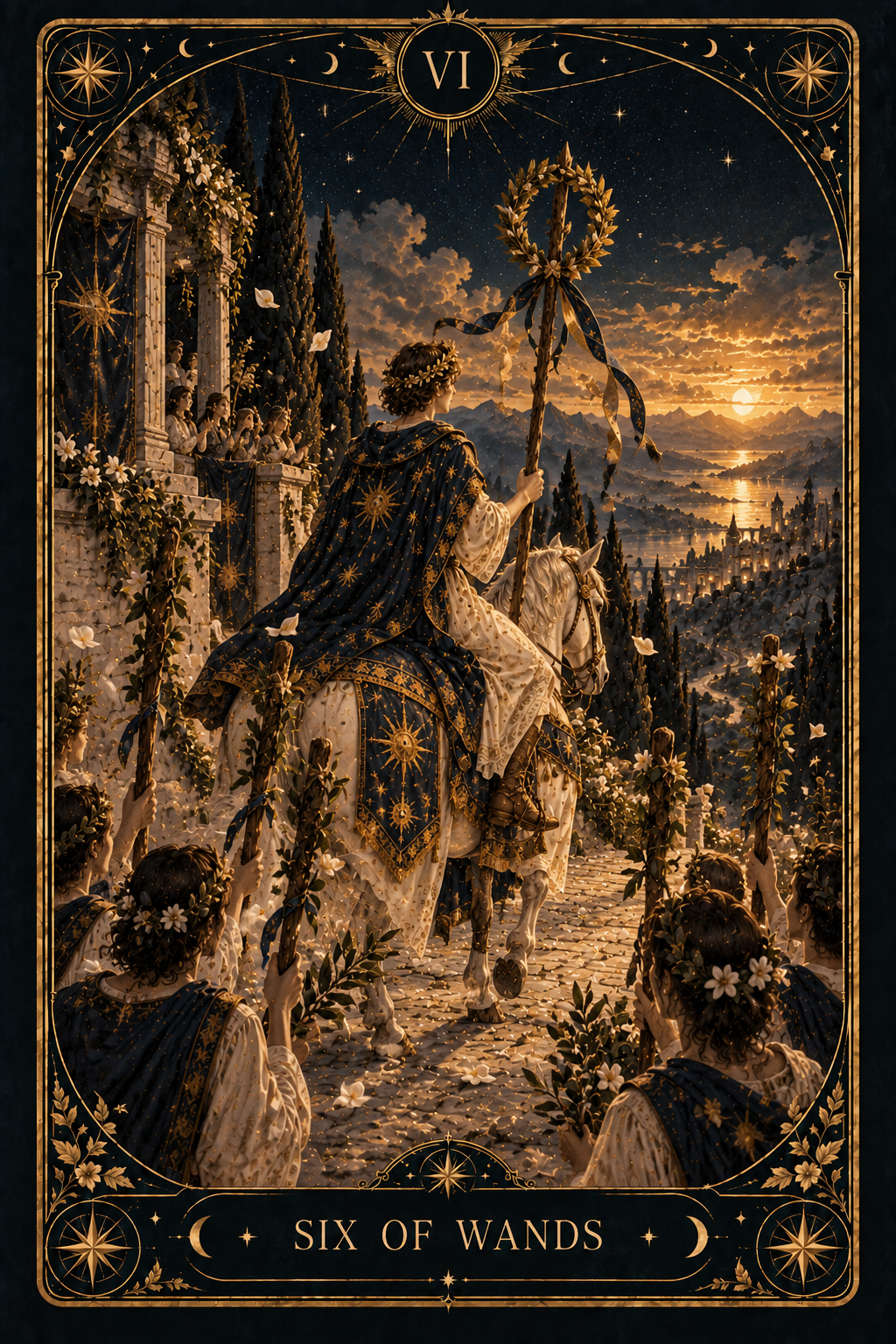
Upright: Recognition, success, confidence, acknowledgement.
Reversed: Lack of recognition, fragile confidence, private achievement.
Seven of Wands
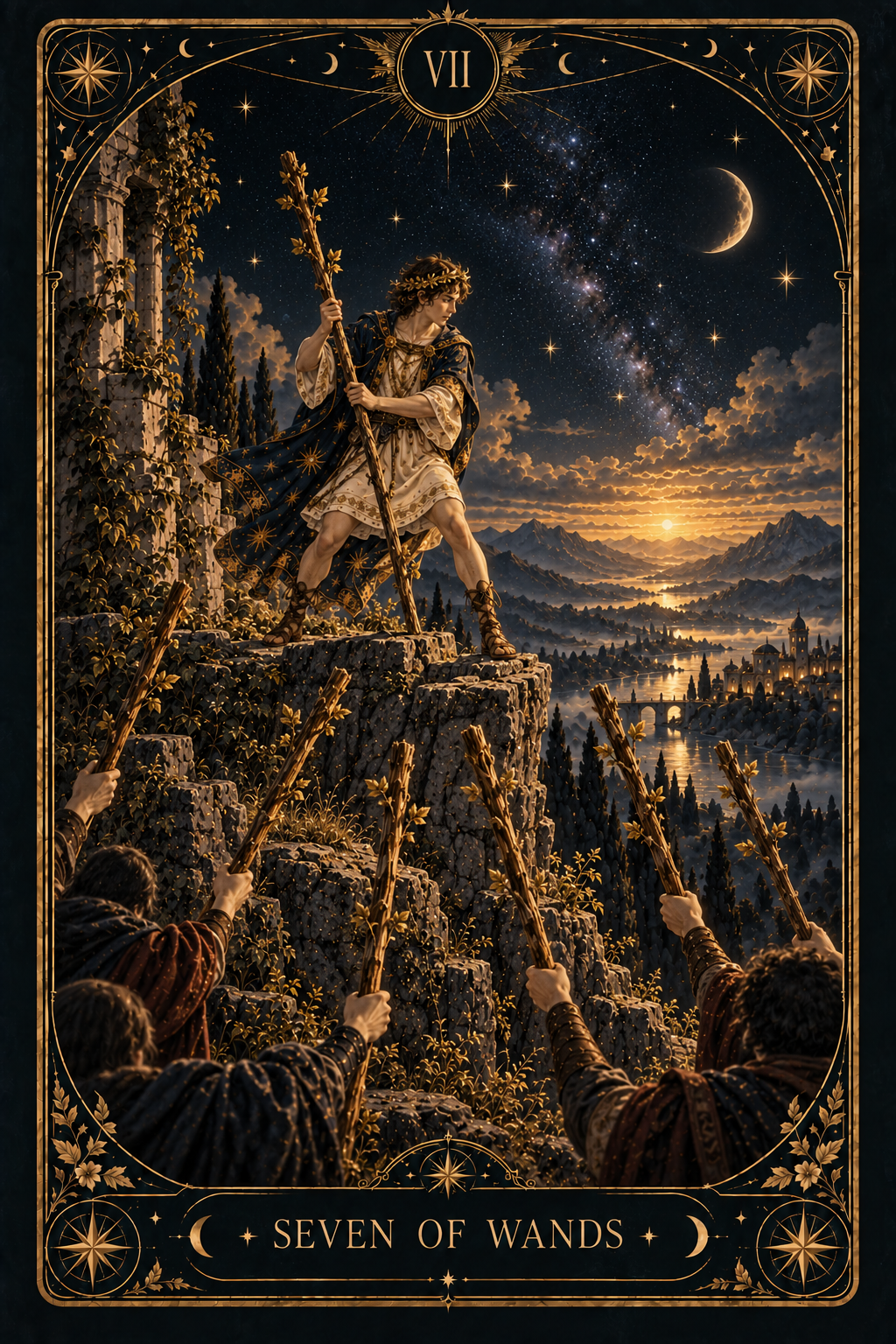
Upright: Defending your position, persistence, holding your ground.
Reversed: Exhaustion, feeling overwhelmed, giving up ground.
Eight of Wands
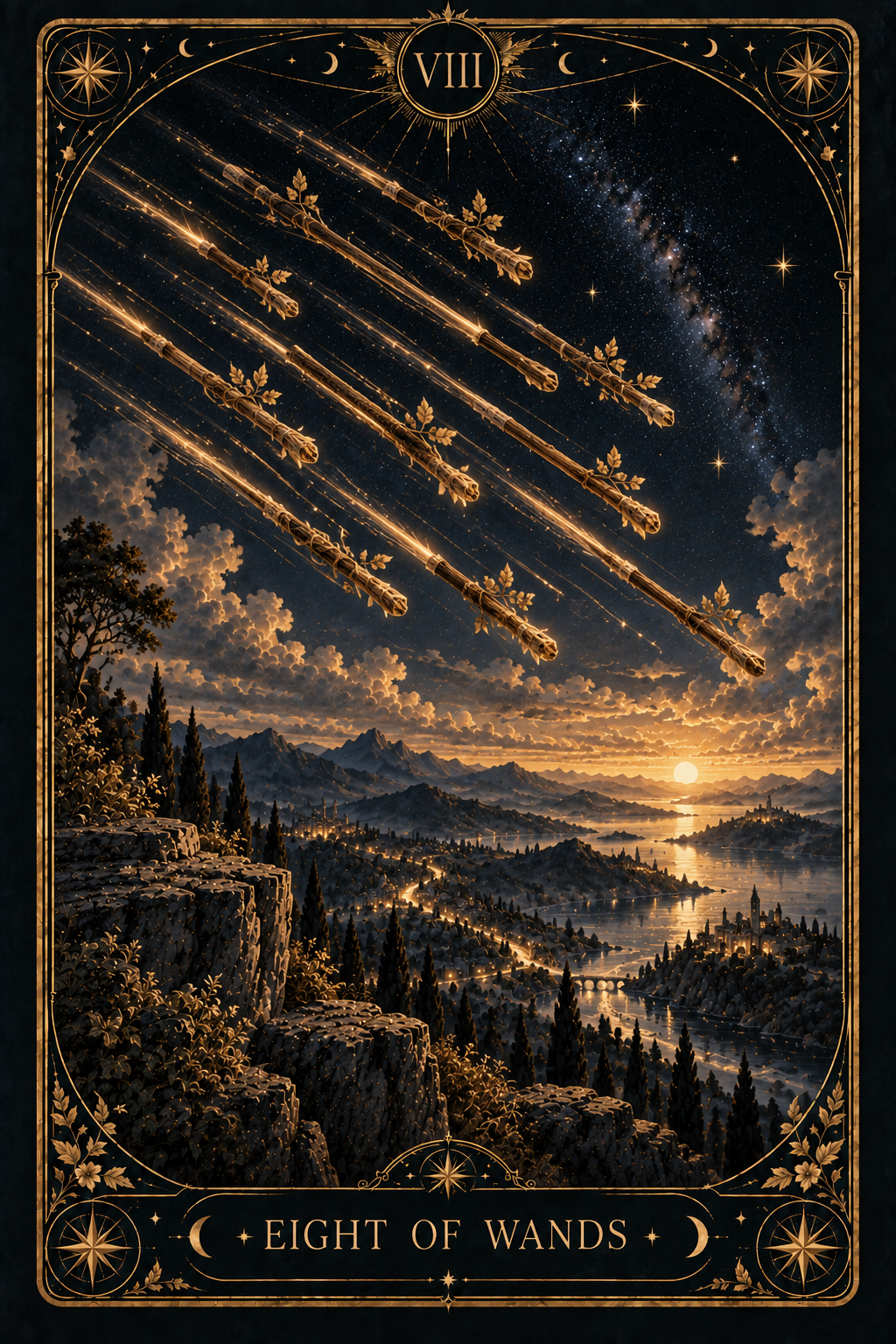
Upright: Speed, messages, acceleration, rapid developments.
Reversed: Delays, crossed communication, interrupted momentum.
Nine of Wands
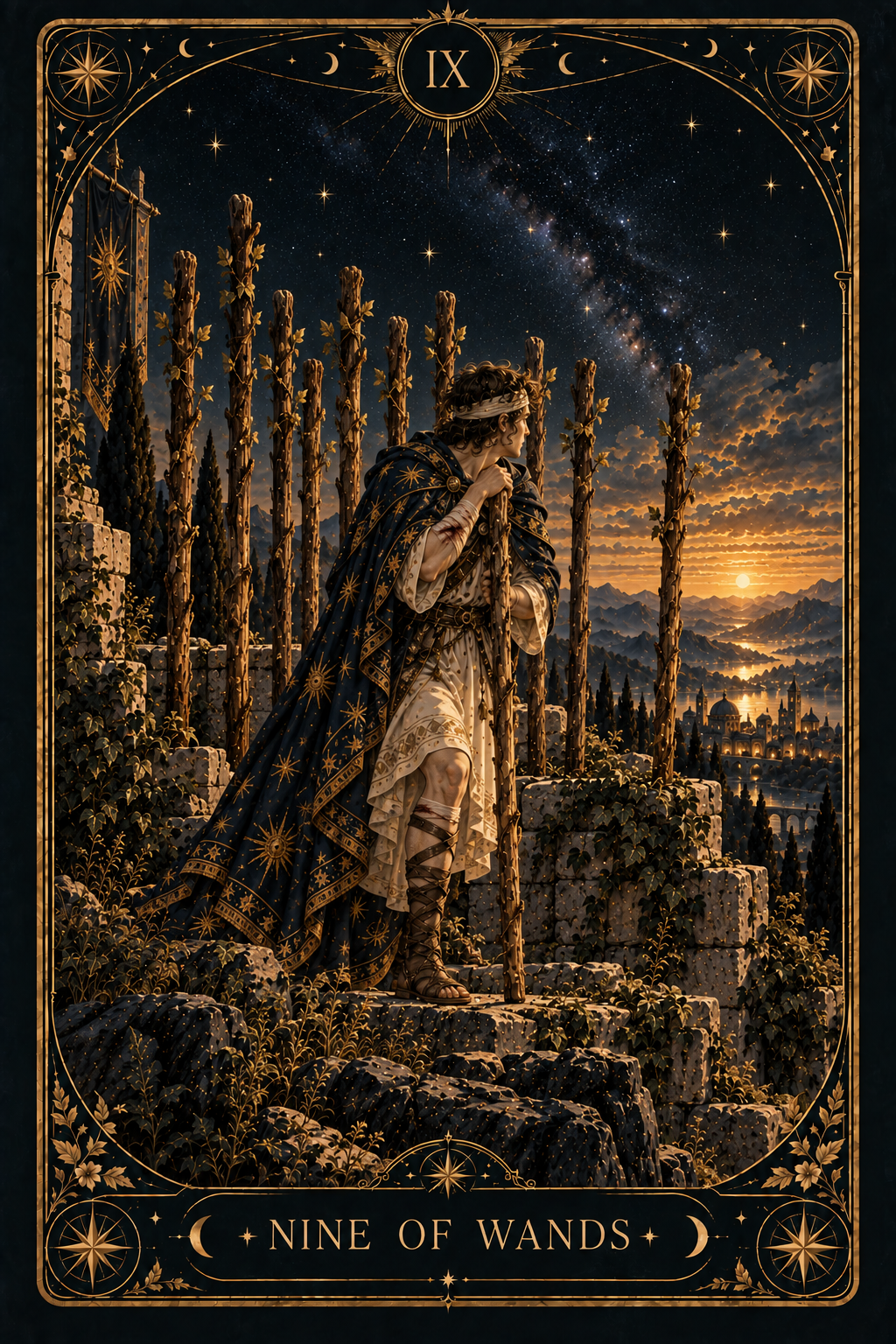
Upright: Resilience, caution, persistence after difficulty.
Reversed: Burnout, defensiveness, difficulty continuing.
Ten of Wands
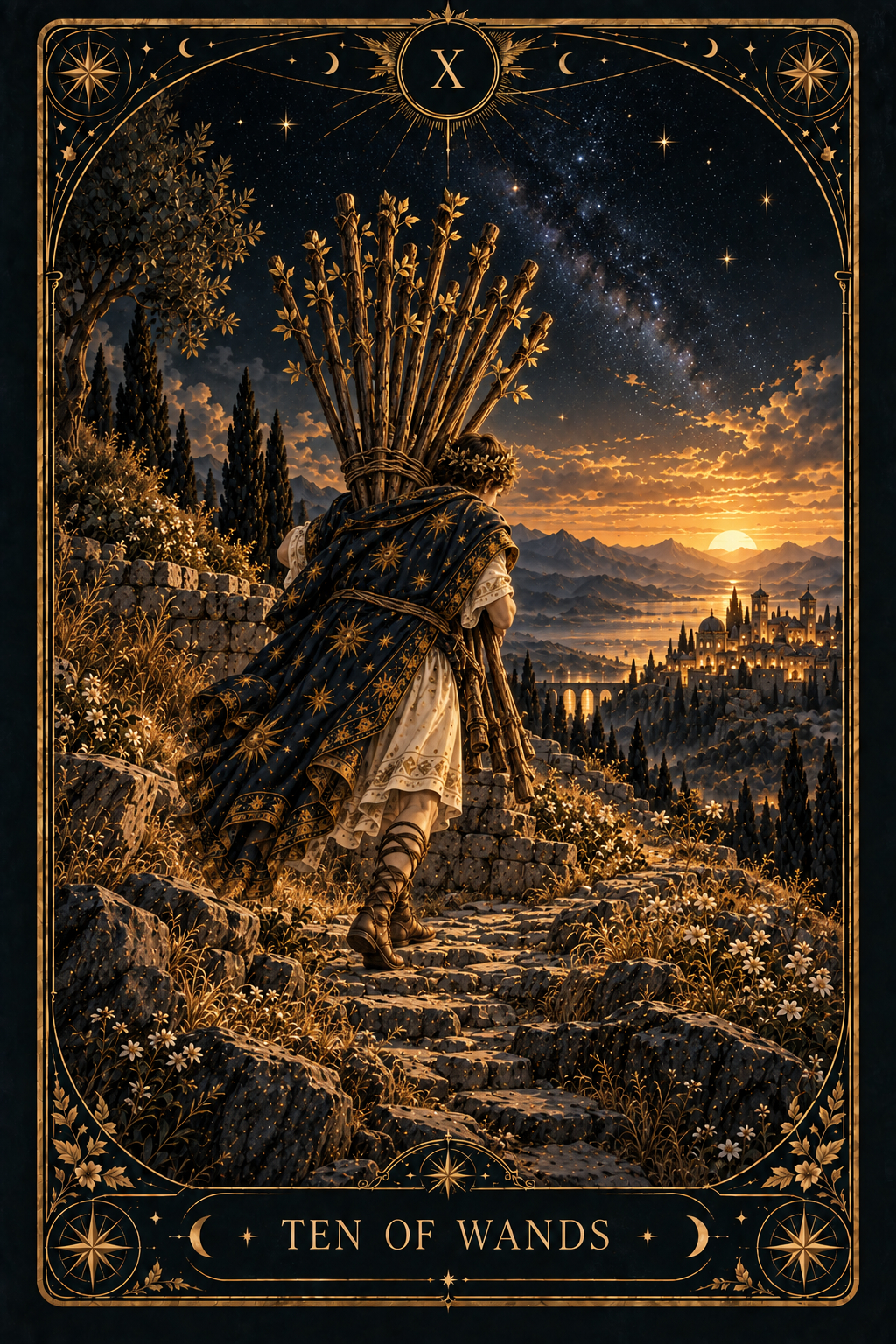
Upright: Burden, responsibility, carrying too much.
Reversed: Releasing a burden, overwhelm, refusing unnecessary responsibility.
Page of Wands
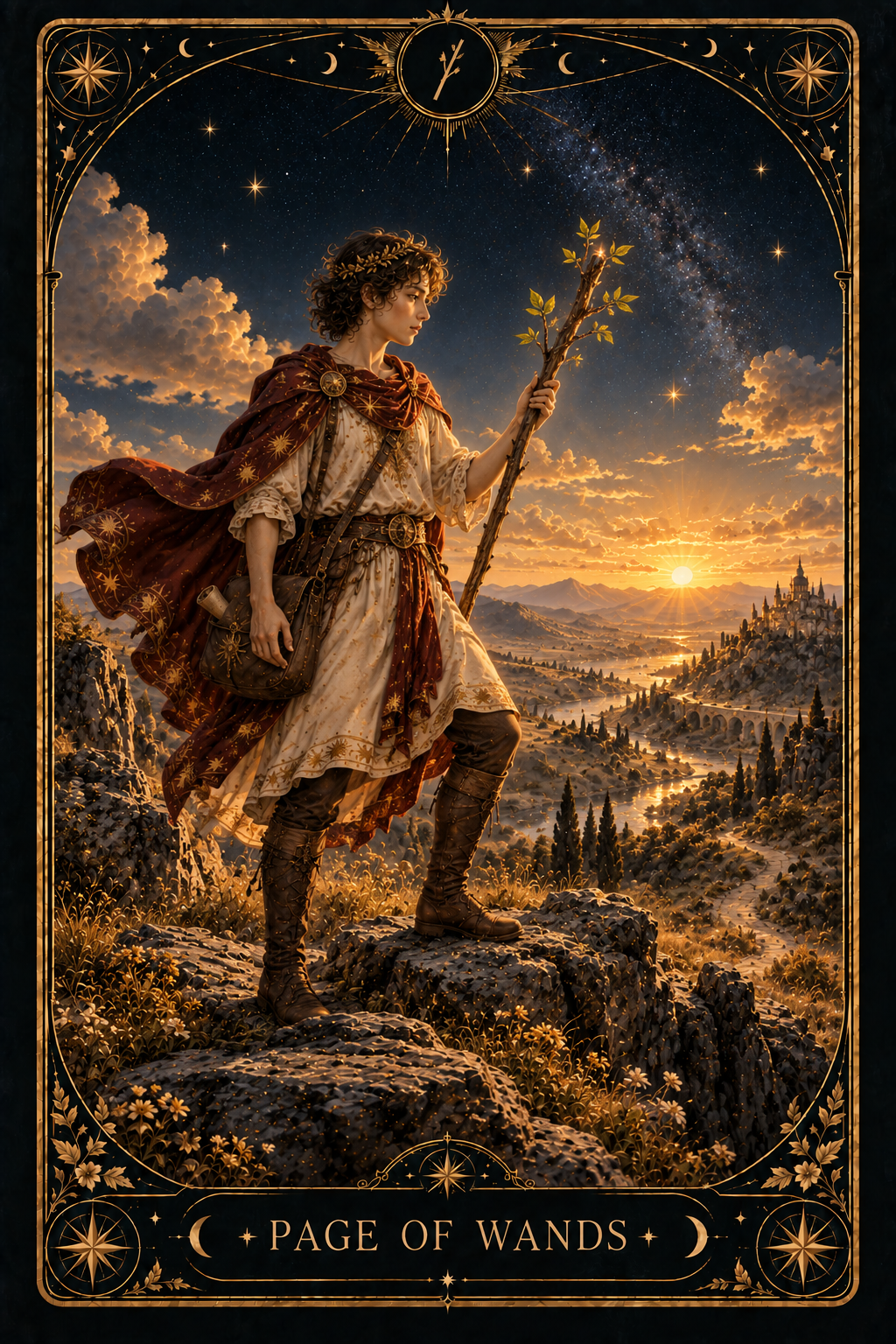
Upright: Curiosity, enthusiasm, new ideas, exploration.
Reversed: Immaturity, scattered enthusiasm, undeveloped plans.
Knight of Wands
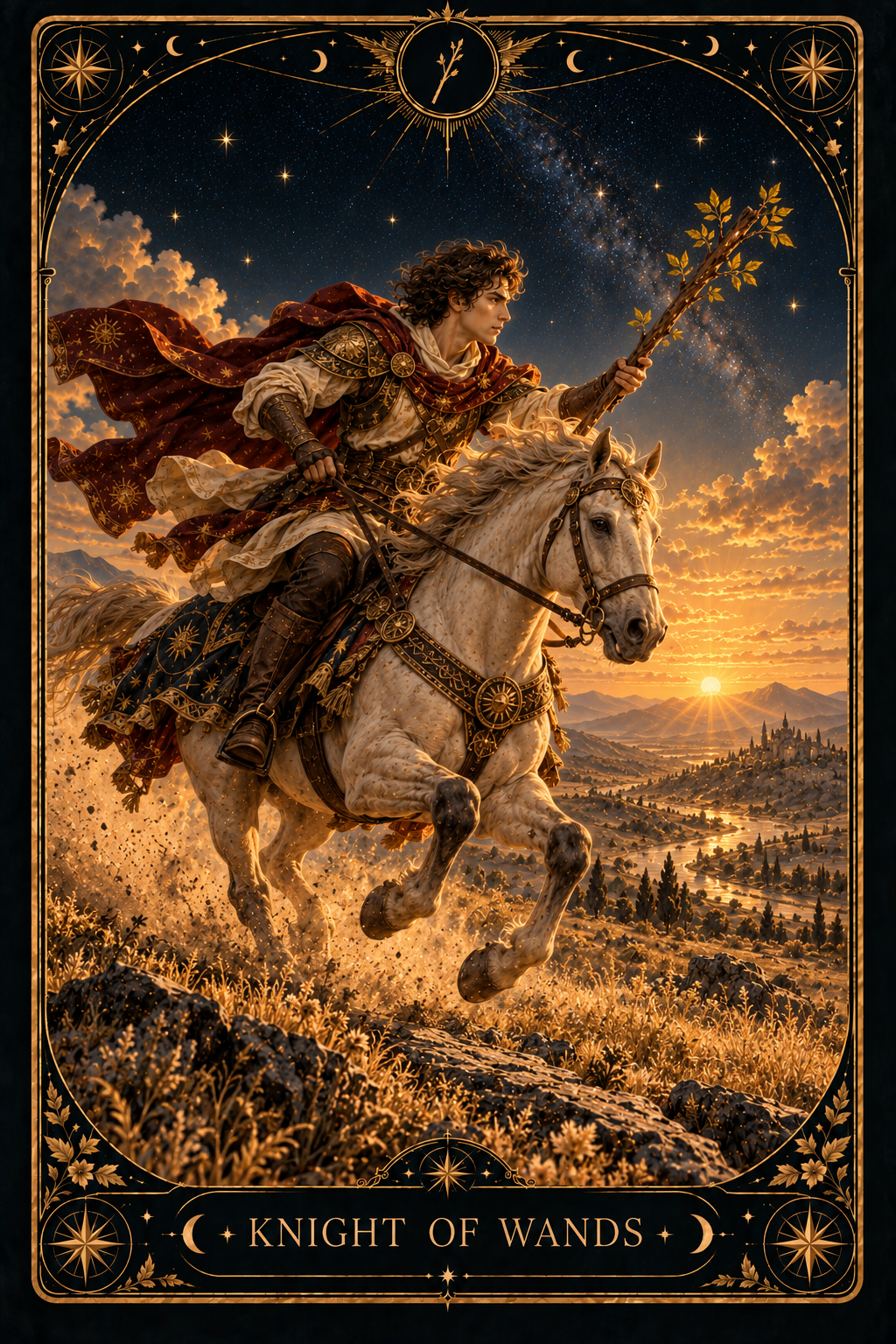
Upright: Passion, movement, bold action, adventure.
Reversed: Impulsiveness, inconsistency, action without enough planning.
Queen of Wands
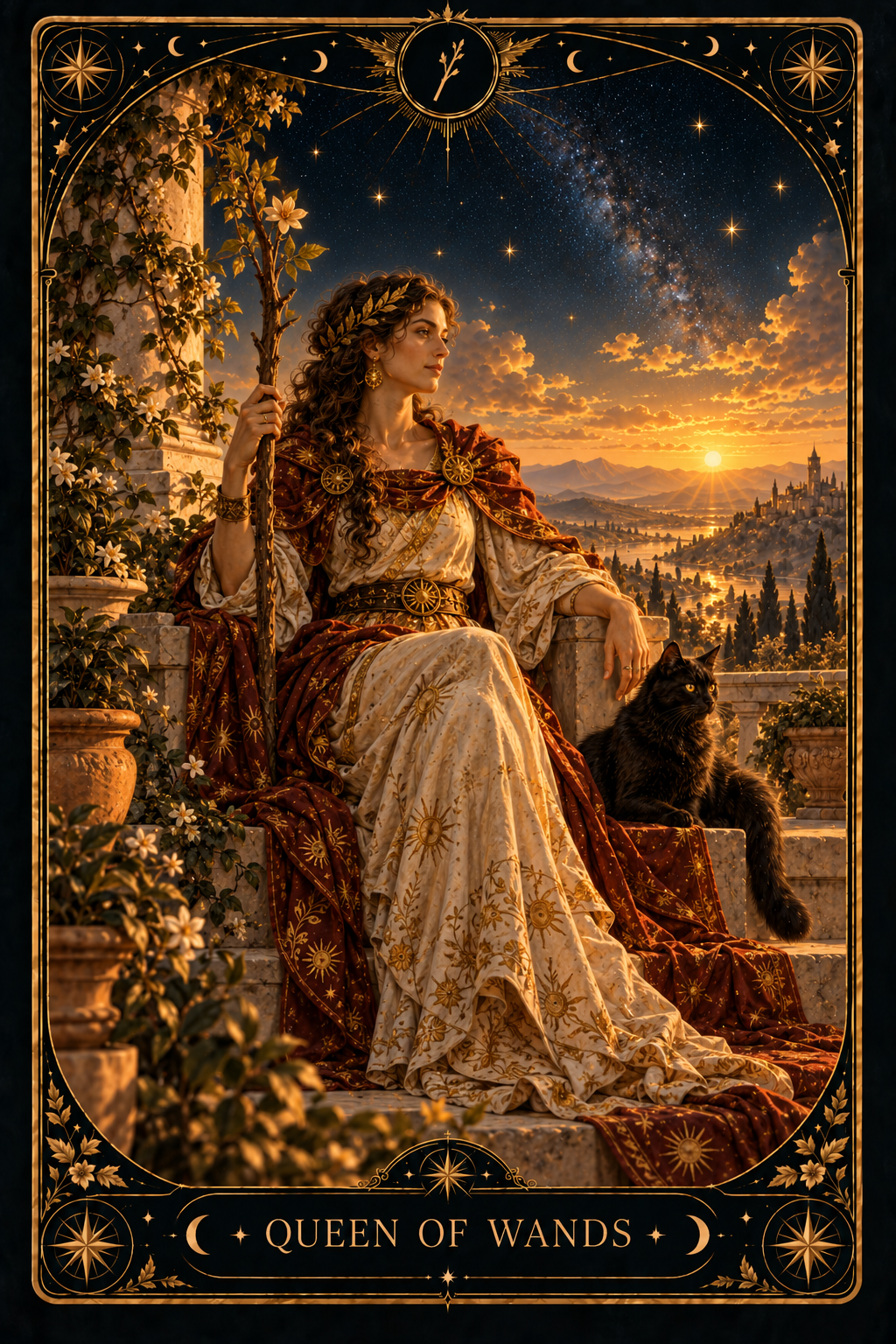
Upright: Confidence, independence, warmth, magnetism.
Reversed: Insecurity, jealousy, reduced confidence.
King of Wands
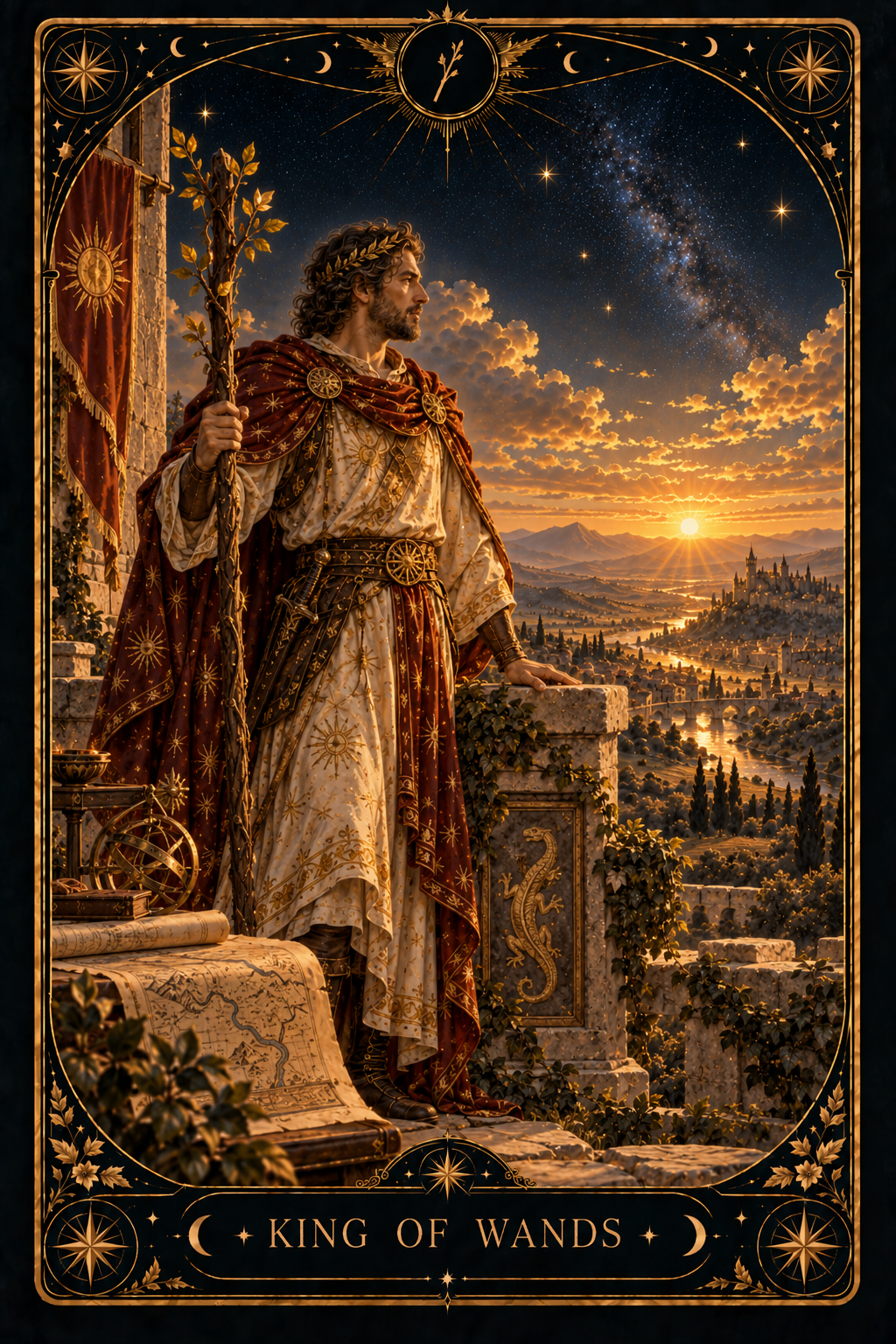
Upright: Vision, leadership, initiative, ambition.
Reversed: Domineering behavior, impulsive leadership, vision without discipline.
Suit of Cups Tarot Card Meanings
Cups are associated with emotion, love, relationships, intimacy, intuition, and connection.
Ace of Cups
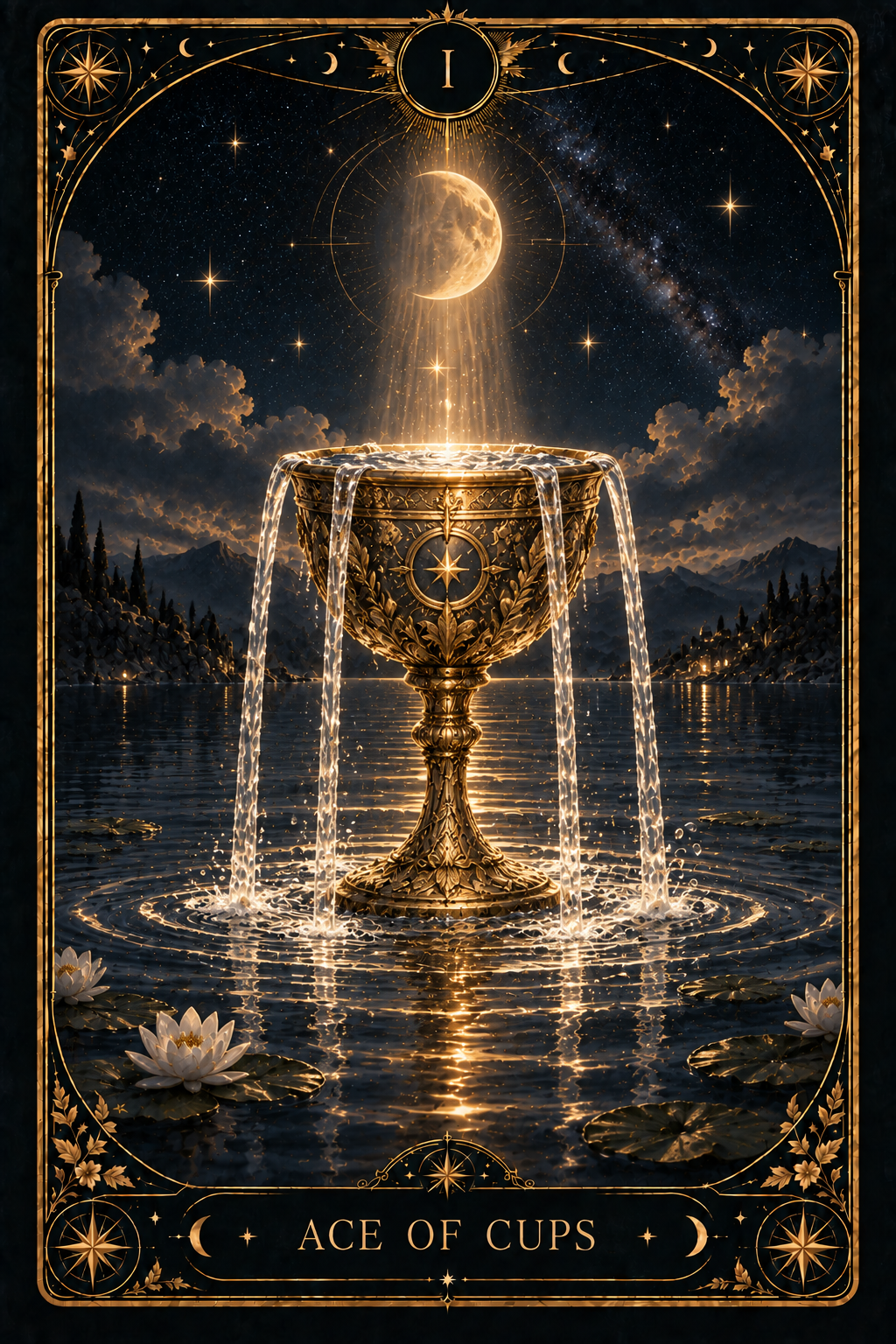
Upright: Emotional opening, affection, connection, new feelings.
Reversed: Blocked emotion, feelings kept inside, difficulty receiving love.
Two of Cups
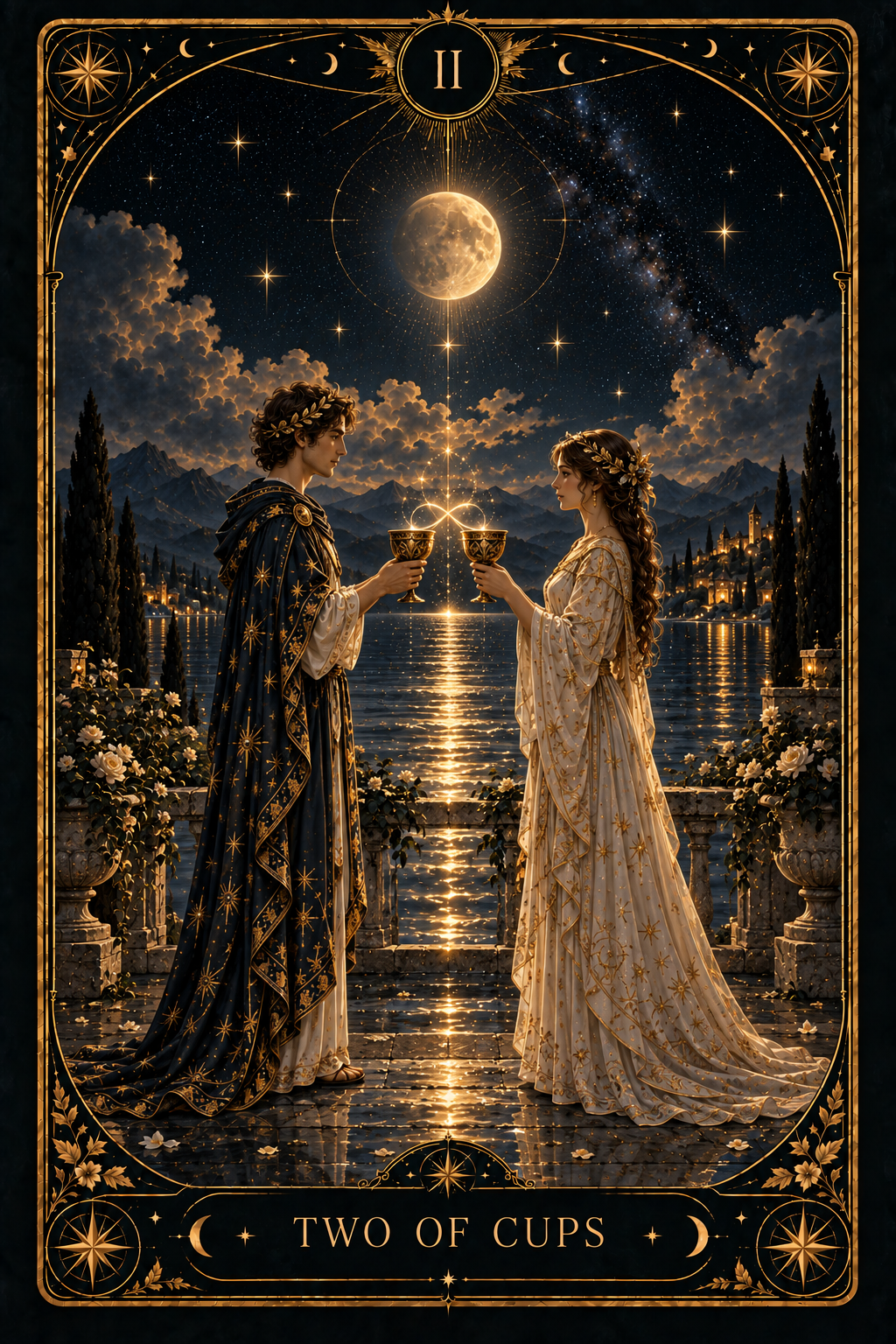
Upright: Mutual connection, partnership, attraction, reciprocity.
Reversed: Imbalance, disconnection, mismatched expectations.
Three of Cups
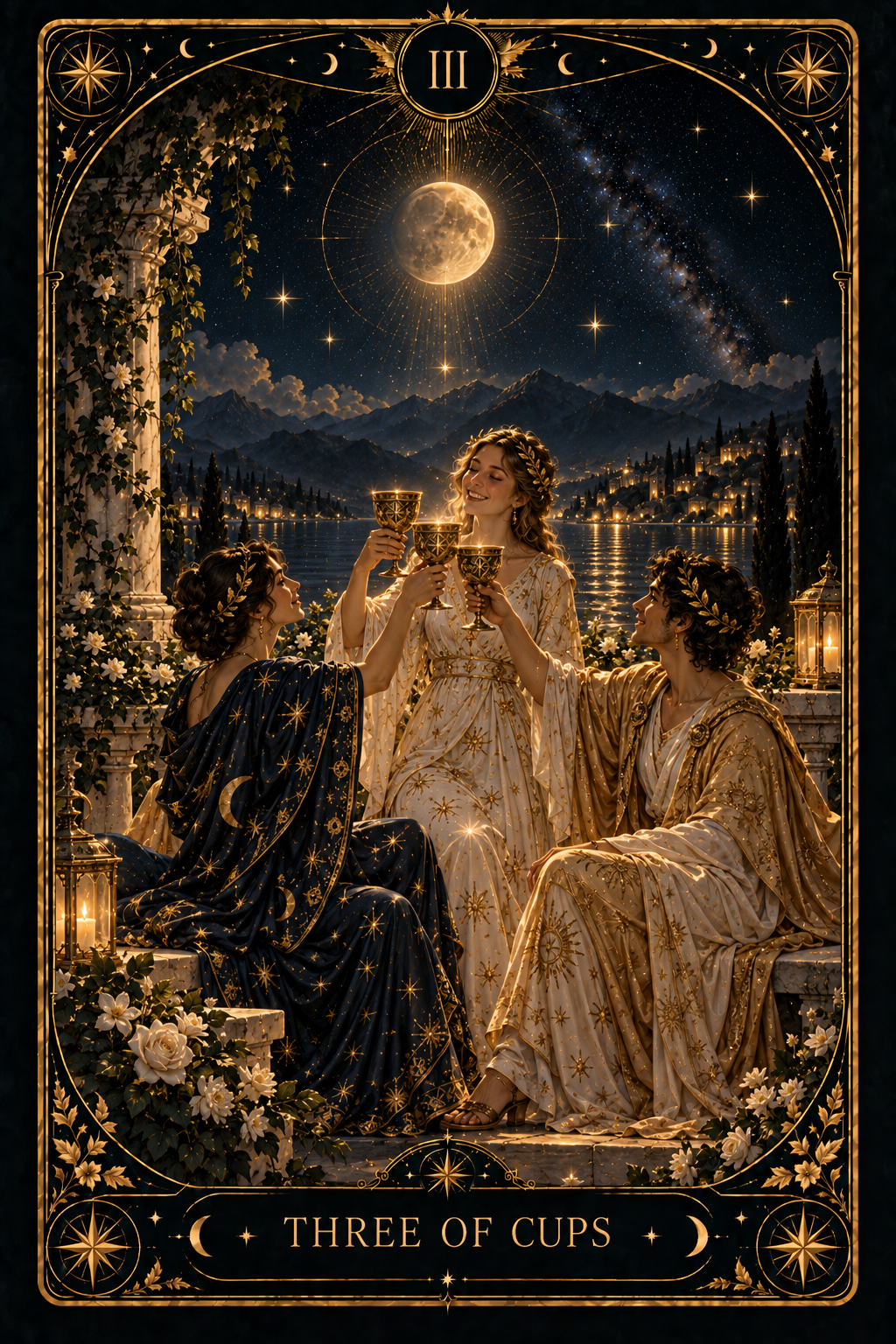
Upright: Friendship, celebration, community, shared enjoyment.
Reversed: Social tension, exclusion, complicated group dynamics.
Four of Cups
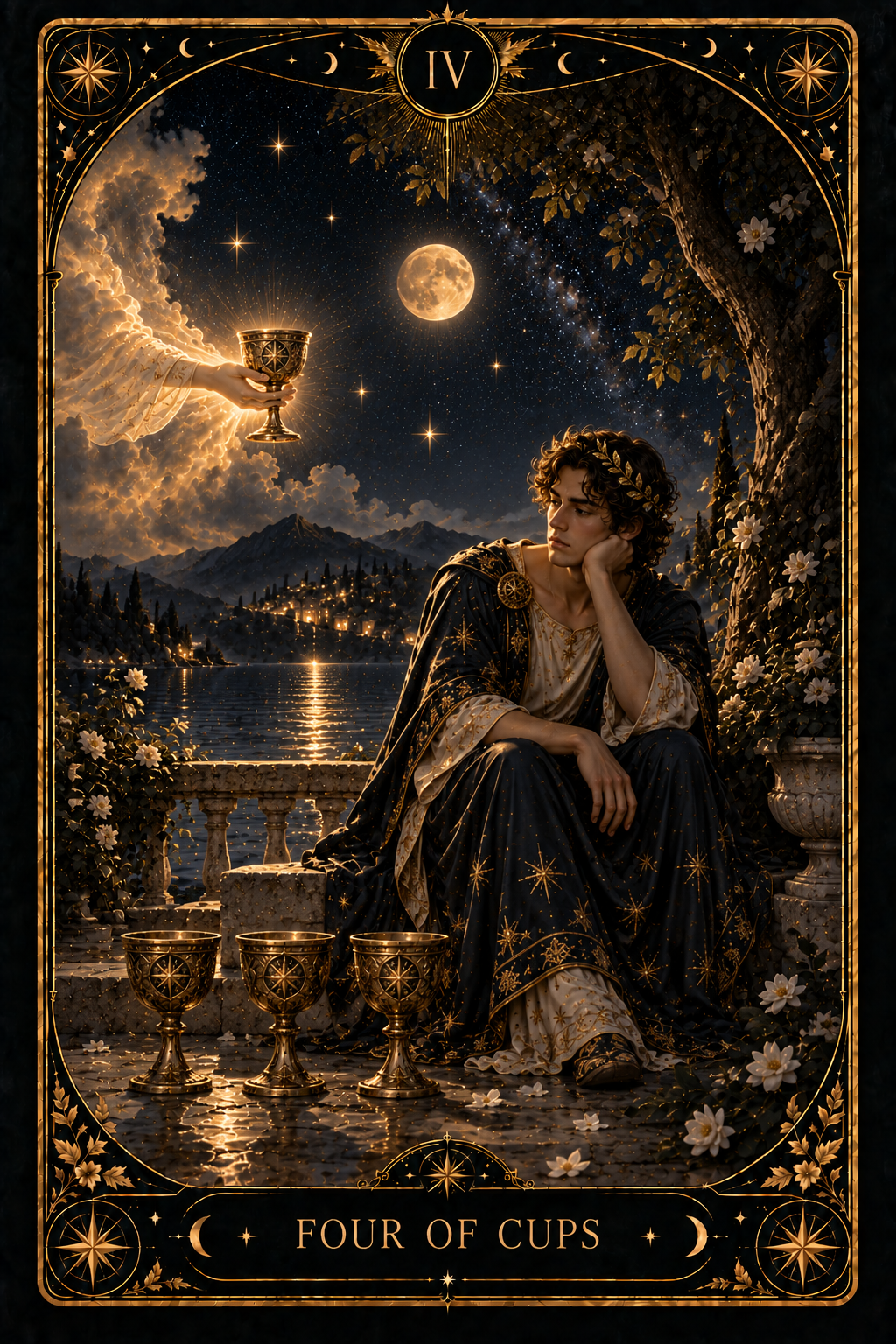
Upright: Disinterest, contemplation, emotional withdrawal, overlooked opportunity.
Reversed: Renewed interest, emerging from withdrawal, noticing an opportunity.
Five of Cups
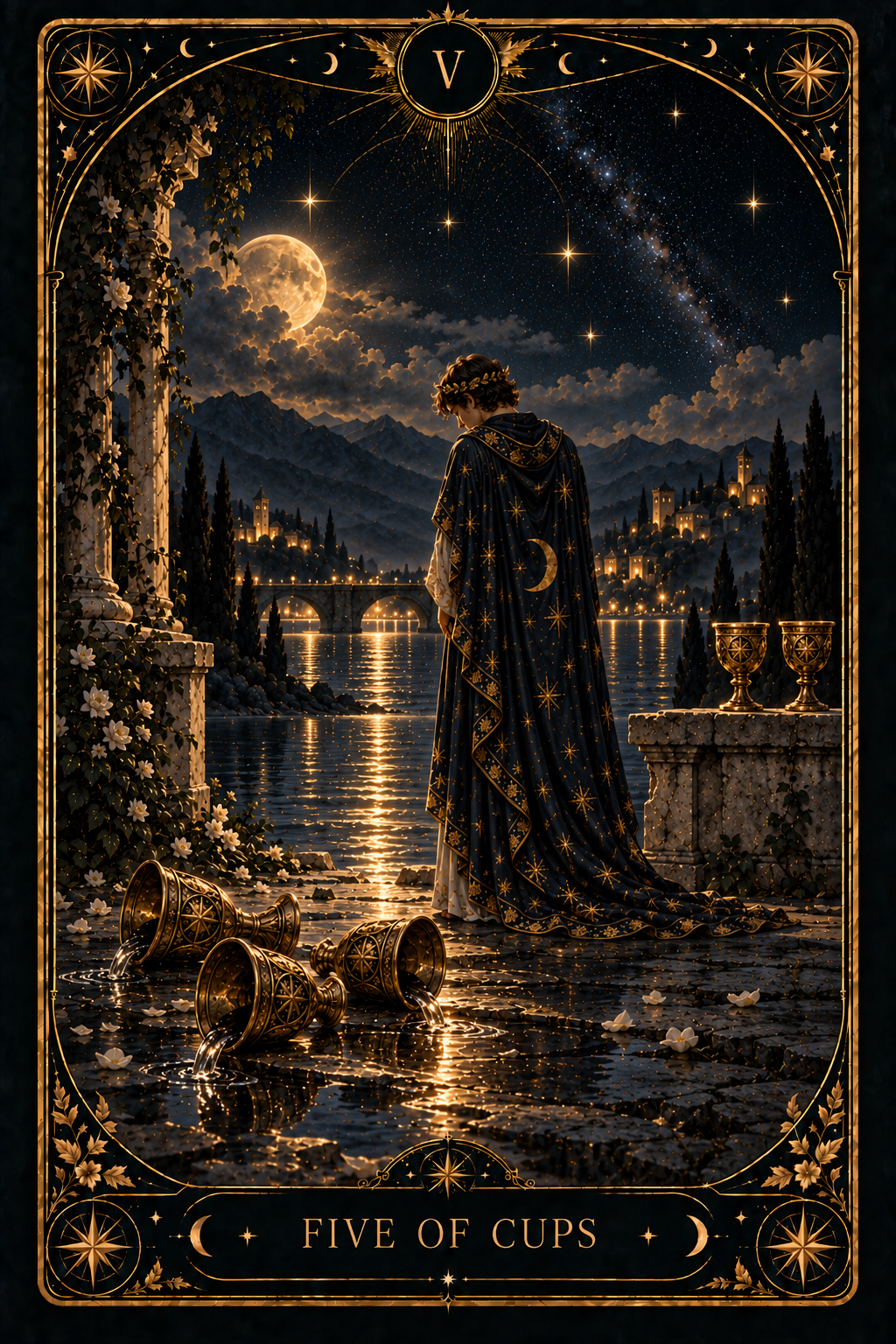
Upright: Grief, disappointment, focusing on loss.
Reversed: Acceptance, recovery, beginning to move forward.
Six of Cups
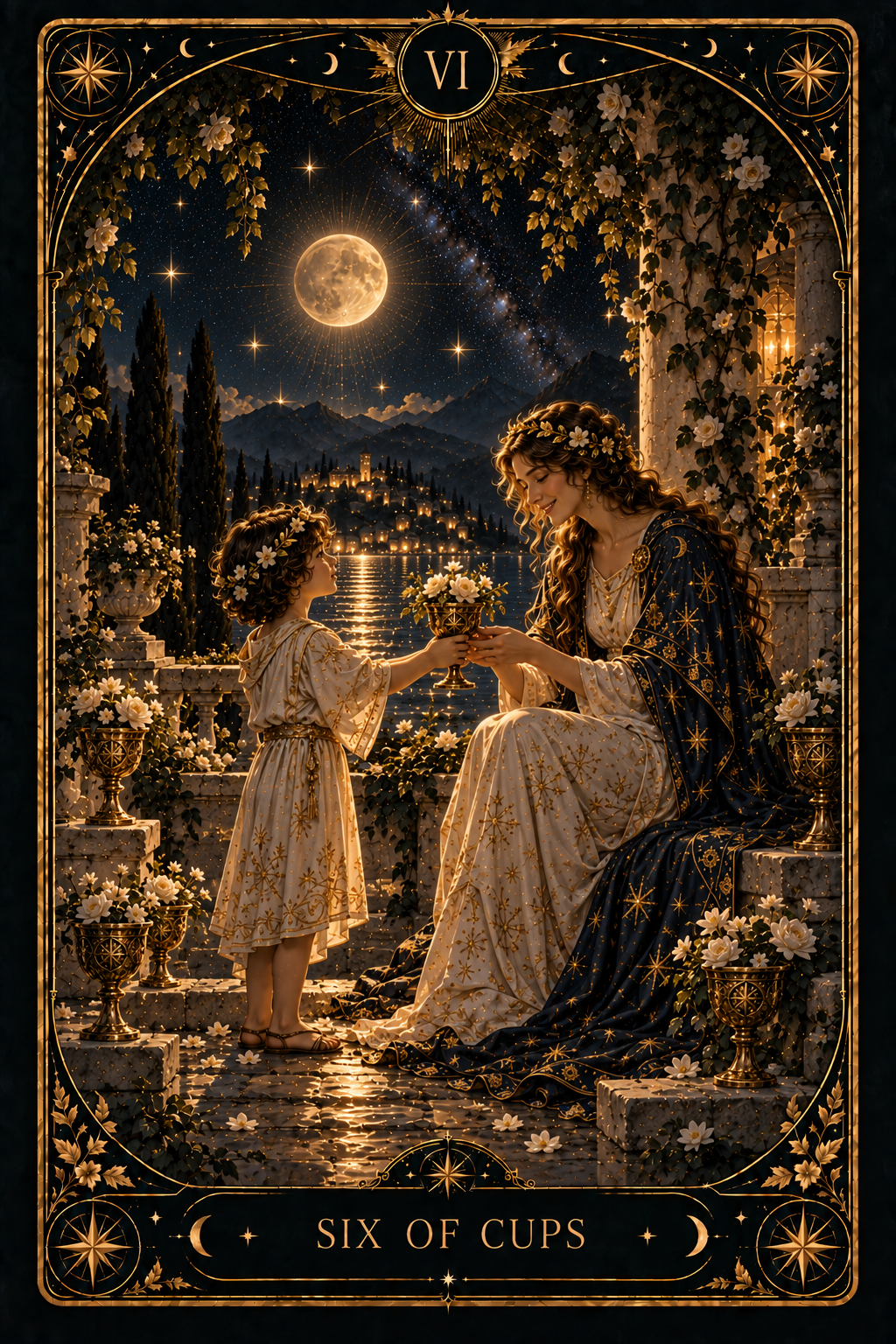
Upright: Nostalgia, familiarity, memories, past connections.
Reversed: Difficulty leaving the past, idealization, being stuck in memory.
Seven of Cups
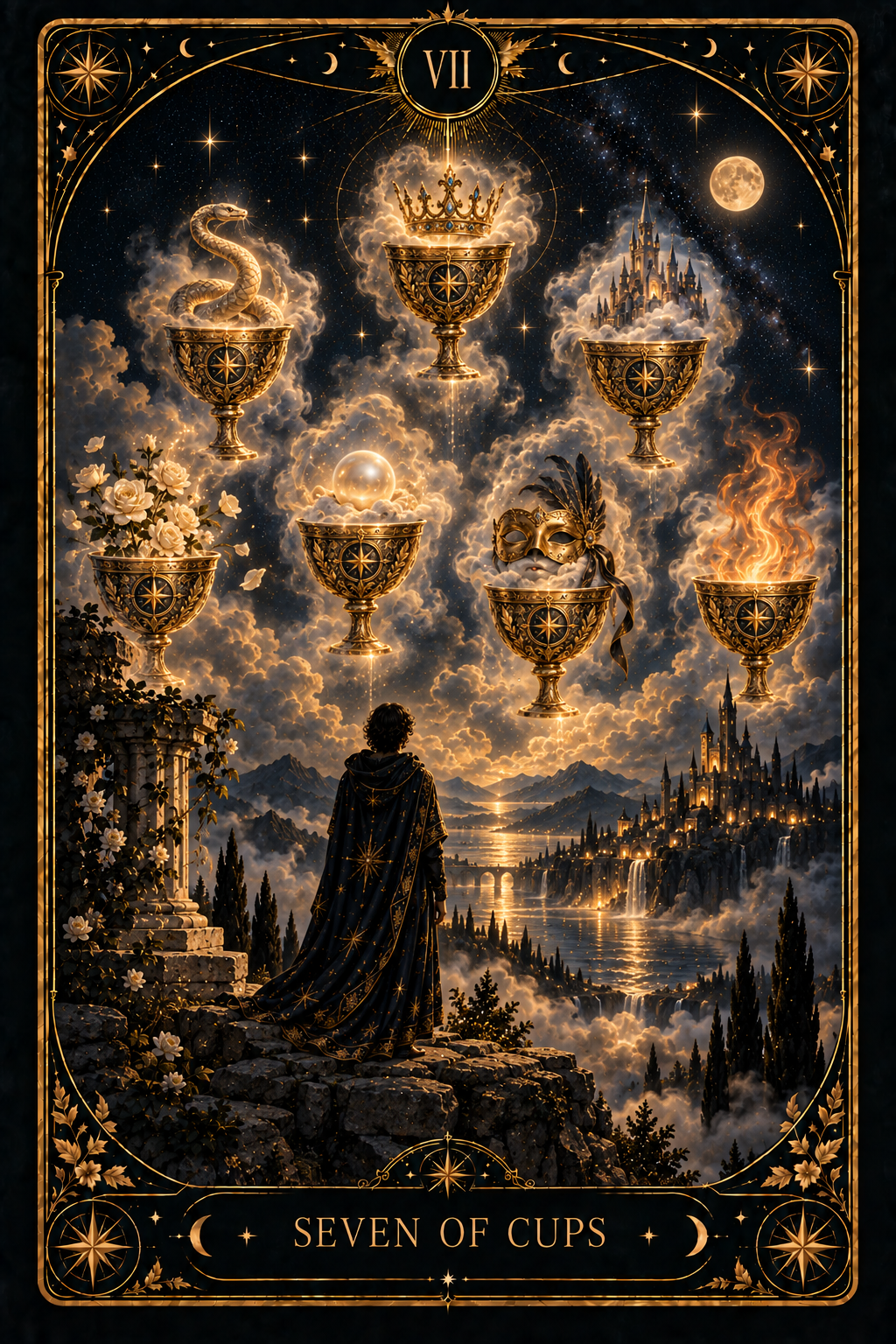
Upright: Options, fantasy, imagination, confusion between possibilities.
Reversed: Narrowing choices, gaining clarity, leaving fantasy behind.
Eight of Cups
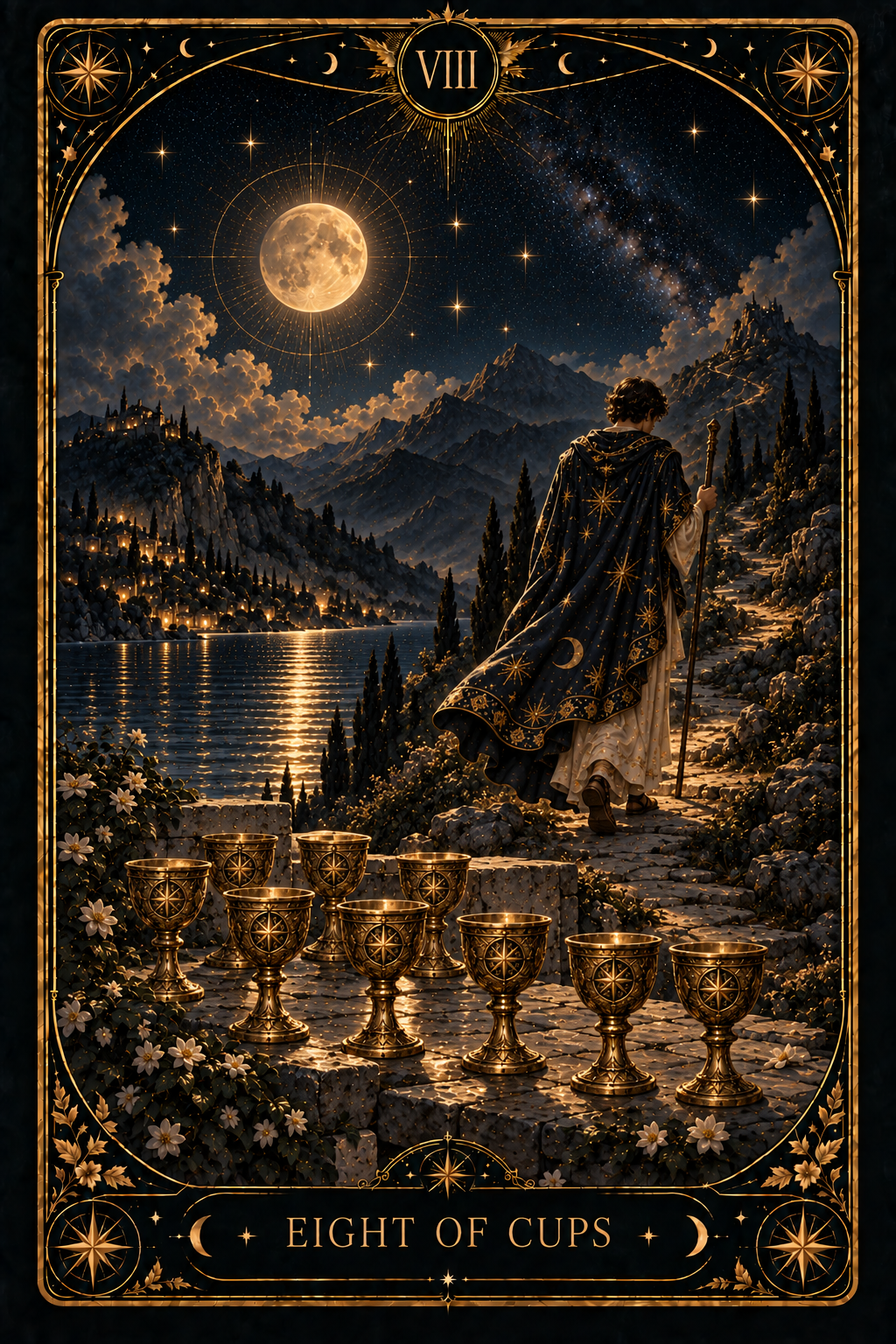
Upright: Walking away, emotional withdrawal, searching for greater meaning.
Reversed: Difficulty leaving, returning, fear of moving on.
Nine of Cups
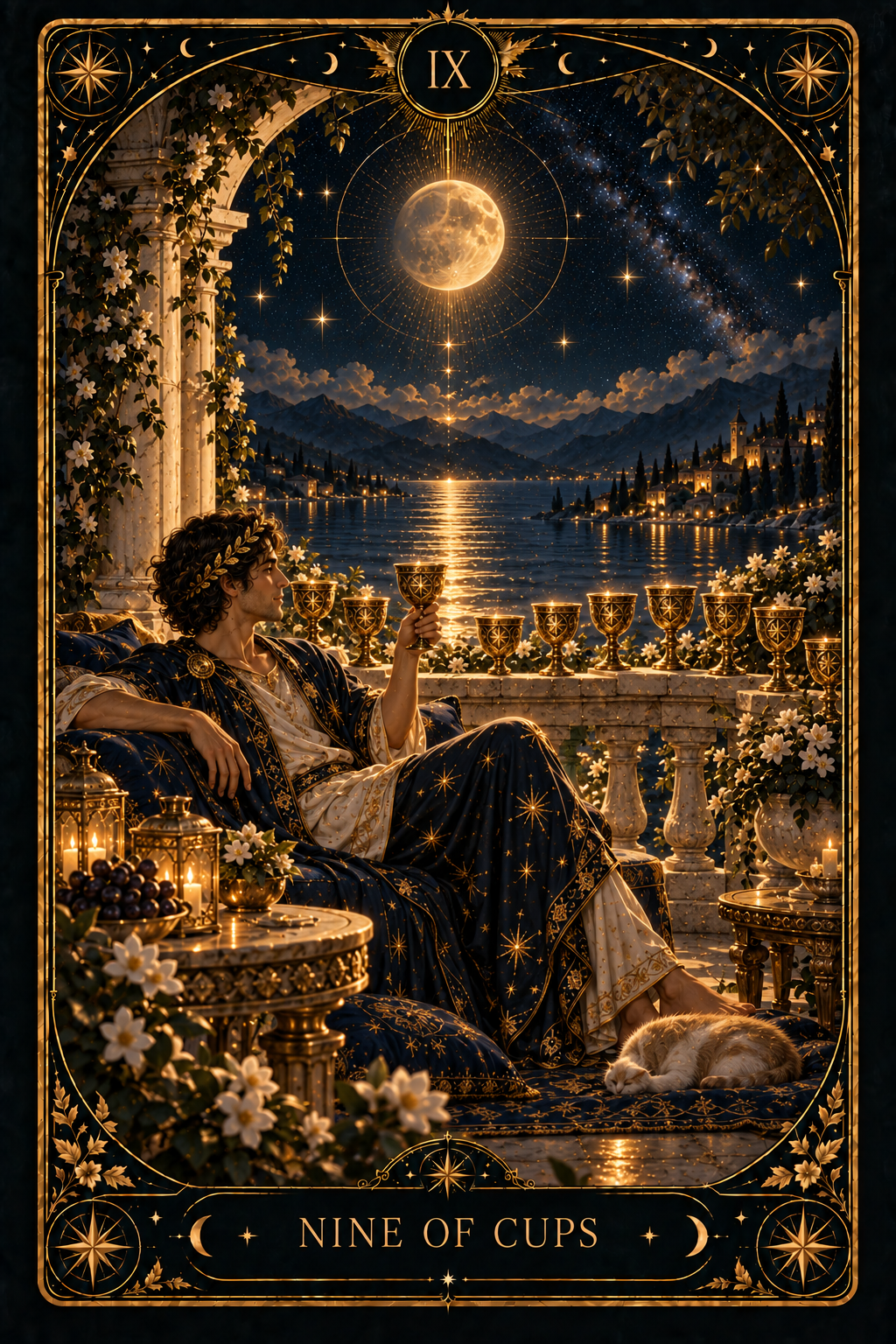
Upright: Satisfaction, enjoyment, wish fulfillment, emotional comfort.
Reversed: Dissatisfaction, excess, emotional emptiness despite getting what you wanted.
Ten of Cups
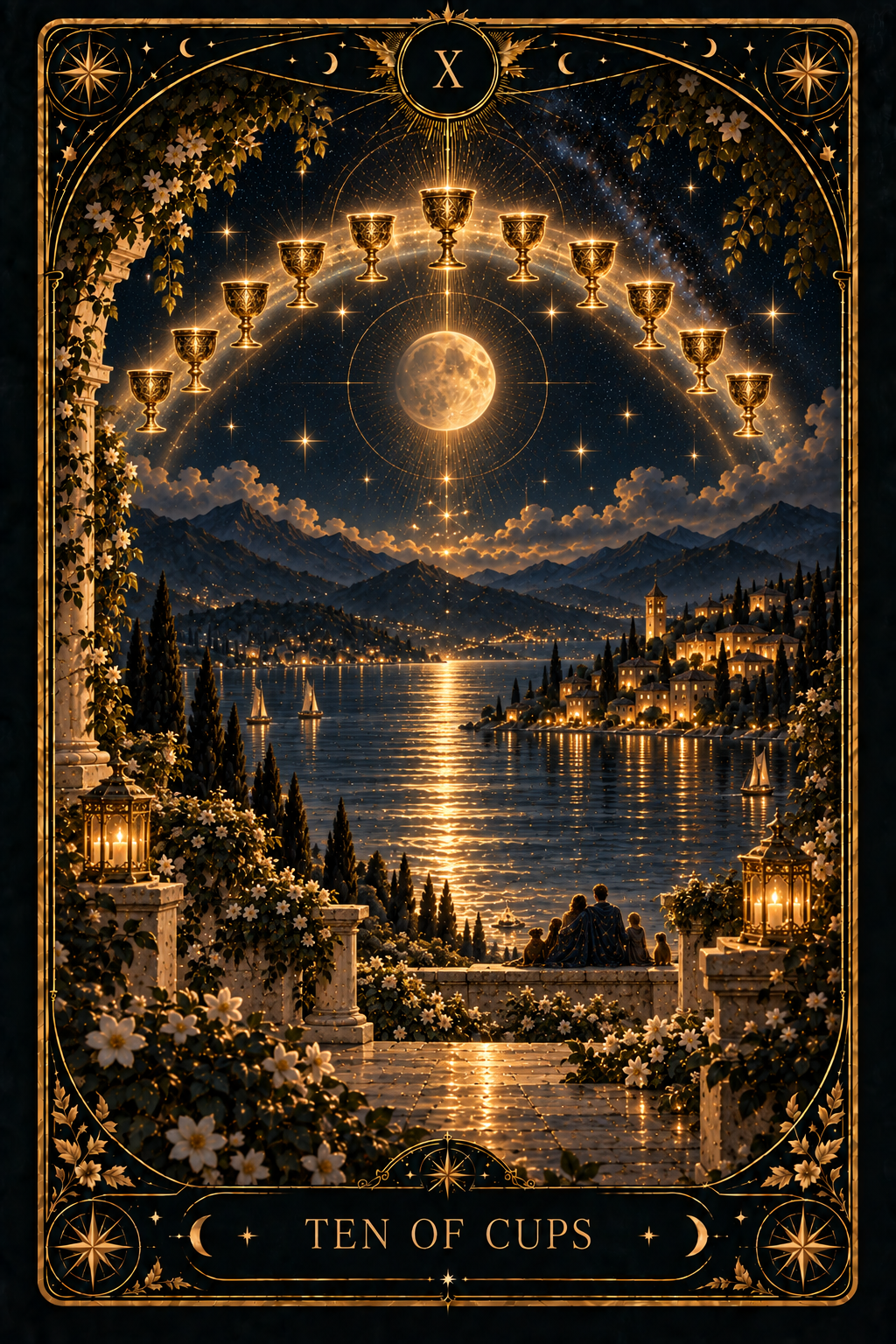
Upright: Emotional harmony, belonging, family connection, shared happiness.
Reversed: Family tension, misaligned expectations, disrupted harmony.
Page of Cups
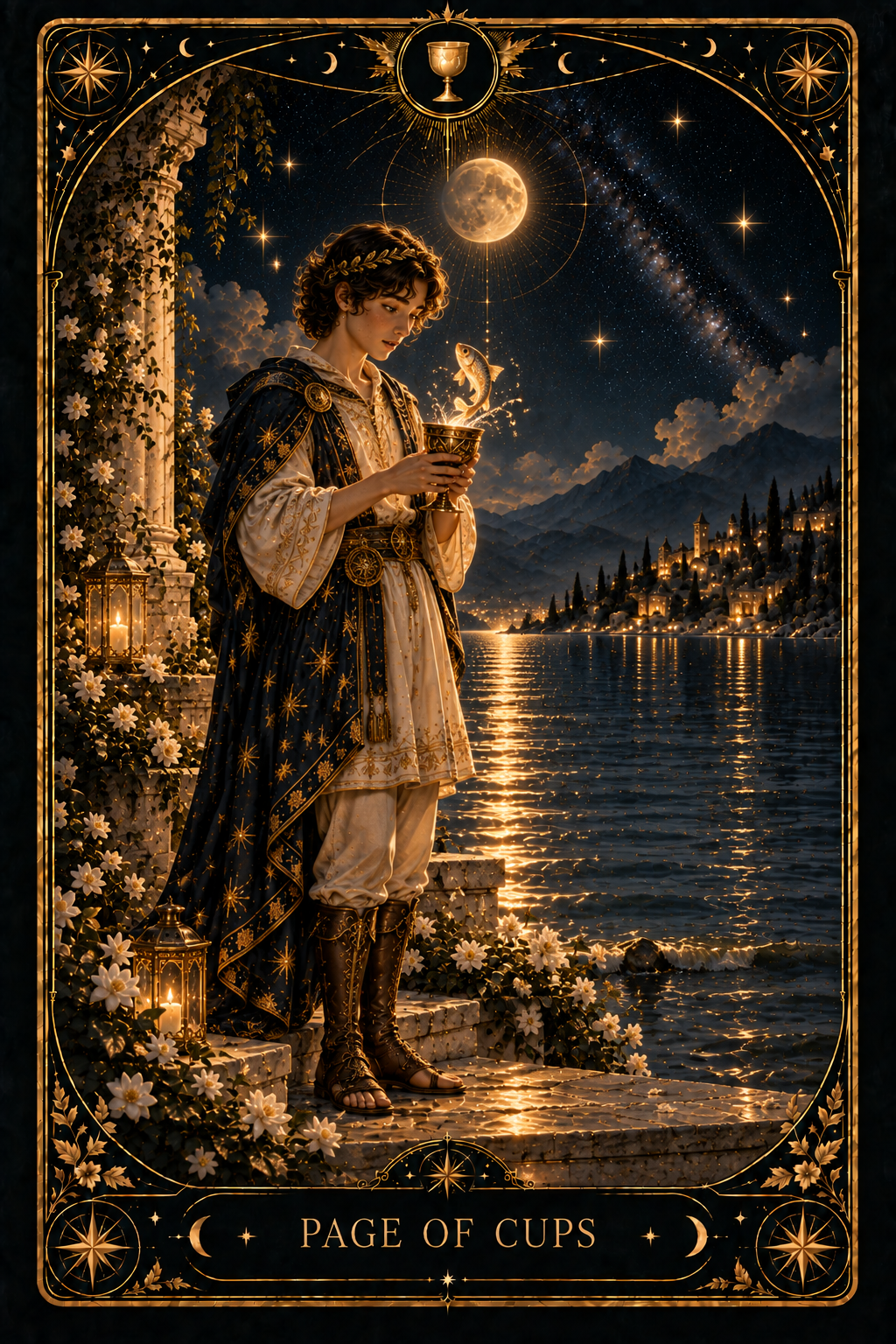
Upright: Emotional curiosity, sensitivity, message, new feeling.
Reversed: Emotional immaturity, blocked expression, unrealistic expectations.
Knight of Cups
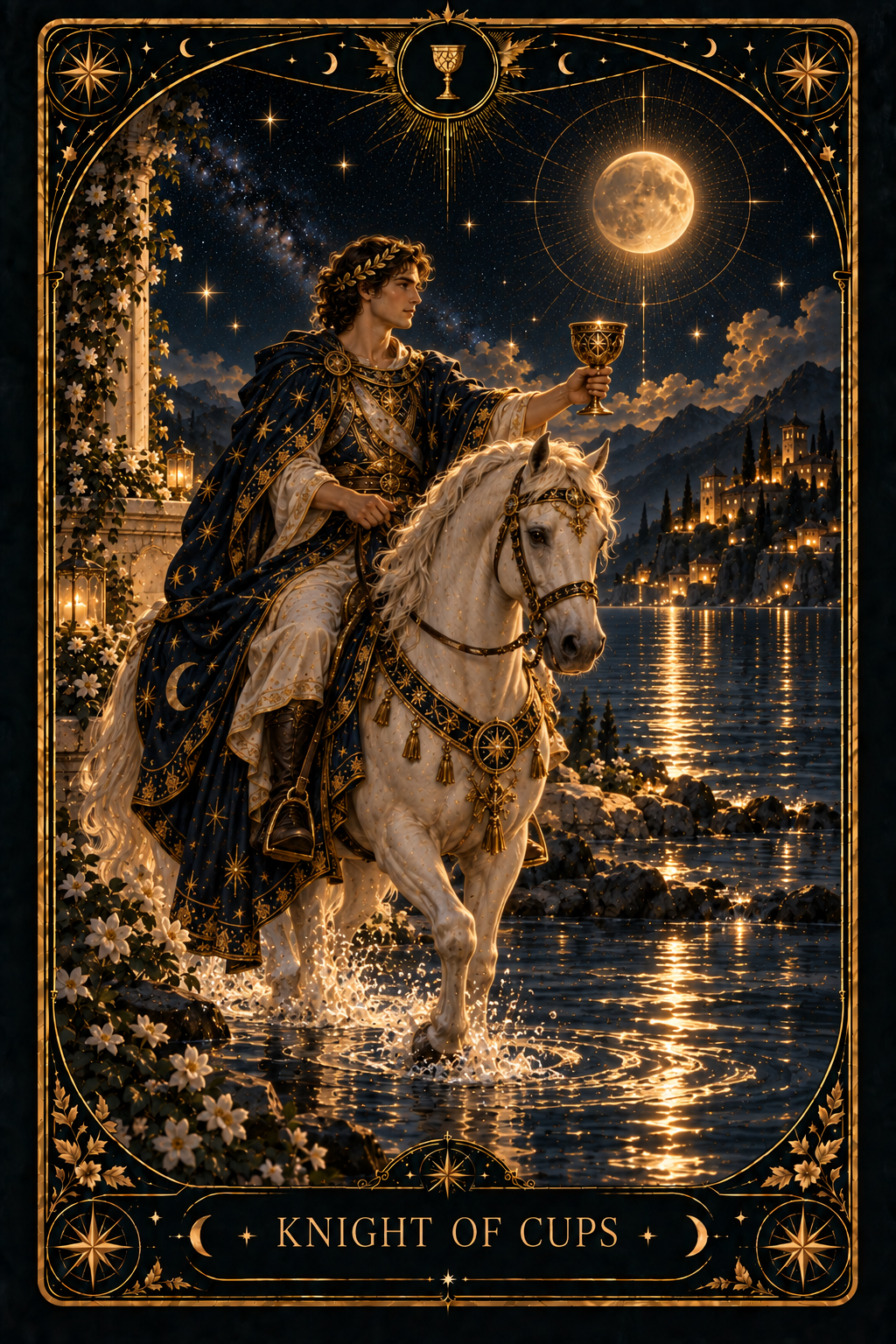
Upright: Romantic approach, invitation, emotional pursuit, charm.
Reversed: Idealization, inconsistency, emotional promises without follow-through.
Queen of Cups
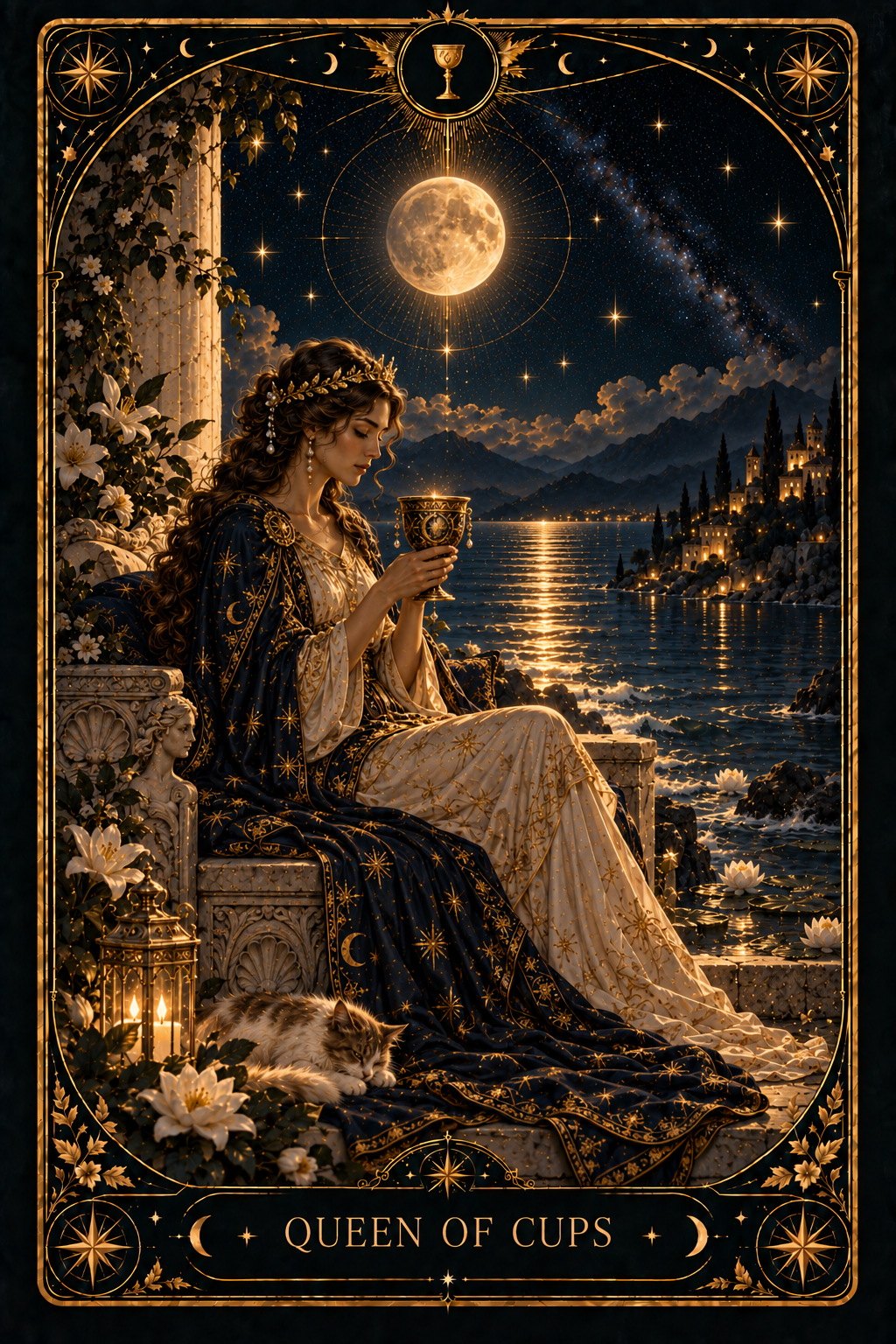
Upright: Empathy, intuition, emotional depth, compassionate understanding.
Reversed: Emotional overwhelm, poor boundaries, absorbing too much from others.
King of Cups
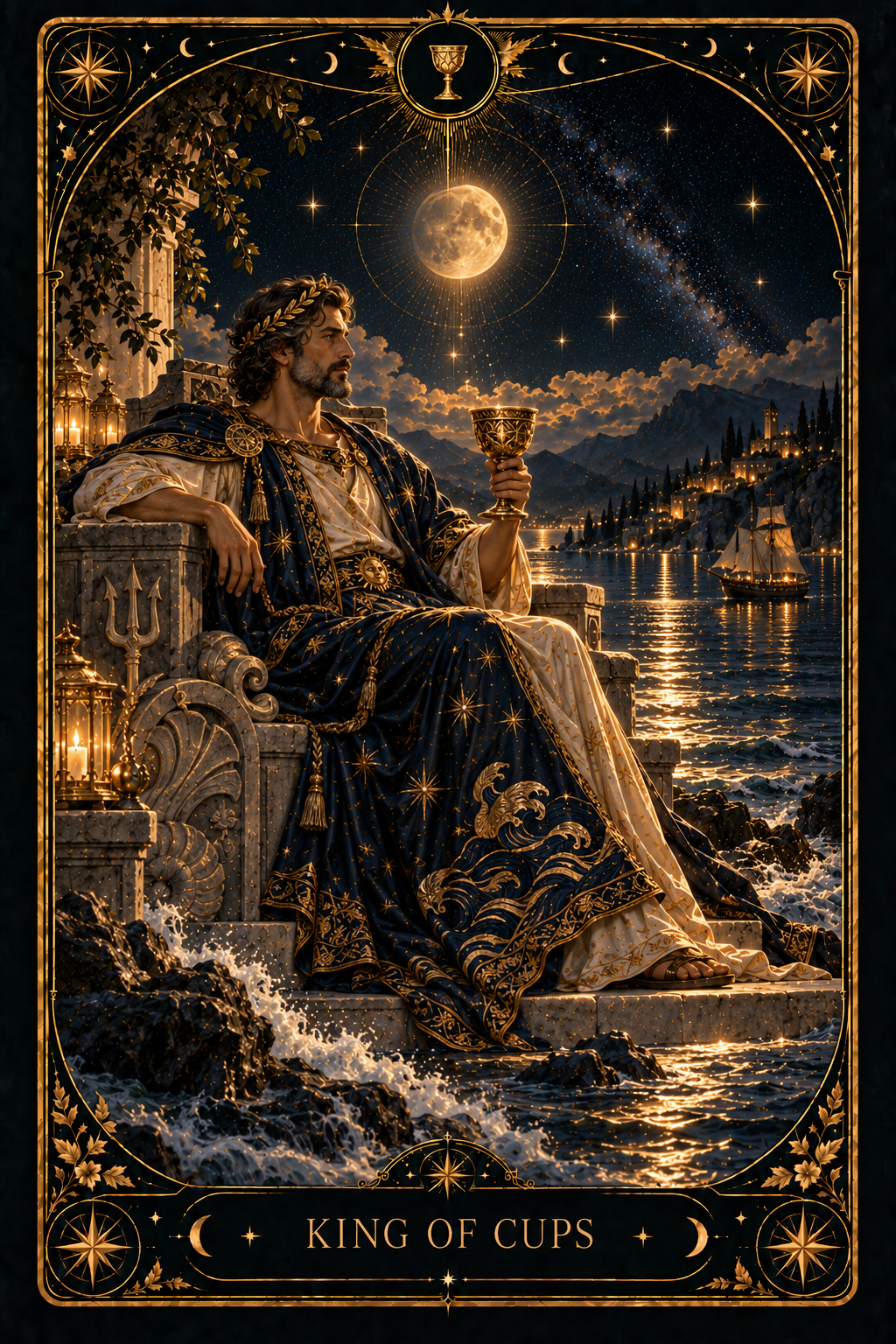
Upright: Emotional maturity, calm, compassion, balanced feeling.
Reversed: Emotional suppression, manipulation, difficulty regulating emotion.
Suit of Swords Tarot Card Meanings
Swords are associated with thought, truth, communication, decisions, conflict, and mental pressure.
Ace of Swords
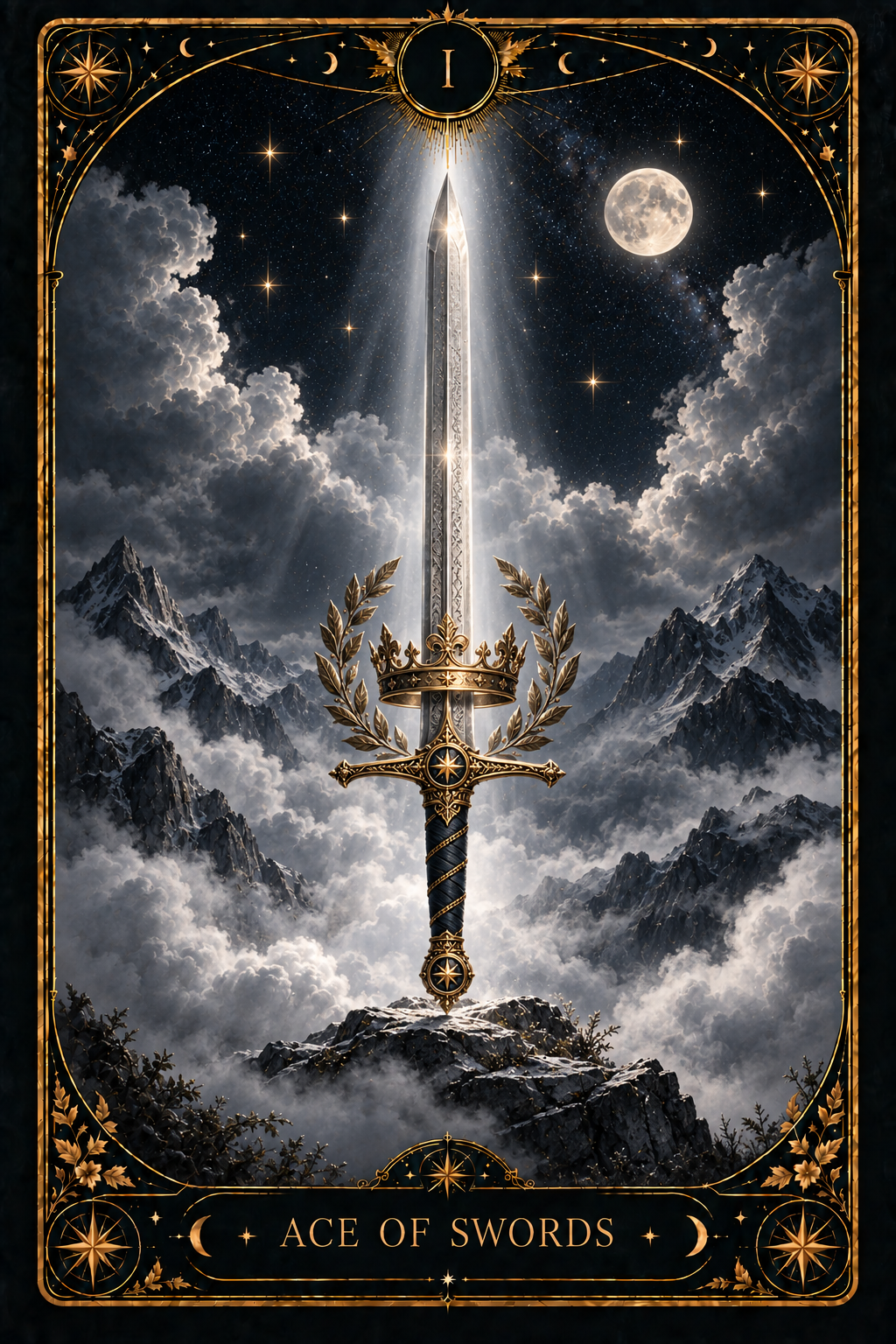
Upright: Clarity, truth, breakthrough, decisive thought.
Reversed: Confusion, poor communication, incomplete information.
Two of Swords
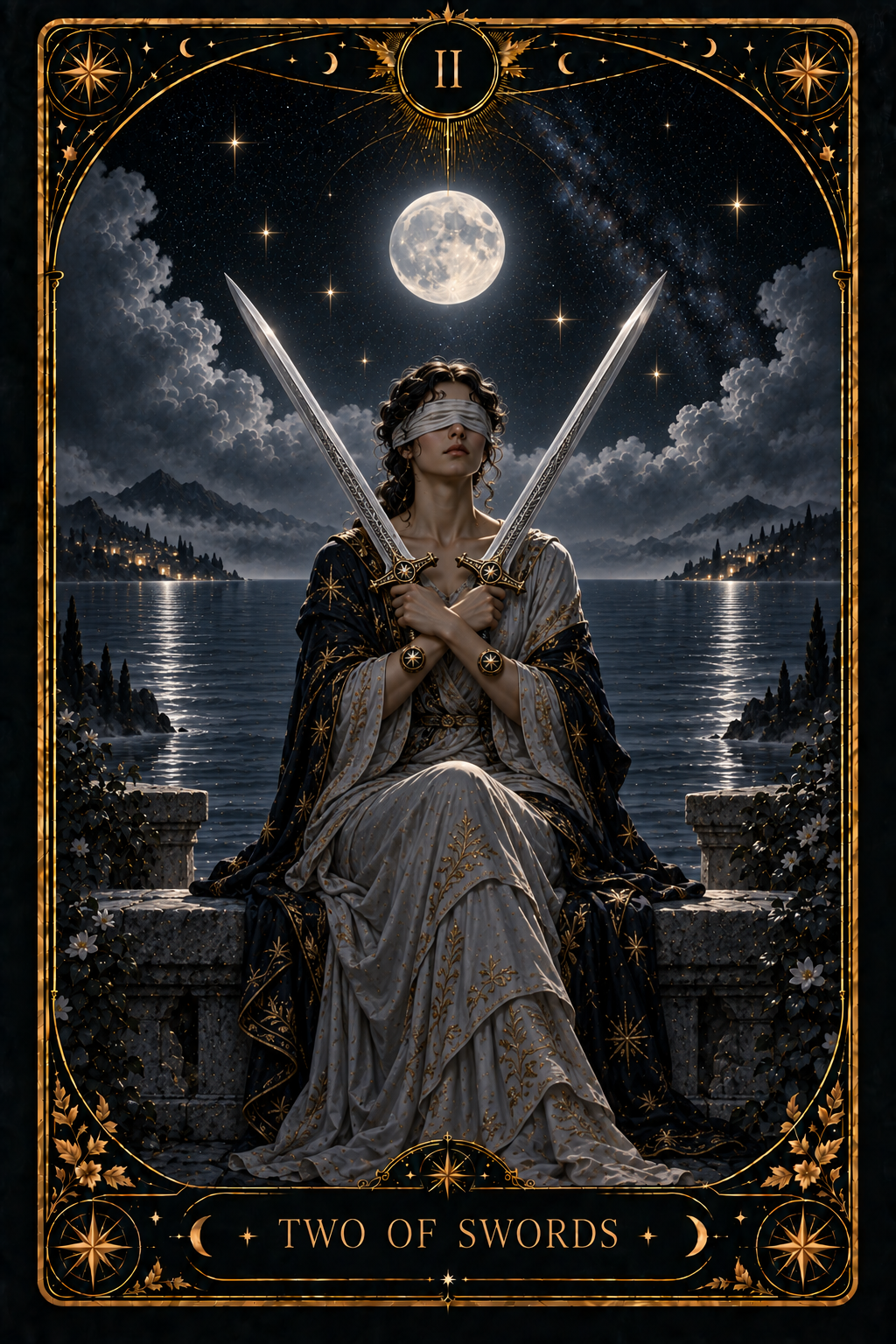
Upright: Indecision, avoidance, being caught between options.
Reversed: Decision pressure, emerging information, inability to avoid the issue.
Three of Swords
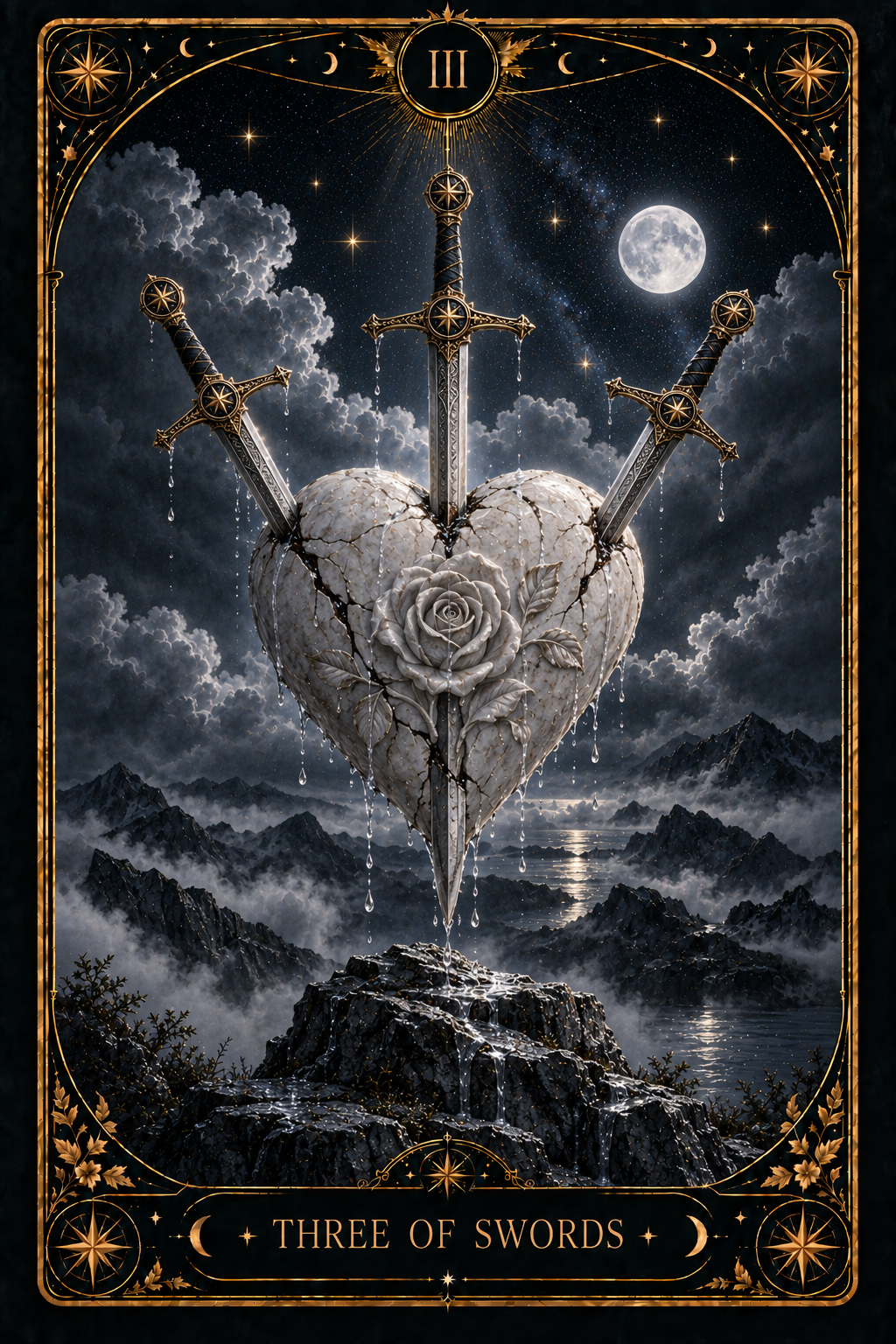
Upright: Heartbreak, painful truth, disappointment, separation.
Reversed: Healing, processing pain, difficulty releasing hurt.
Four of Swords
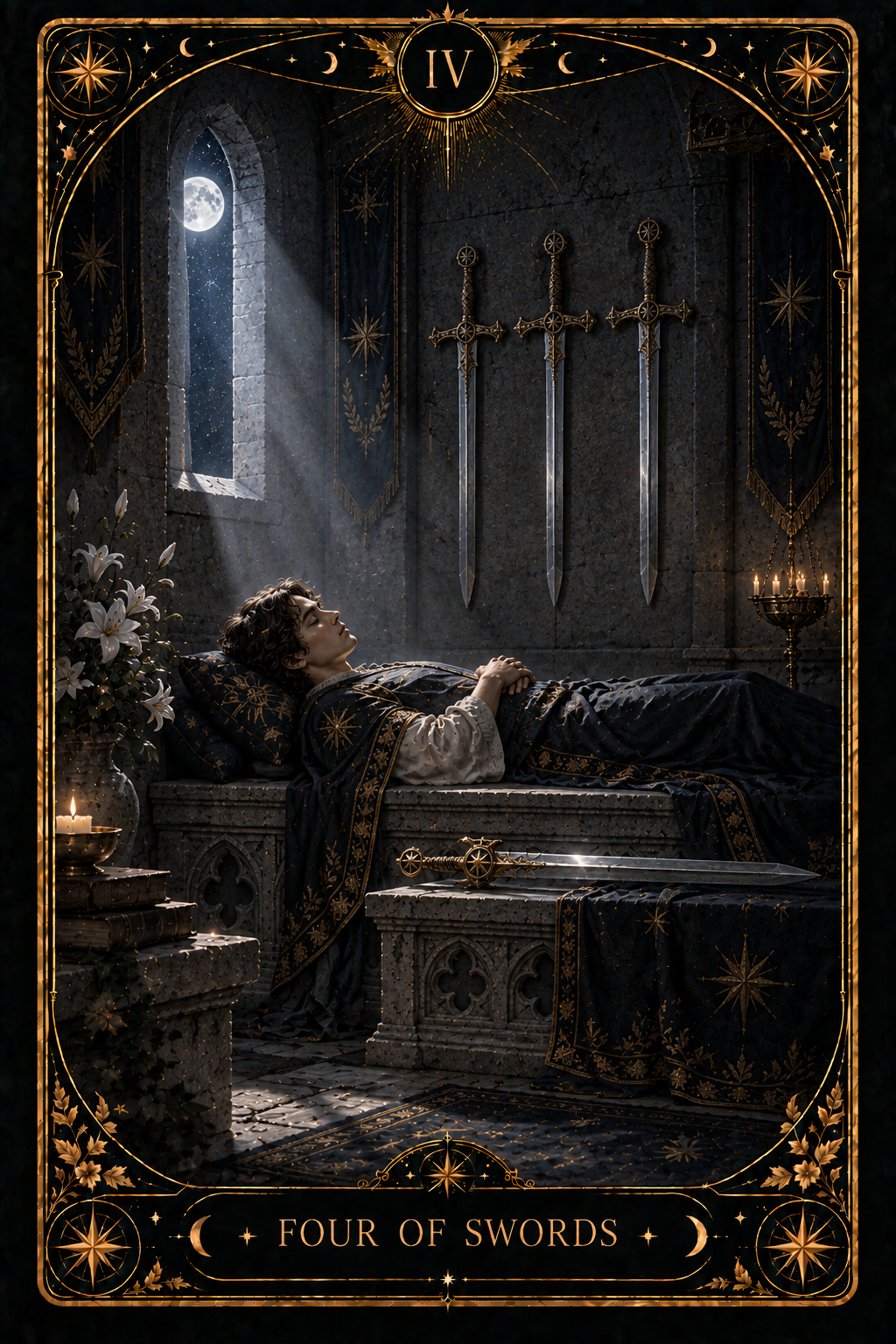
Upright: Rest, pause, recovery, stepping back.
Reversed: Restlessness, returning too soon, prolonged exhaustion.
Five of Swords
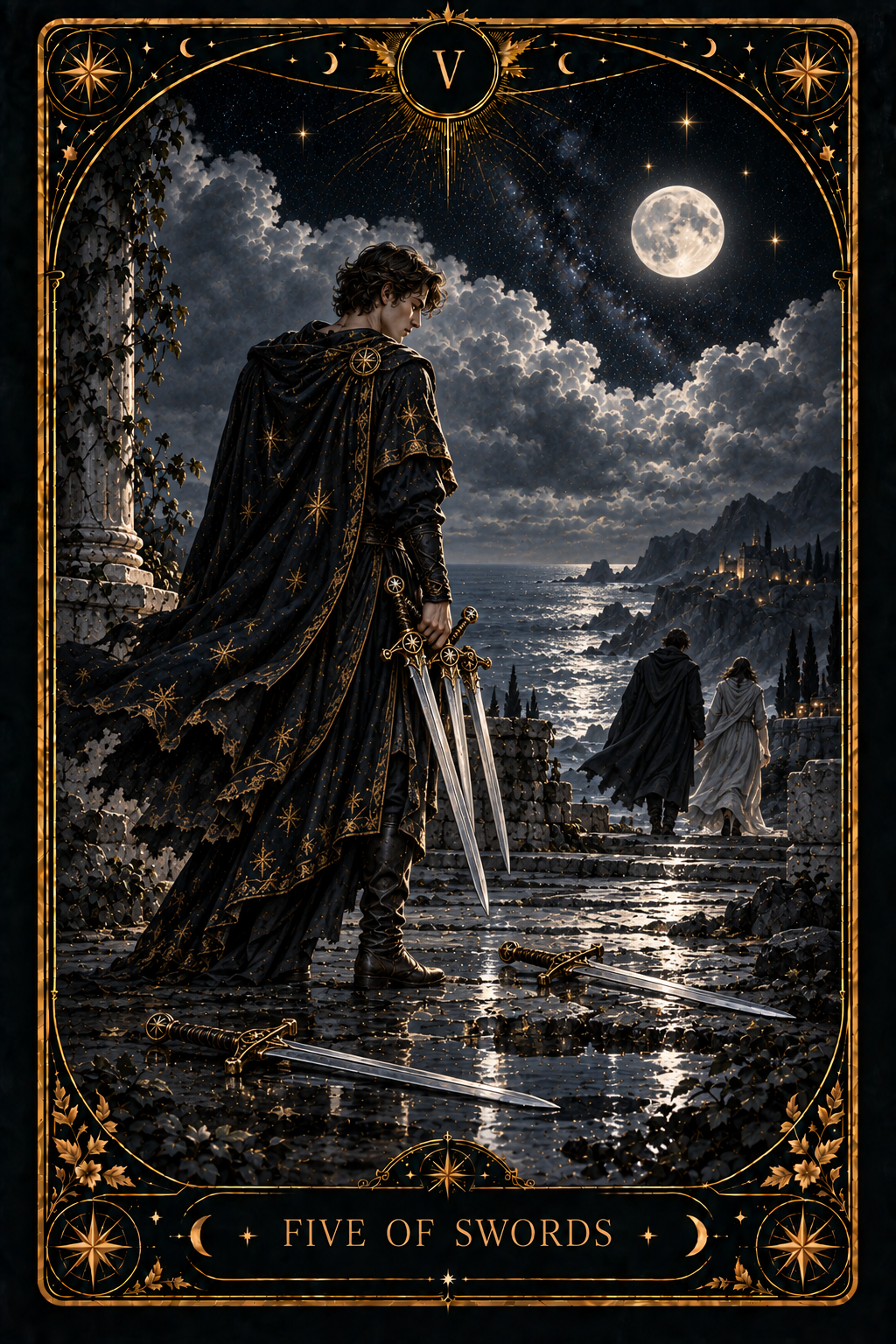
Upright: Conflict, winning at a cost, hostility, damaged trust.
Reversed: Reconciliation attempts, lingering resentment, leaving conflict.
Six of Swords
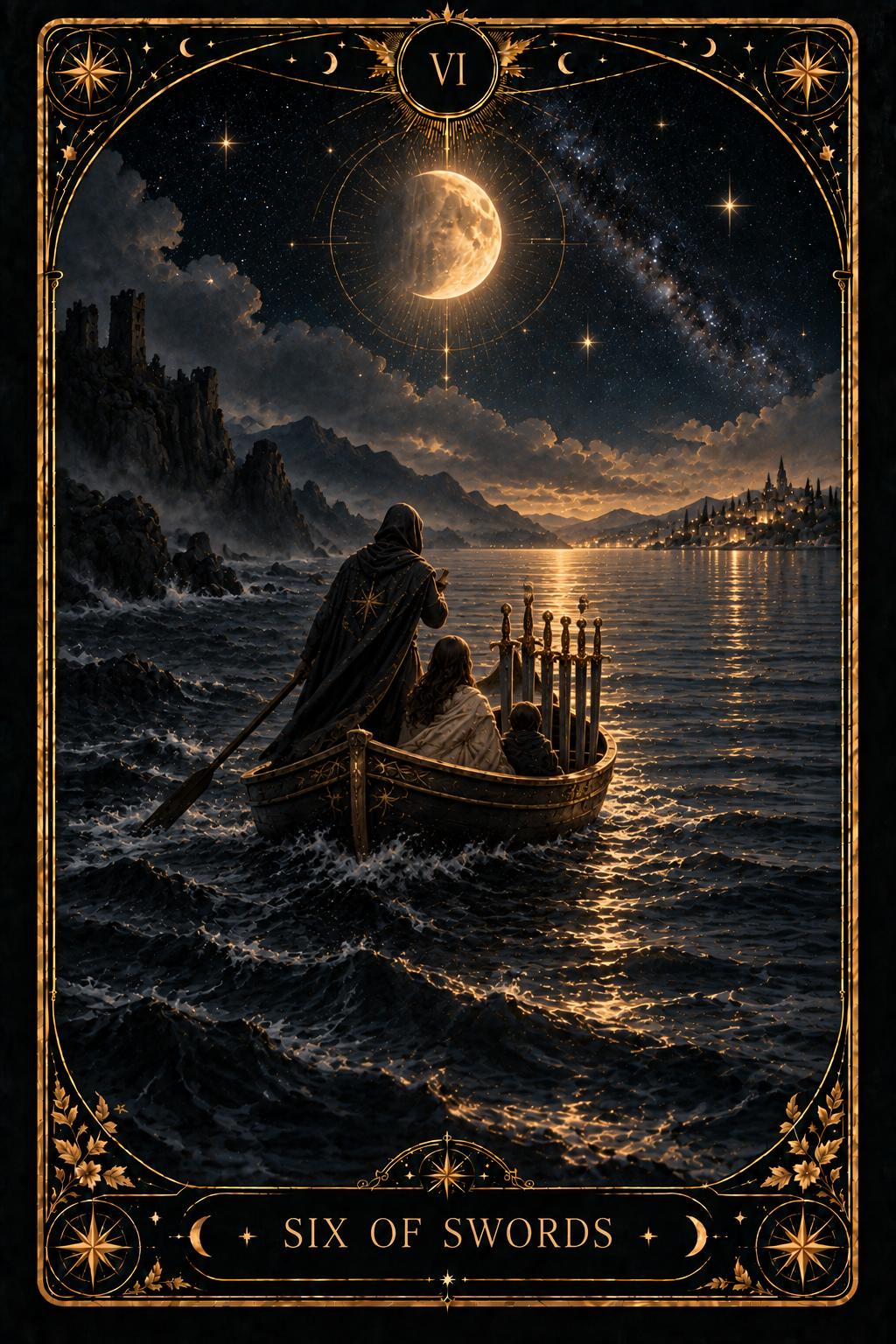
Upright: Transition, moving away from difficulty, gradual improvement.
Reversed: Difficulty moving on, unresolved baggage, delayed transition.
Seven of Swords
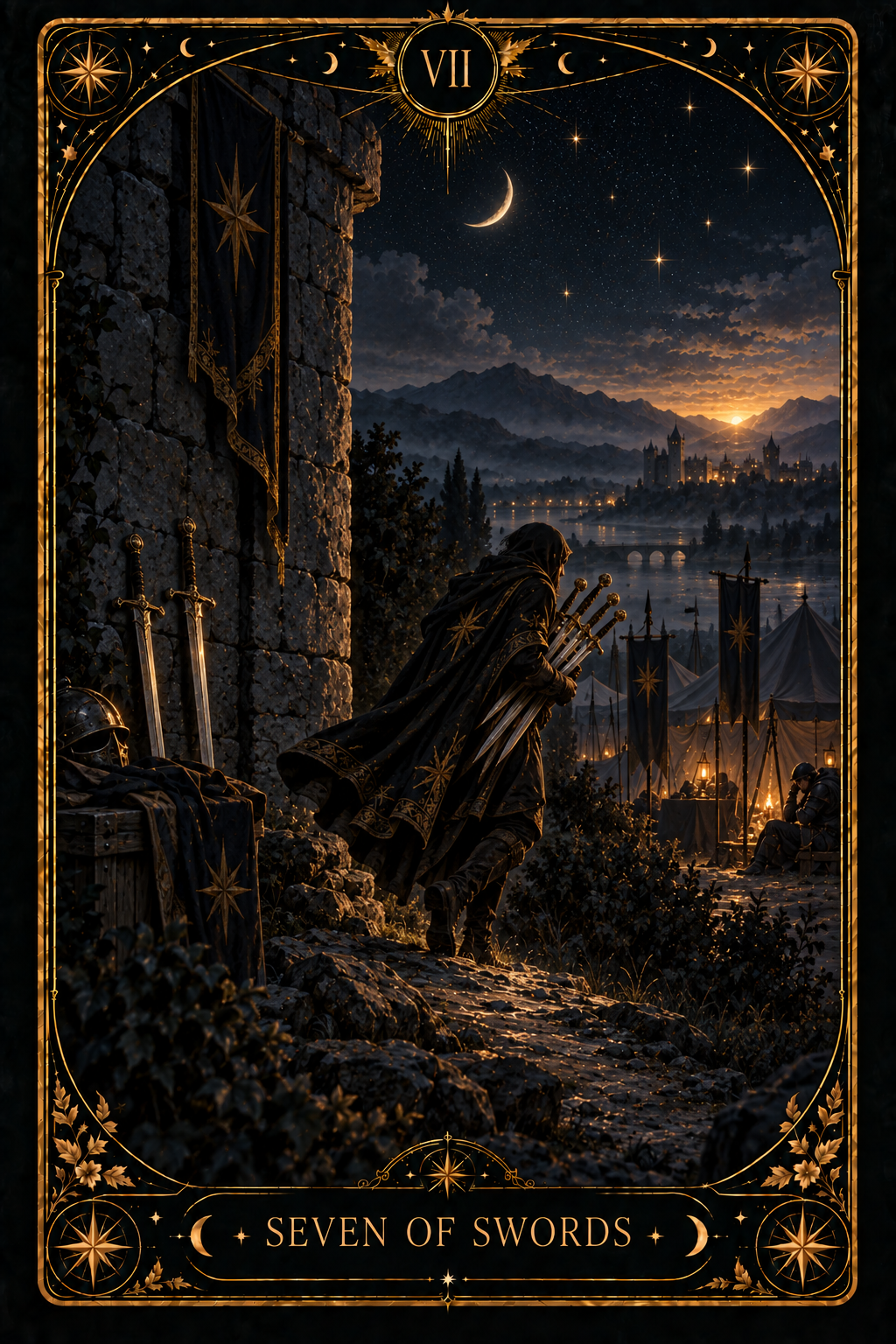
Upright: Strategy, secrecy, avoidance, indirect action.
Reversed: Truth emerging, confession, failed strategy, self-deception.
Eight of Swords
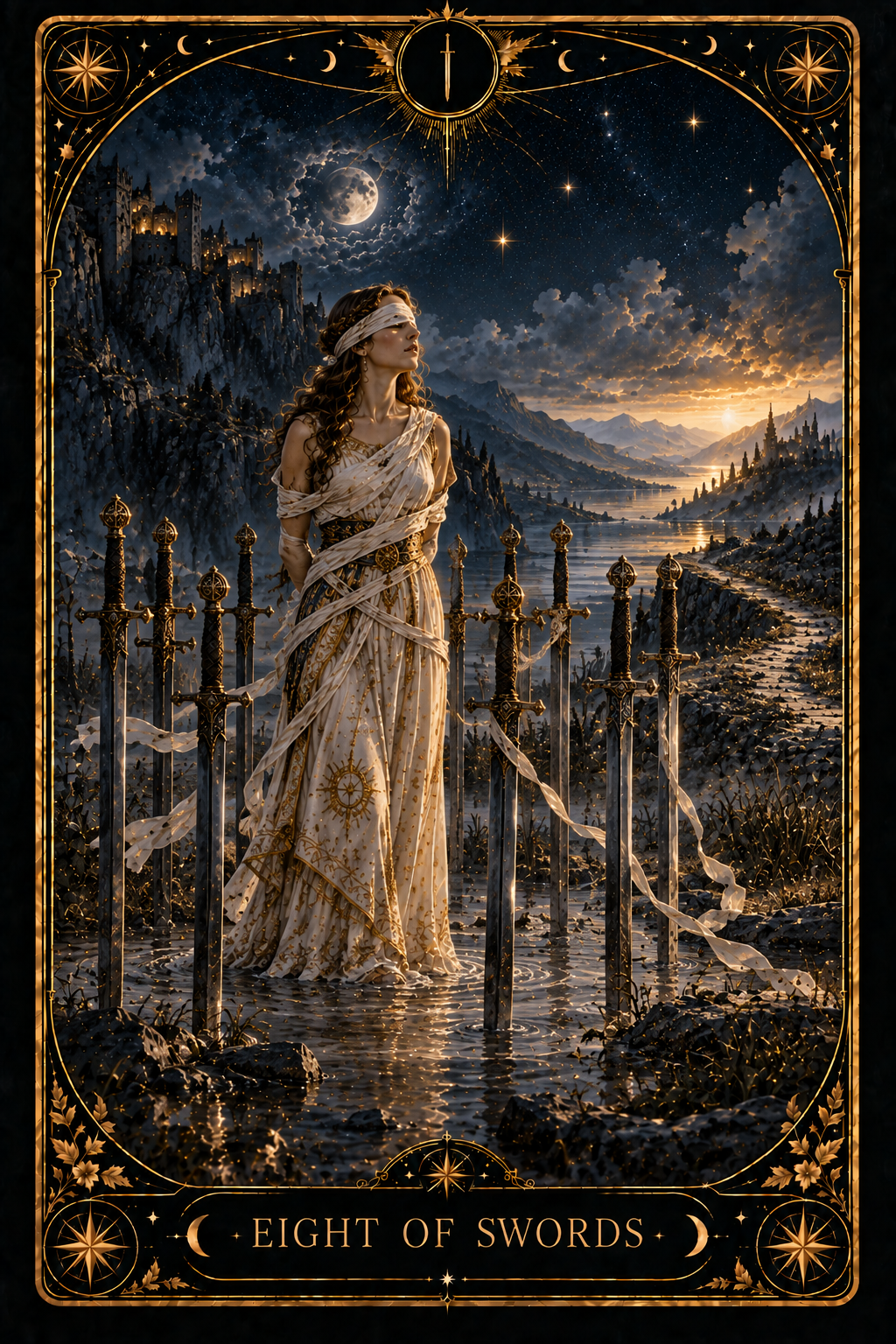
Upright: Feeling trapped, restriction, fear limiting choices.
Reversed: Recognizing options, beginning to release limitations.
Nine of Swords
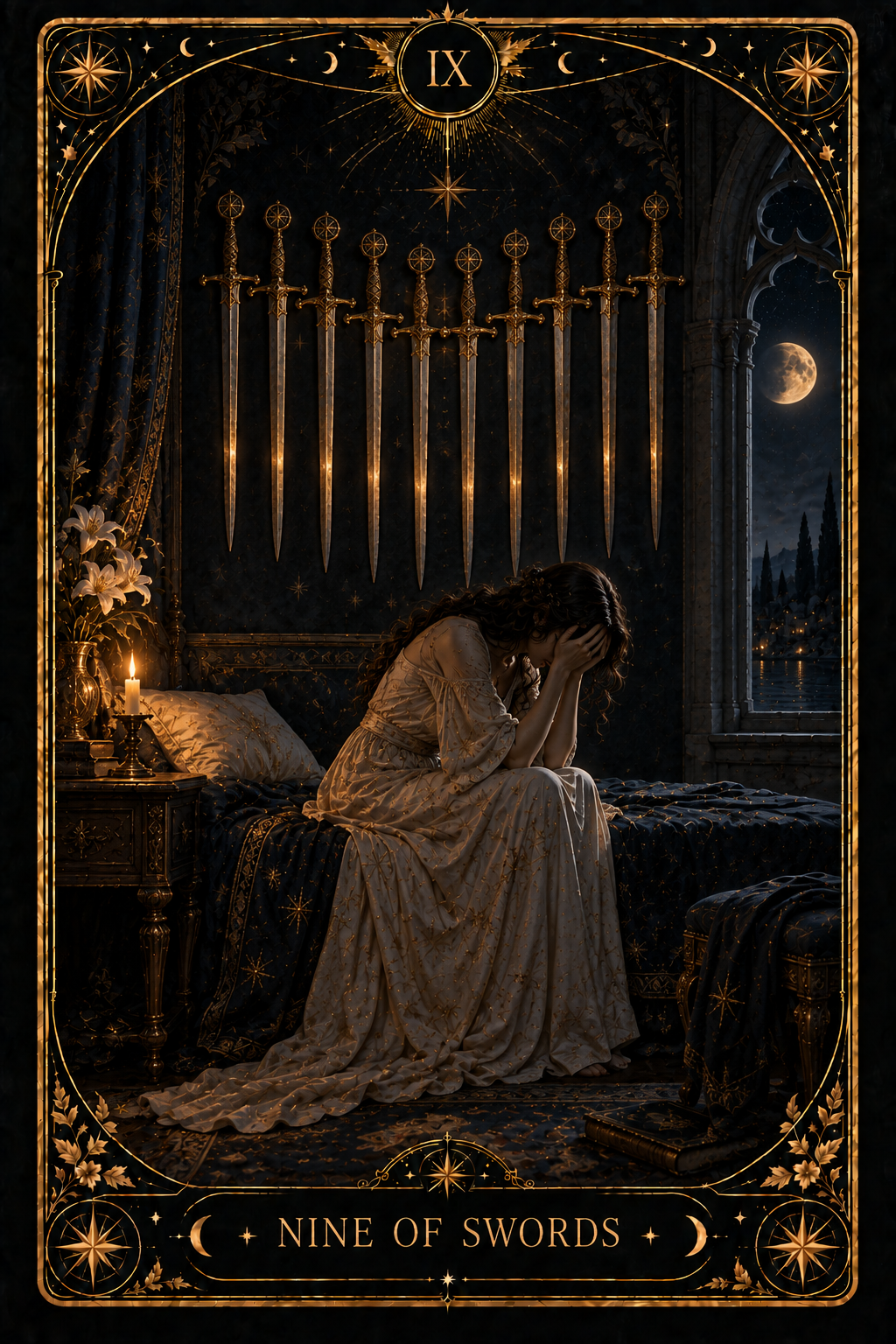
Upright: Anxiety, worry, rumination, fear.
Reversed: Anxiety easing or becoming deeply internalized.
Ten of Swords
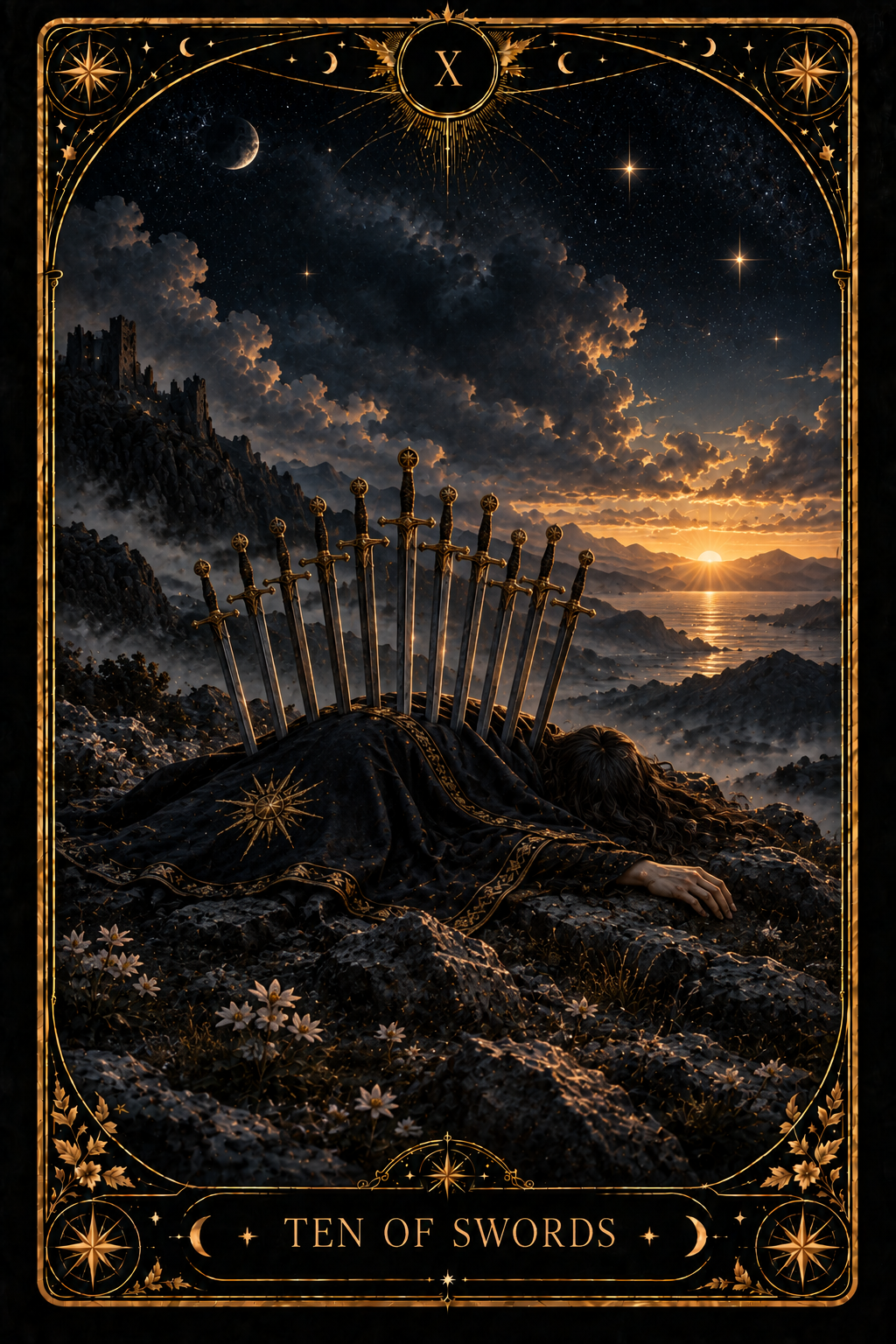
Upright: Painful ending, exhaustion, reaching the limit.
Reversed: Recovery, survival, resistance to accepting an ending.
Page of Swords
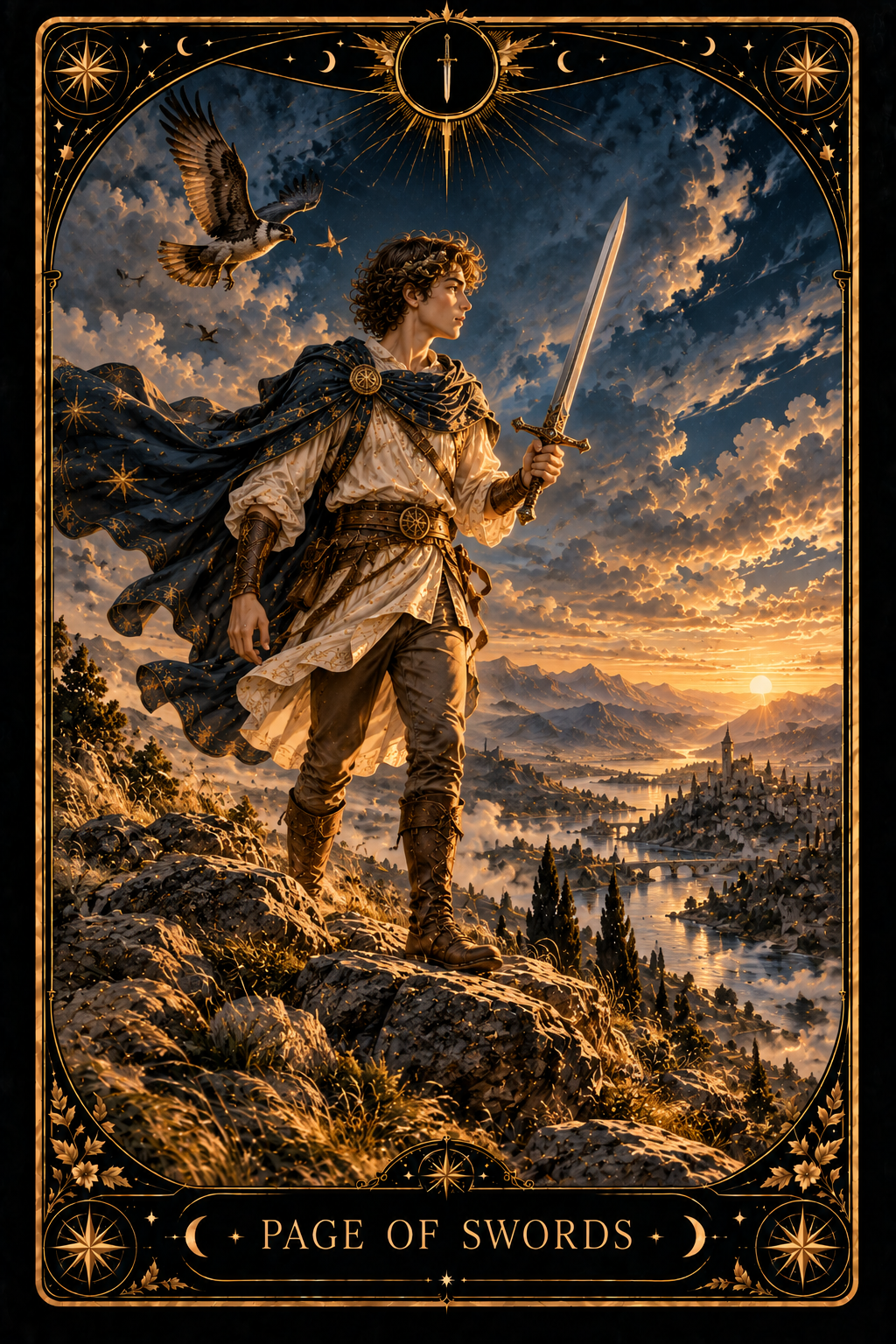
Upright: Curiosity, observation, communication, gathering information.
Reversed: Gossip, poor communication, jumping to conclusions.
Knight of Swords
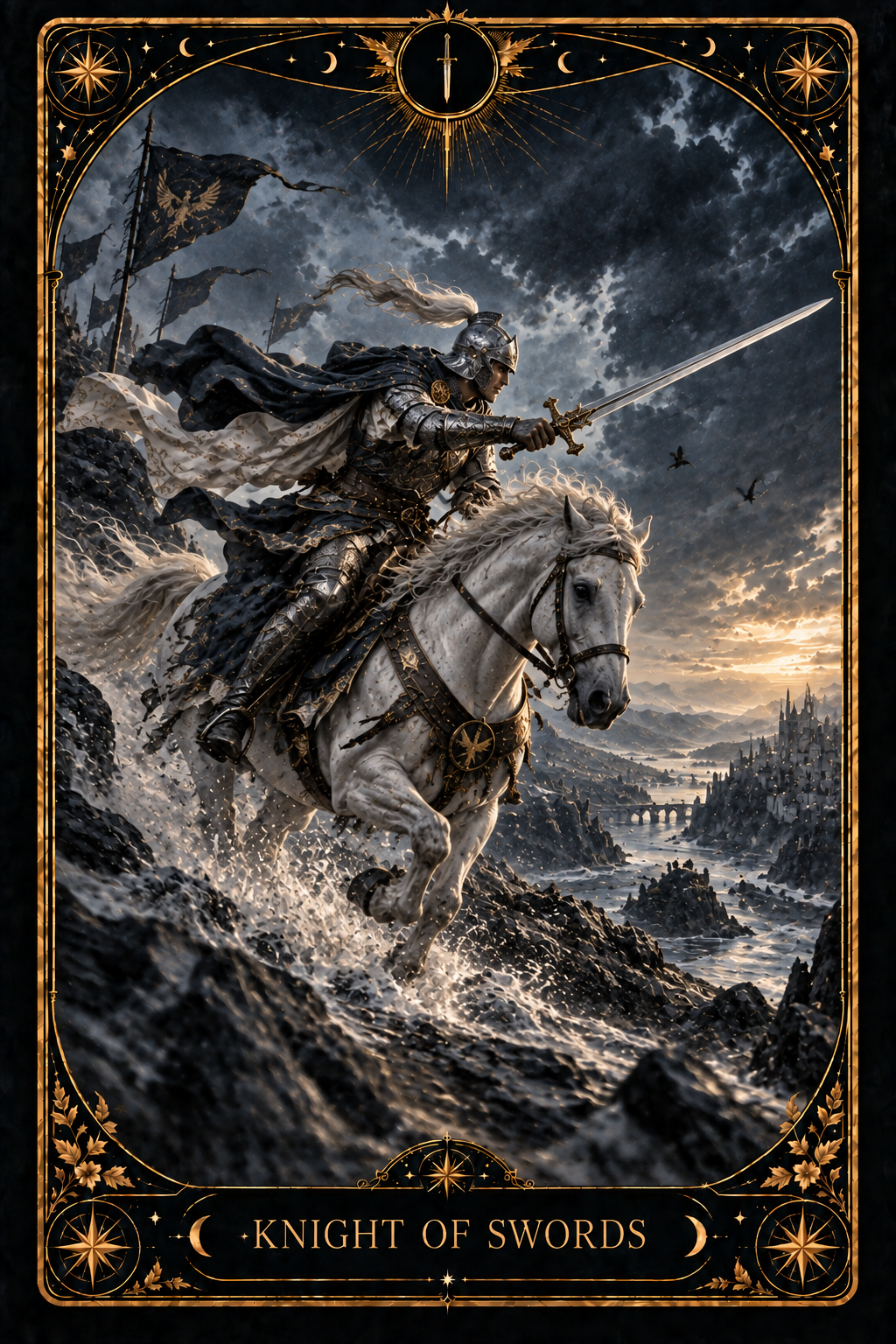
Upright: Direct action, urgency, determination, fast communication.
Reversed: Aggression, recklessness, acting before thinking.
Queen of Swords
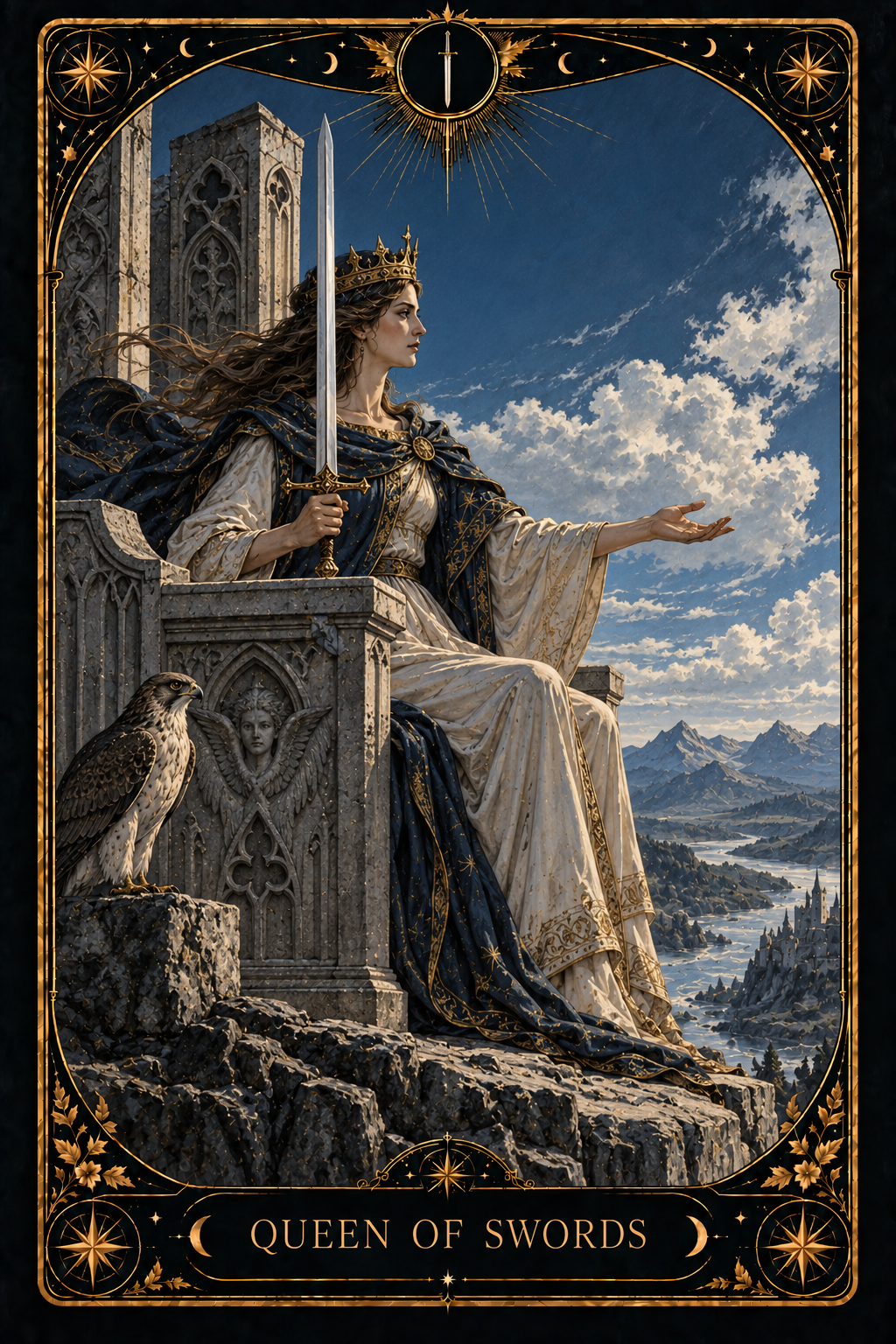
Upright: Discernment, honesty, boundaries, independent judgment.
Reversed: Harshness, cynicism, defensive communication.
King of Swords
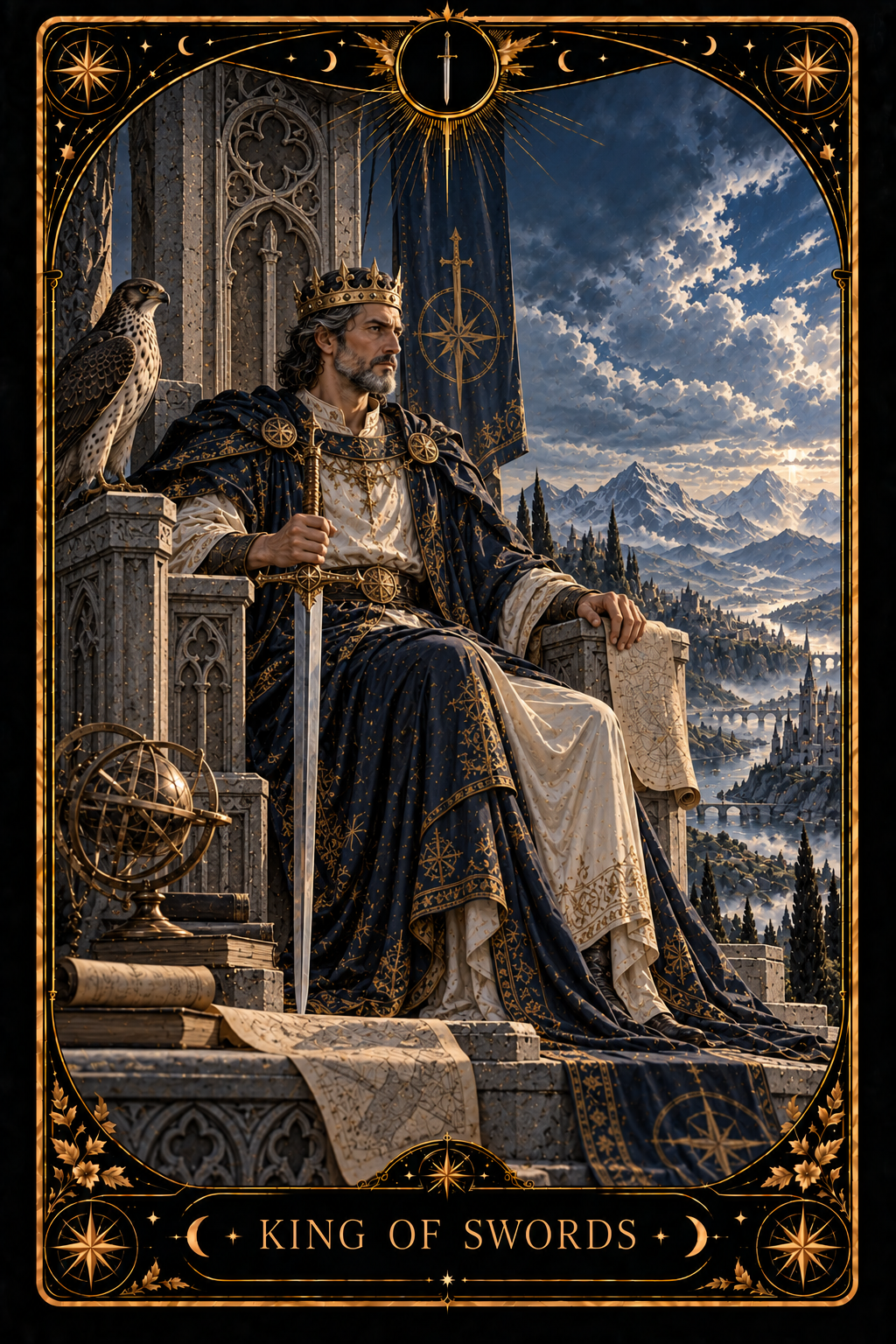
Upright: Logic, authority, strategy, clear judgment.
Reversed: Coldness, rigid thinking, manipulation, misuse of authority.
Suit of Pentacles Tarot Card Meanings
Pentacles are associated with money, work, resources, stability, skill, routines, and material reality.
Ace of Pentacles
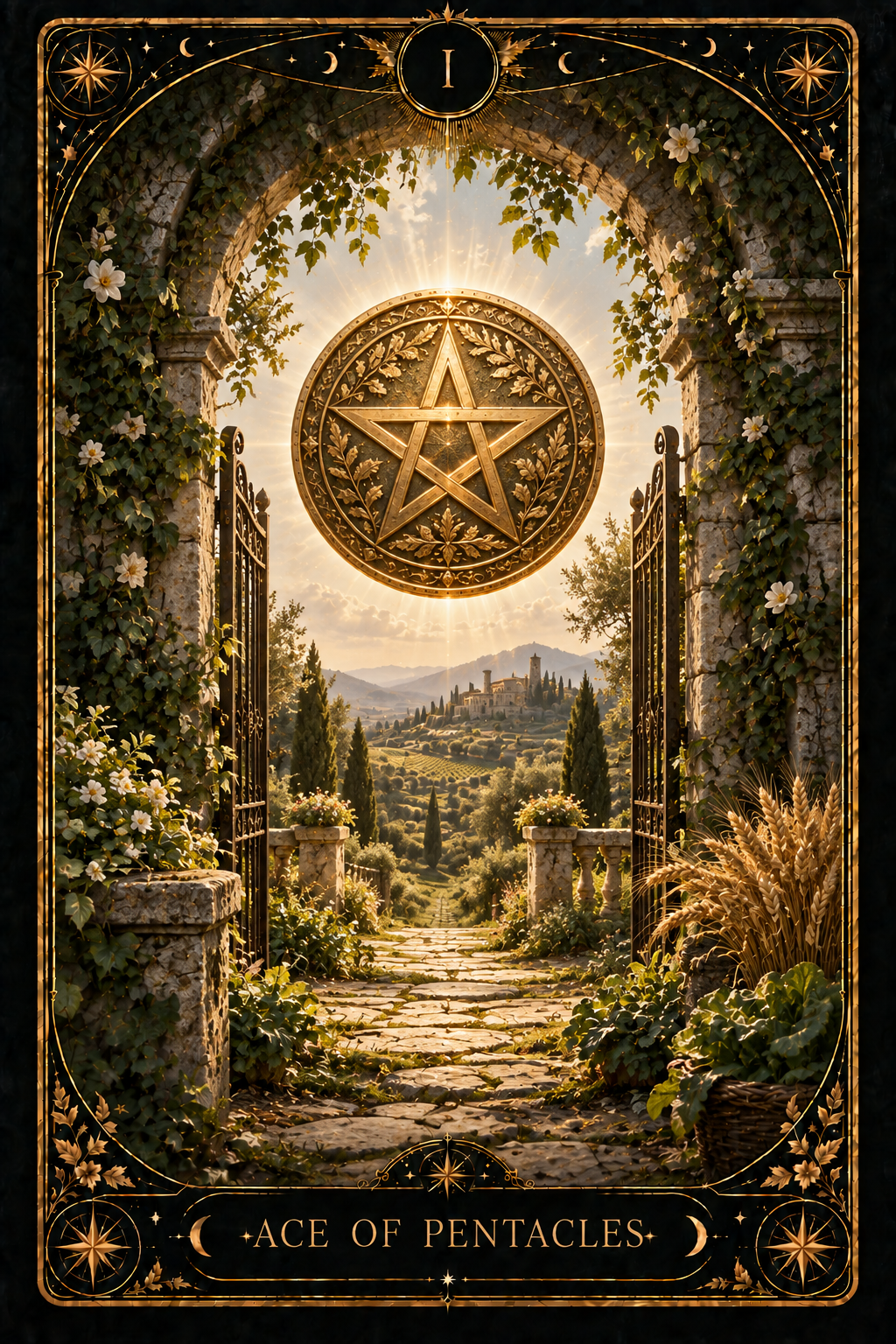
Upright: Practical opportunity, new resource, tangible beginning.
Reversed: Missed opportunity, weak foundation, delayed progress.
Two of Pentacles
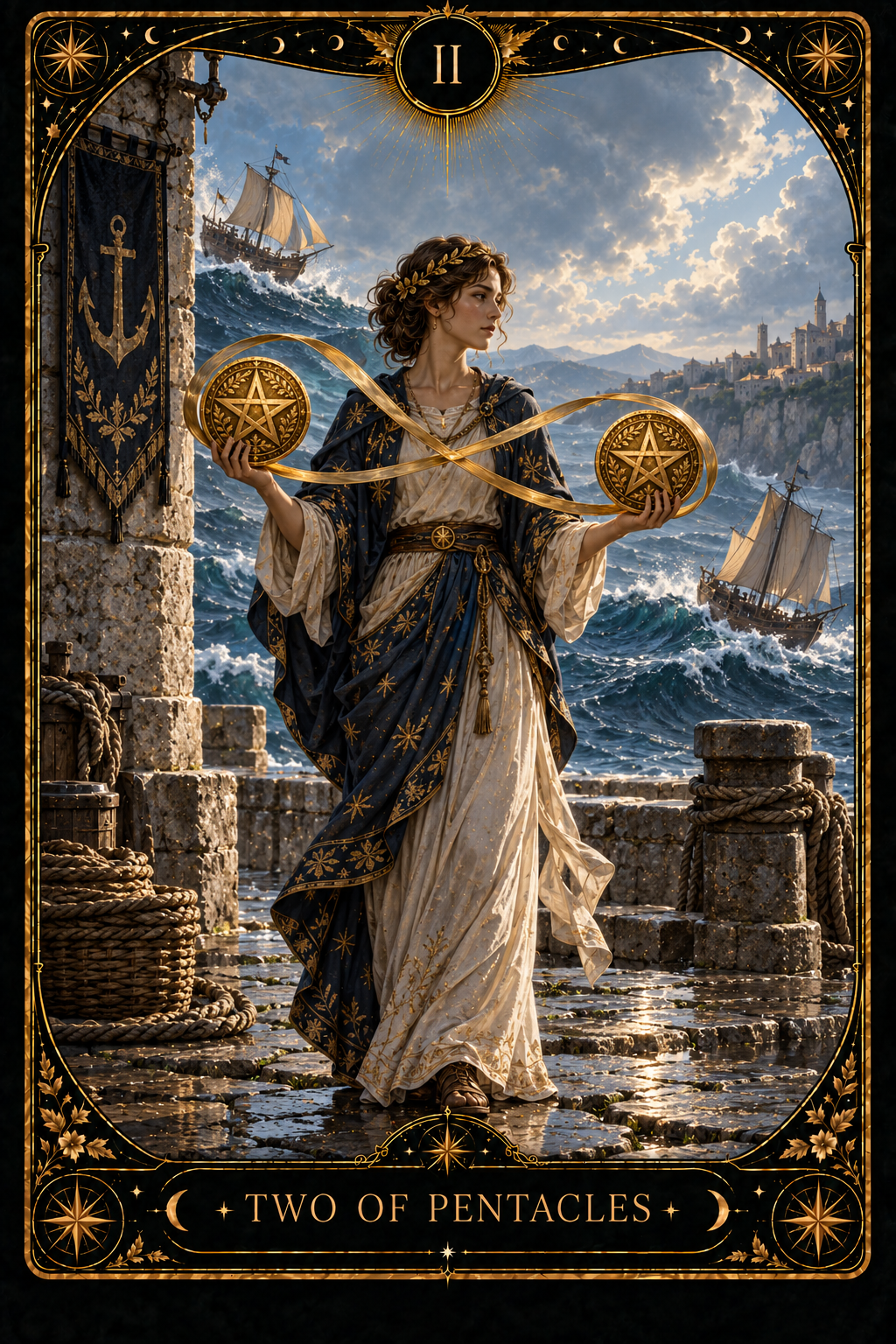
Upright: Managing priorities, flexibility, balancing responsibilities.
Reversed: Overcommitment, poor balance, too many demands.
Three of Pentacles
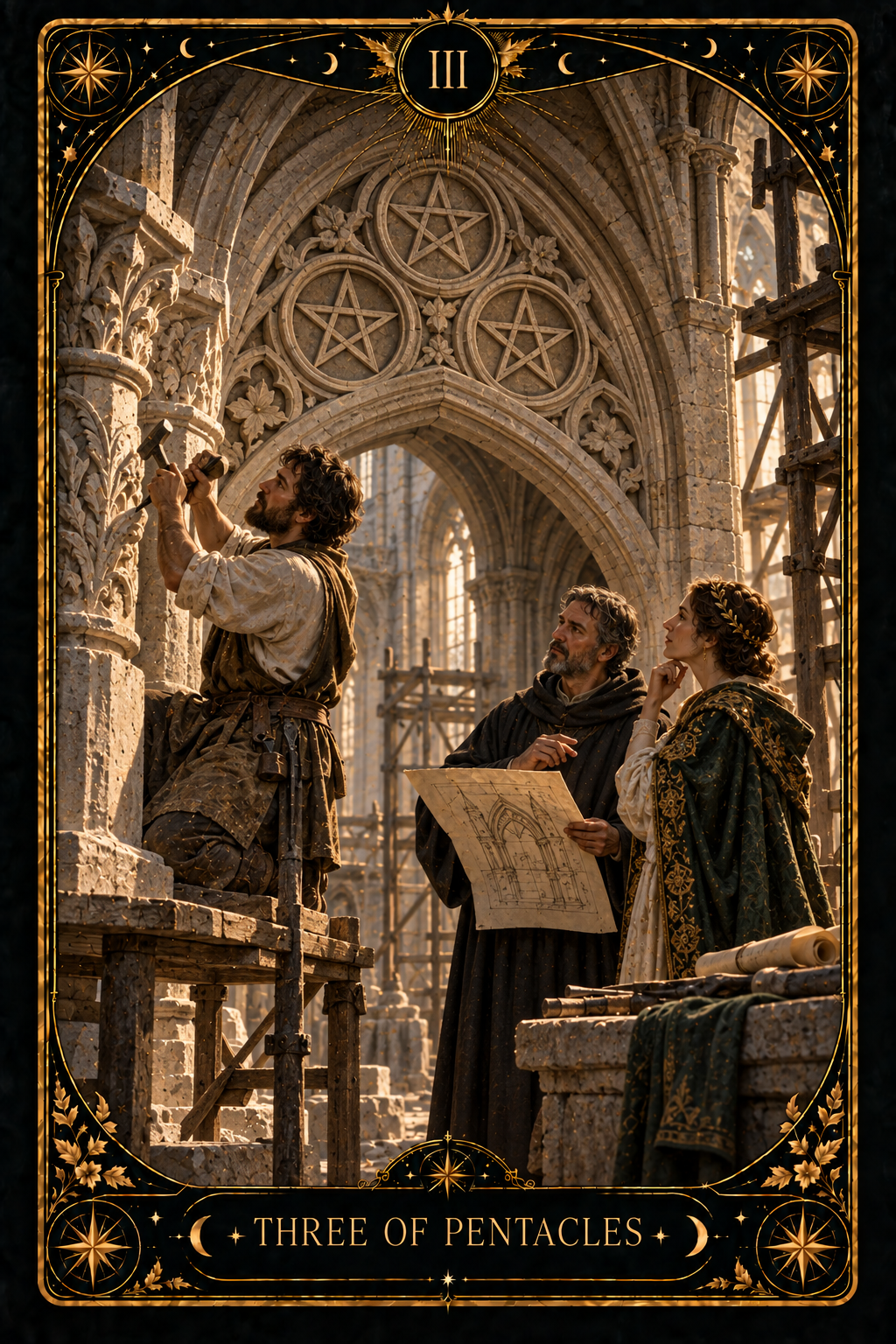
Upright: Collaboration, learning, skill, teamwork.
Reversed: Poor coordination, lack of recognition, weak teamwork.
Four of Pentacles
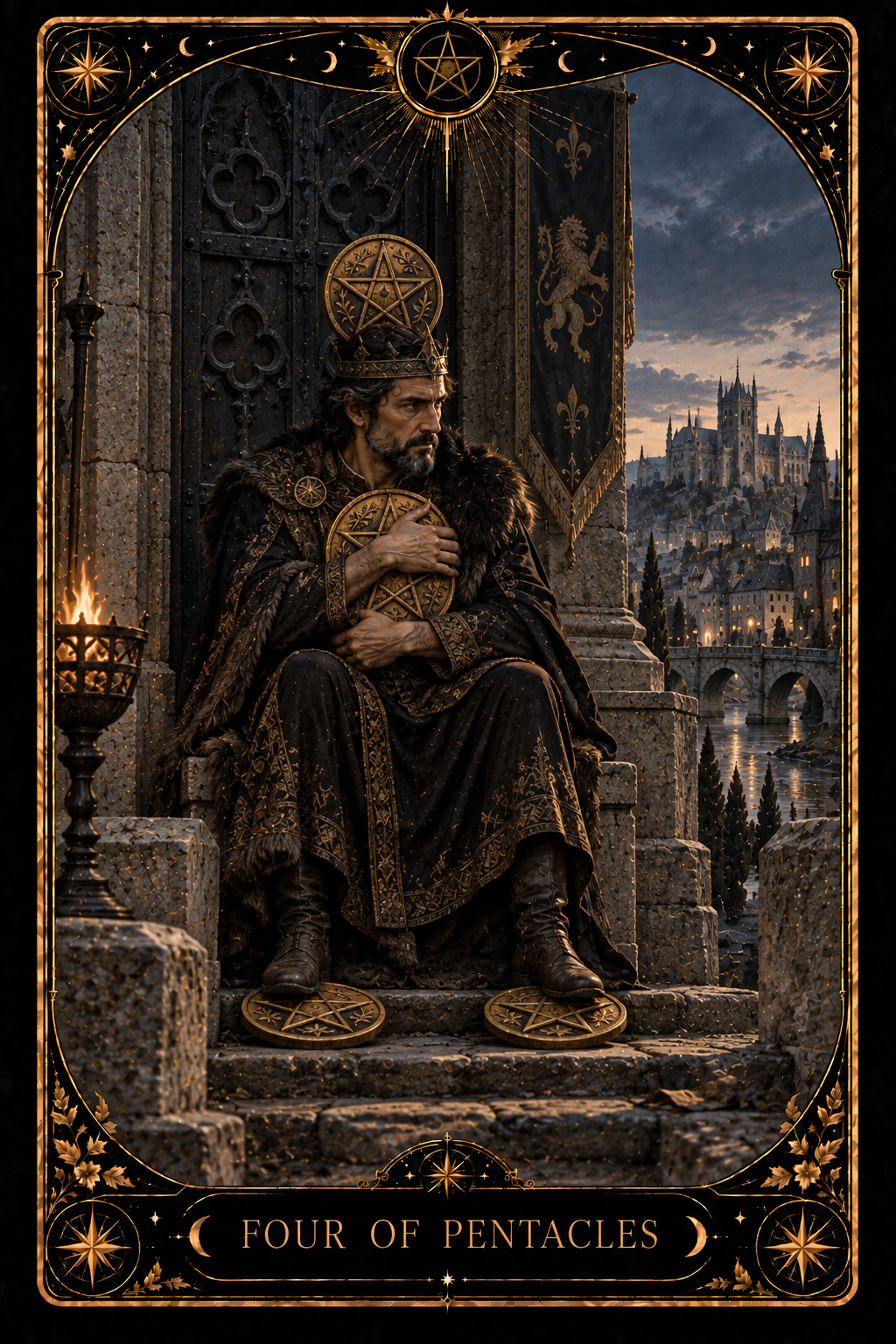
Upright: Security, control of resources, holding on, protecting stability.
Reversed: Fear around security, releasing control, unhealthy attachment to resources.
Five of Pentacles
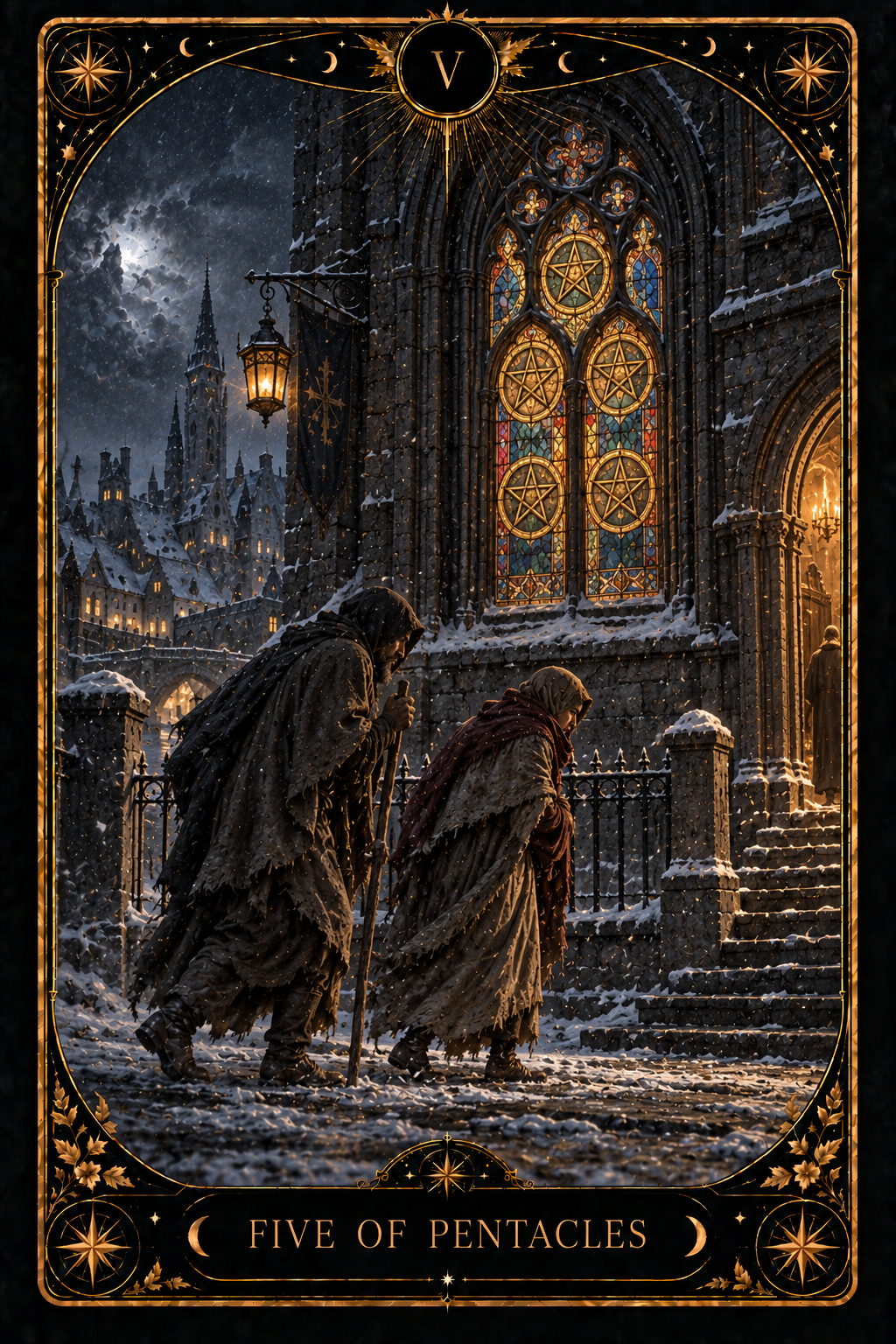
Upright: Financial strain, exclusion, insecurity, feeling unsupported.
Reversed: Recovery, improving stability, support becoming available.
Six of Pentacles
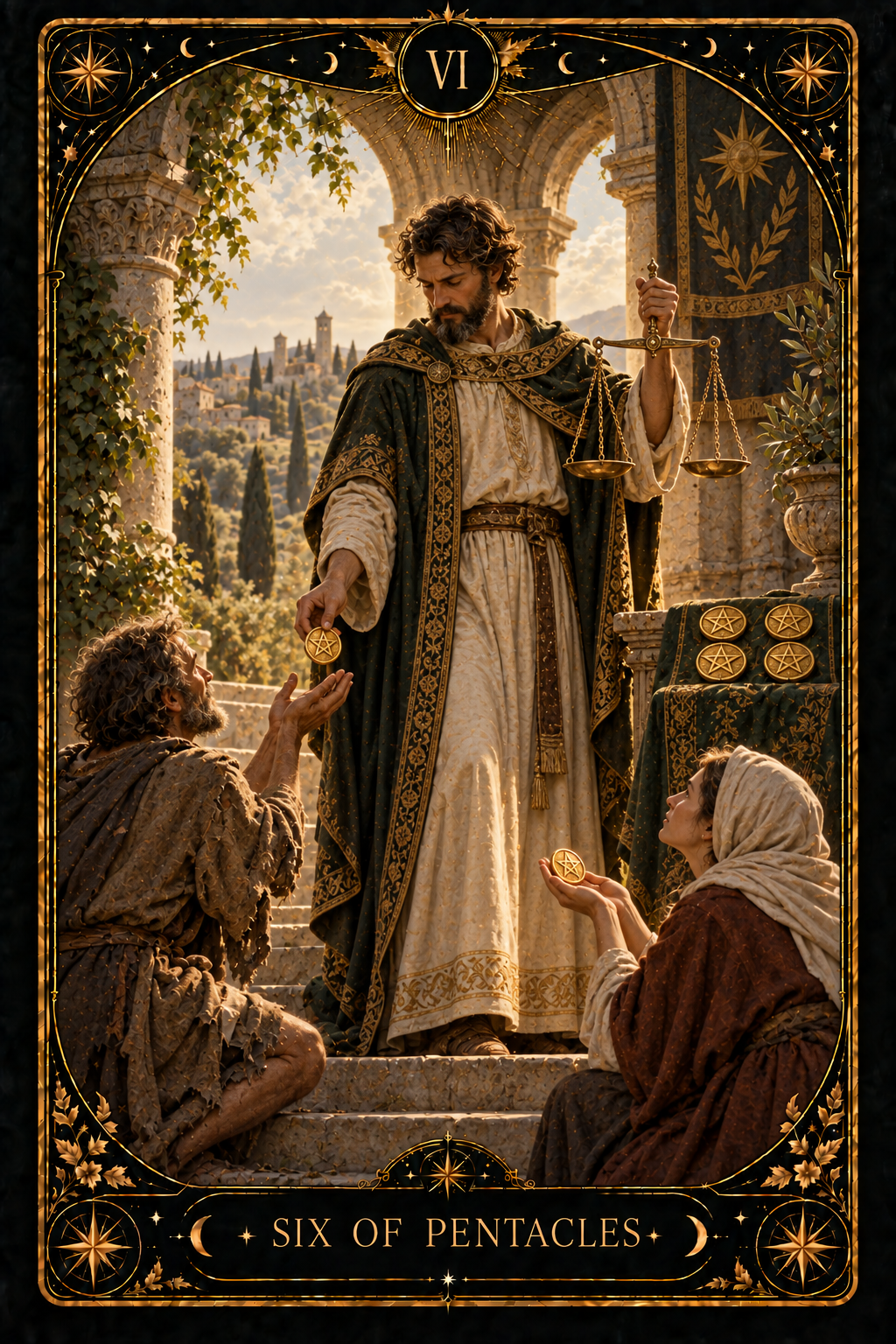
Upright: Giving and receiving, support, generosity, exchange.
Reversed: Unequal exchange, strings attached, imbalance in giving.
Seven of Pentacles
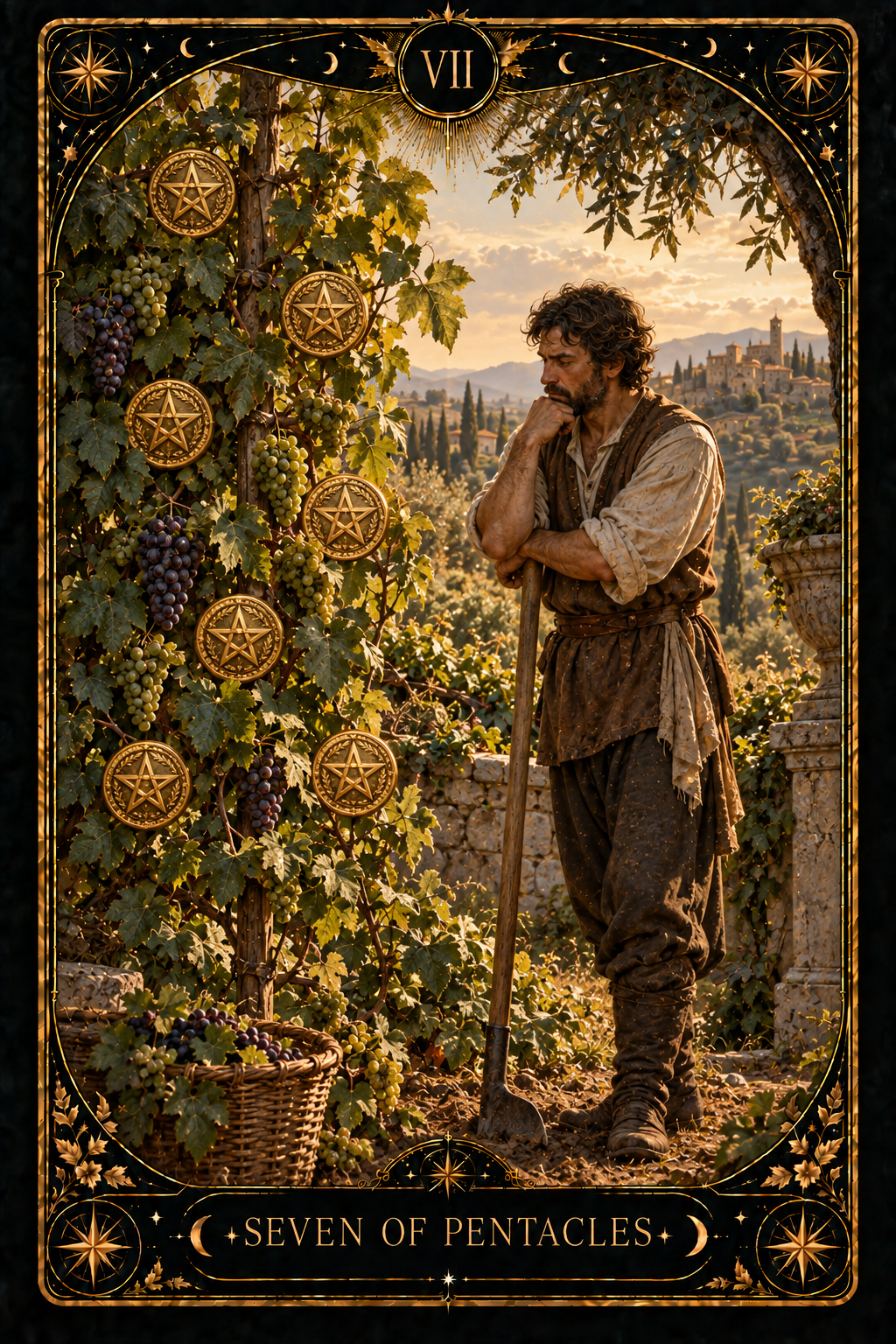
Upright: Patience, assessment, waiting for results, long-term effort.
Reversed: Impatience, poor return on effort, questioning whether to continue.
Eight of Pentacles
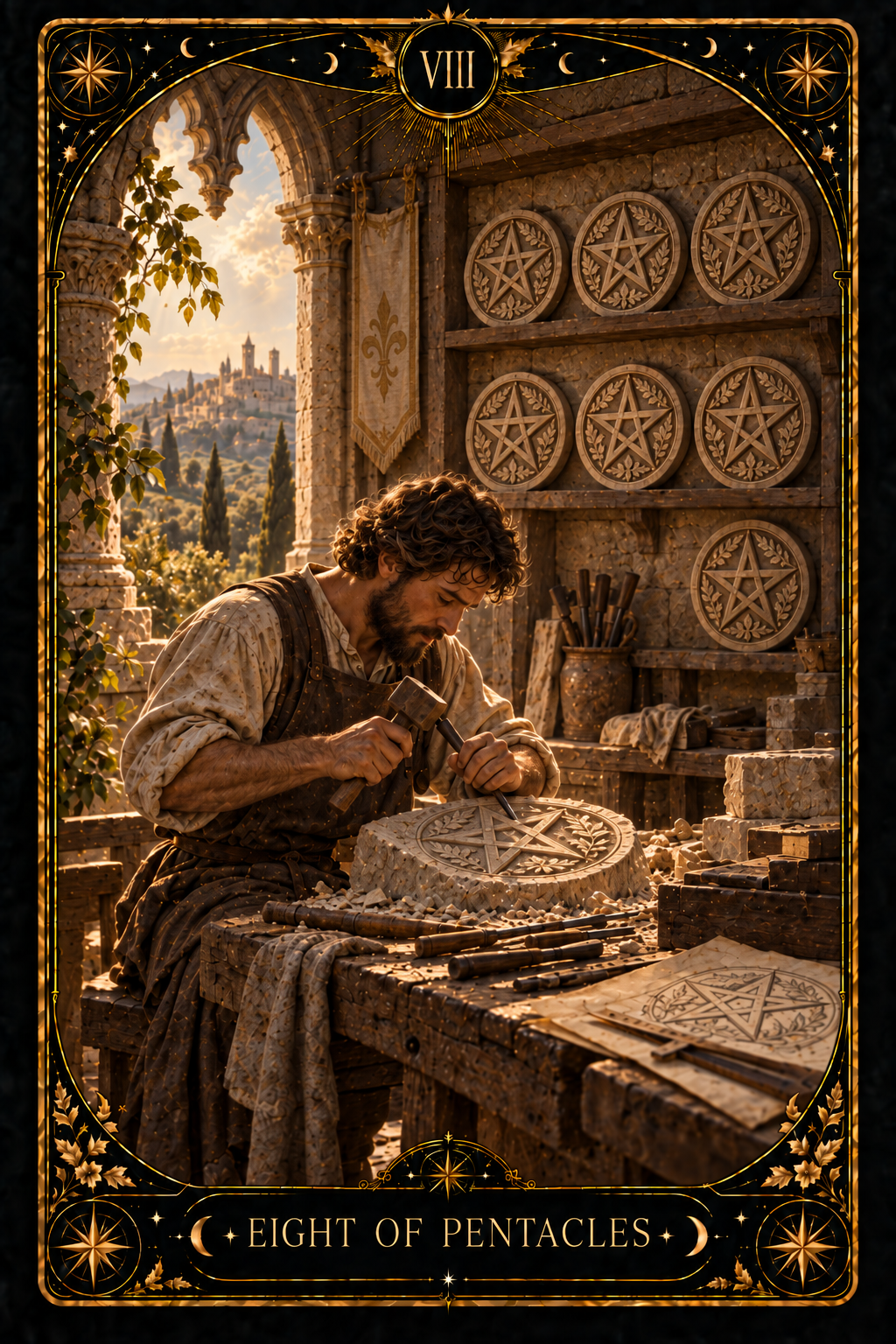
Upright: Practice, craftsmanship, repetition, improvement.
Reversed: Cutting corners, boredom, inconsistent effort.
Nine of Pentacles
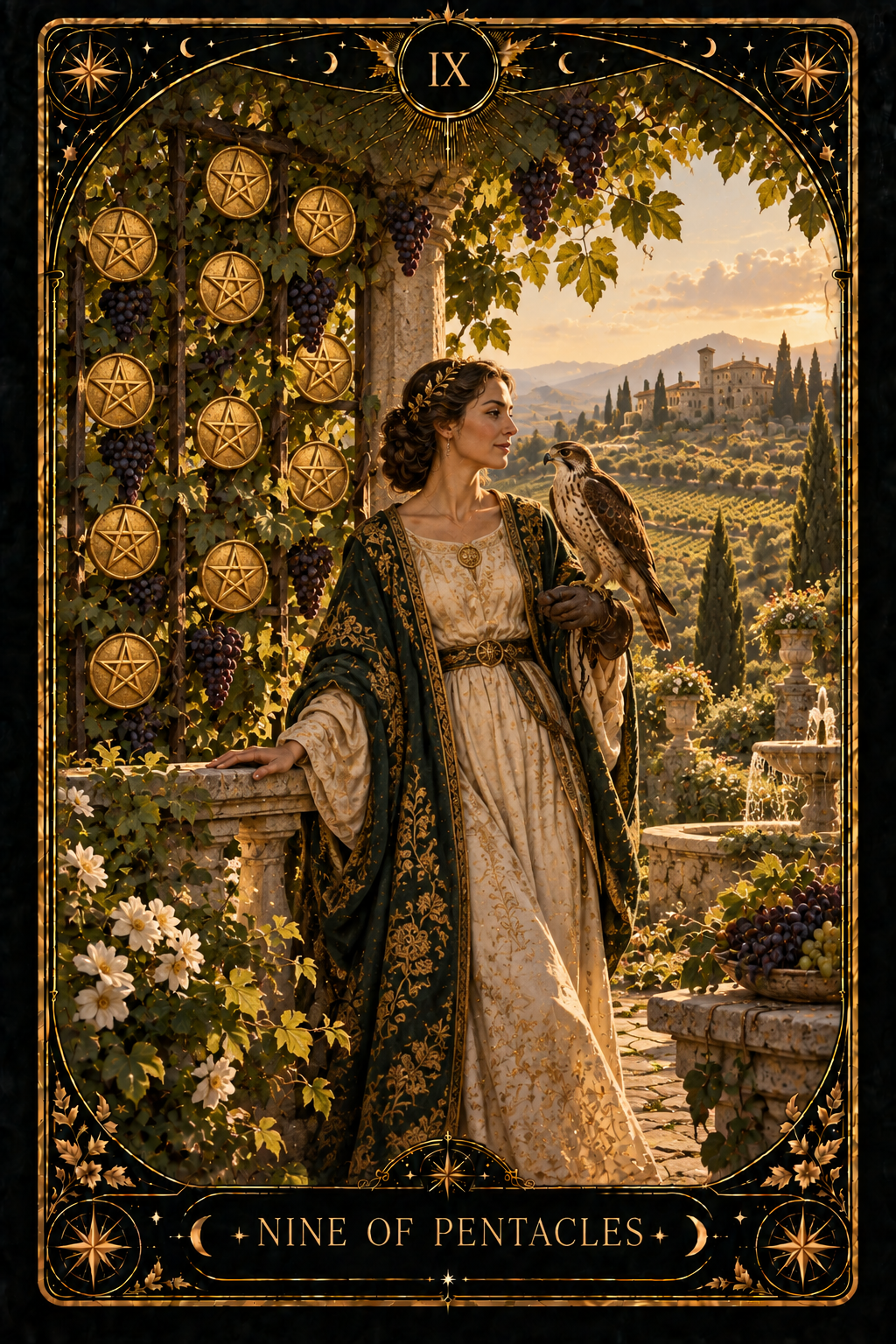
Upright: Independence, comfort, self-sufficiency, enjoying what you built.
Reversed: Dependence, insecurity, unstable independence.
Ten of Pentacles
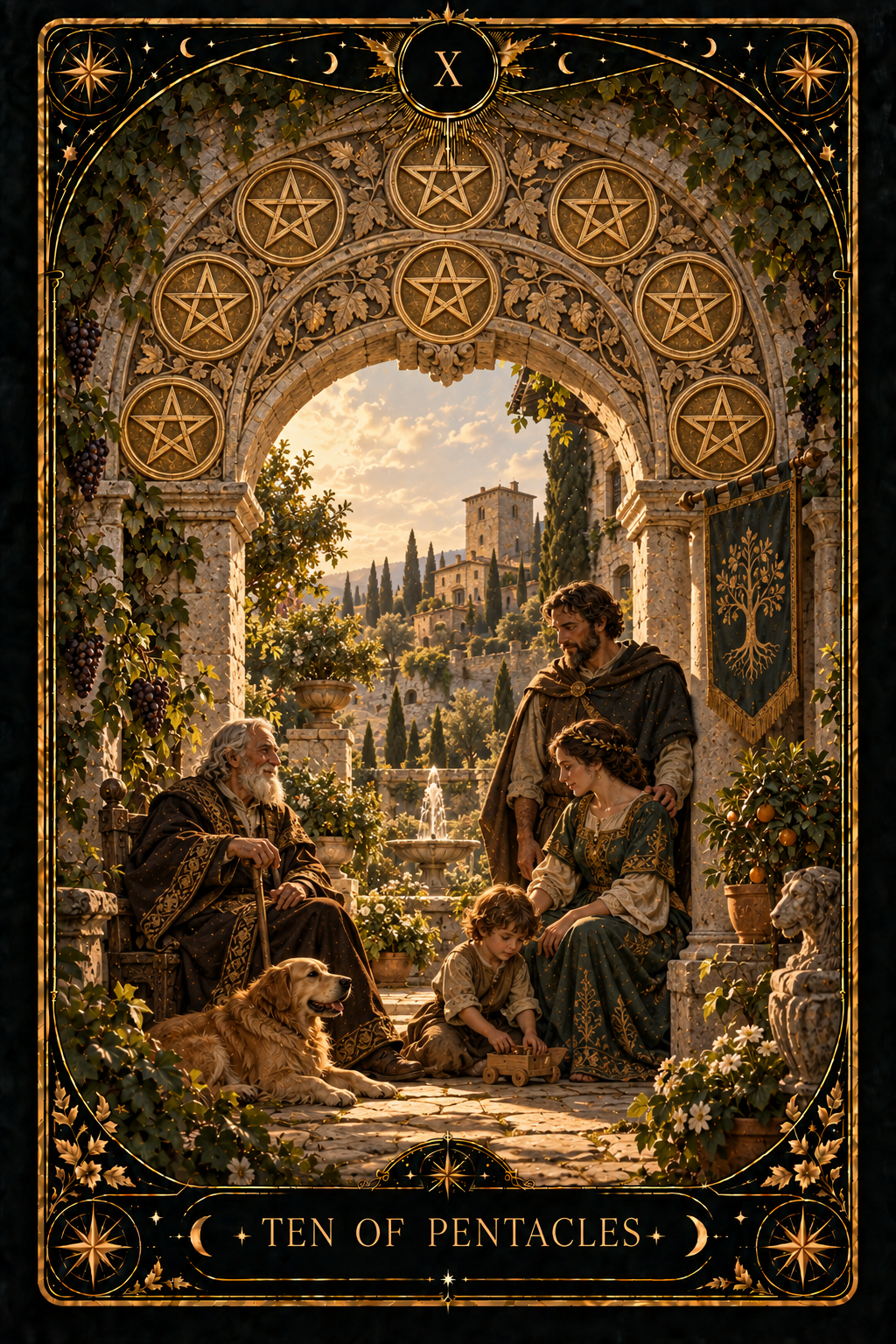
Upright: Long-term stability, legacy, family resources, established success.
Reversed: Instability, family conflict around resources, weak foundation.
Page of Pentacles
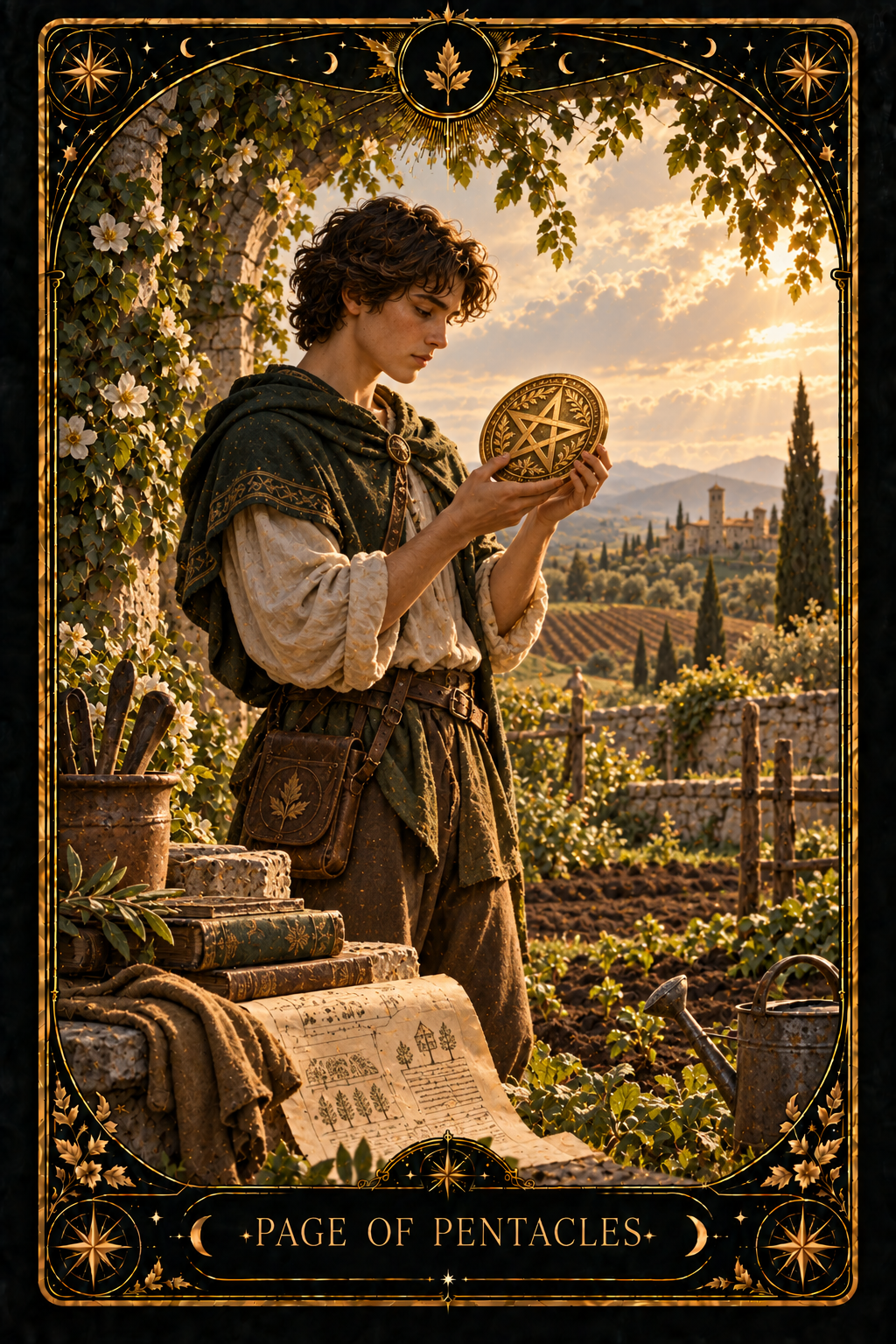
Upright: Learning, practical opportunity, study, building something real.
Reversed: Lack of follow-through, poor planning, undeveloped opportunity.
Knight of Pentacles
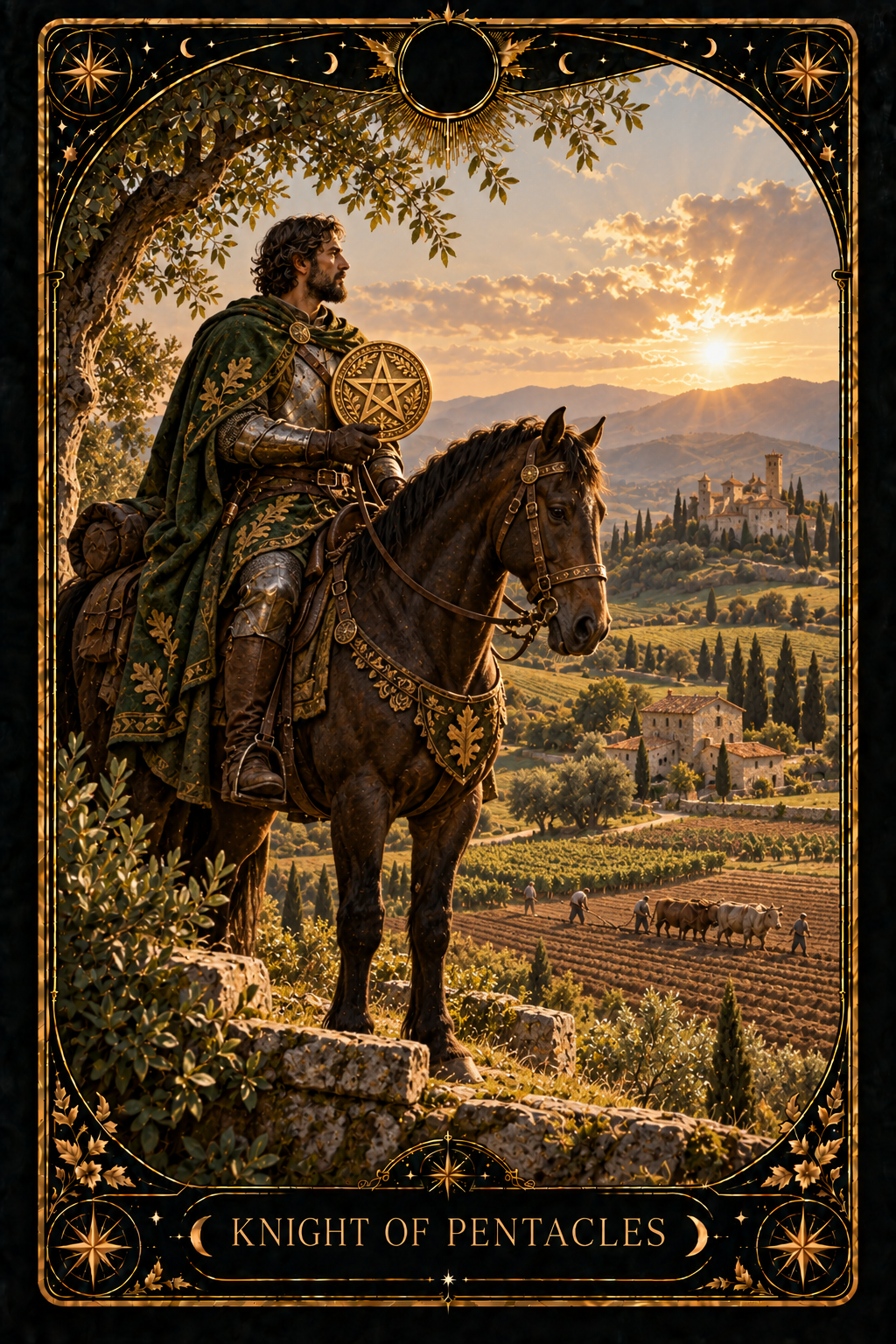
Upright: Reliability, patience, consistency, steady progress.
Reversed: Stagnation, excessive caution, routine without progress.
Queen of Pentacles
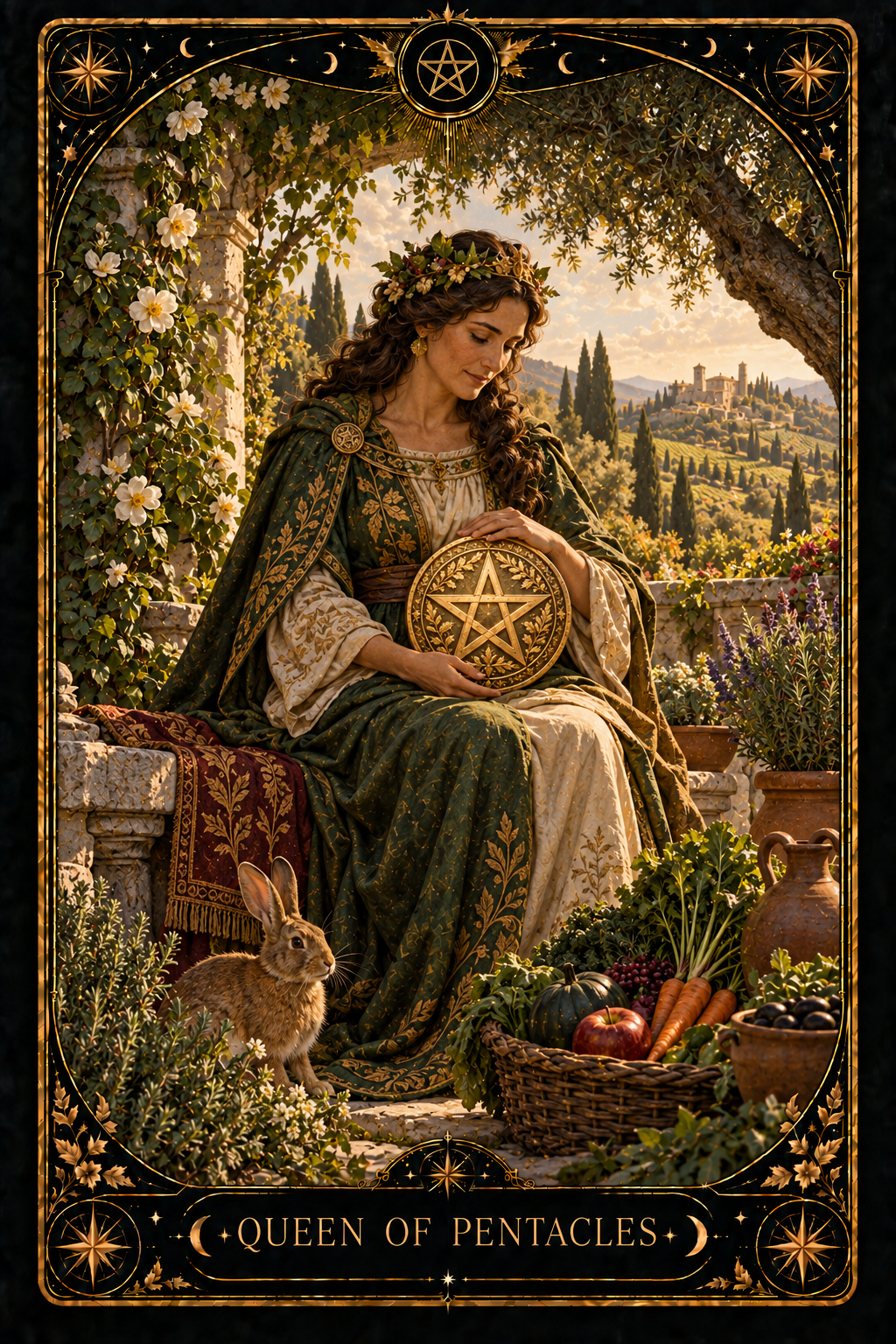
Upright: Practical care, stability, resourcefulness, grounded support.
Reversed: Overextension, neglecting yourself, insecurity around resources.
King of Pentacles
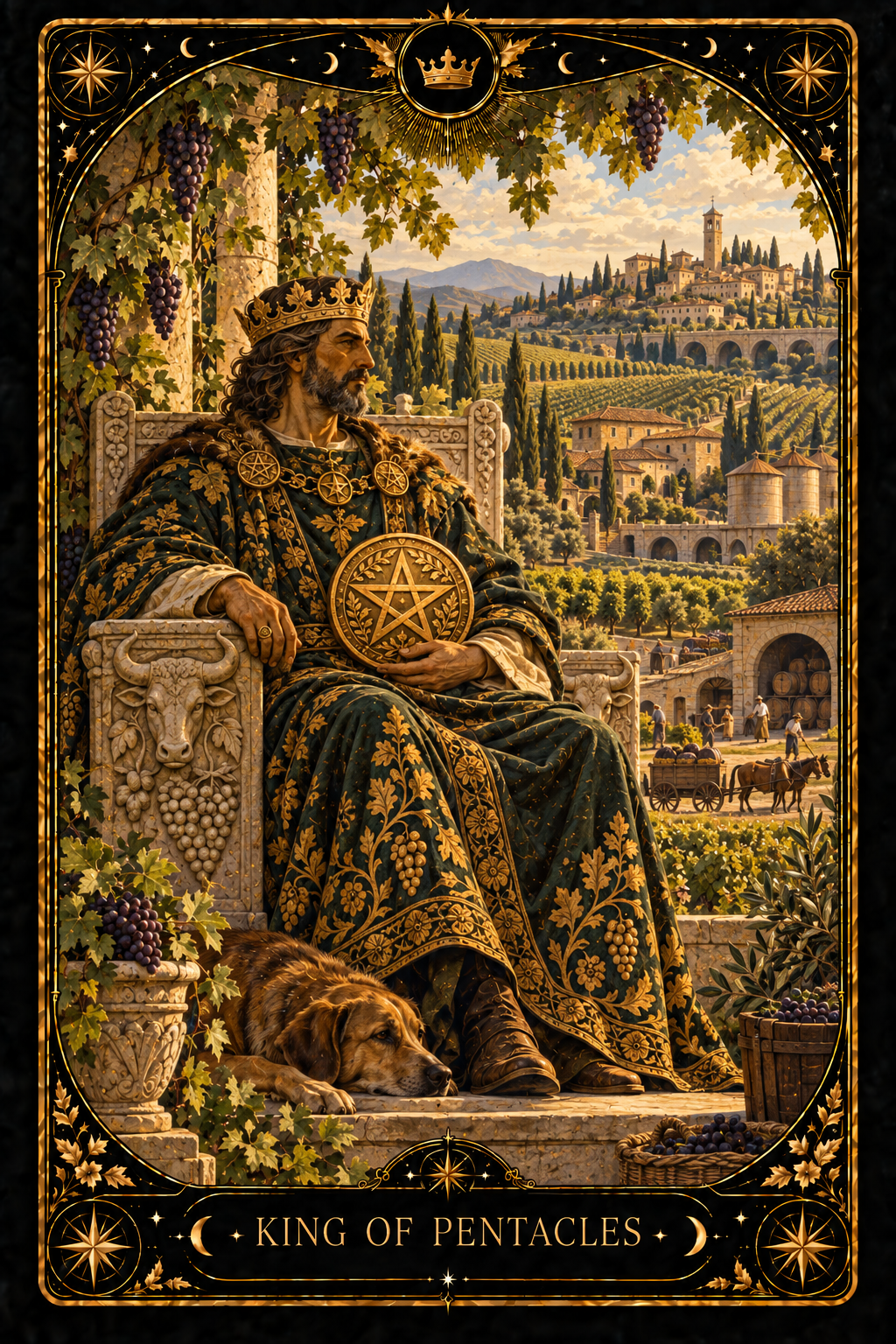
Upright: Material stability, leadership, business ability, long-term security.
Reversed: Materialism, controlling resources, instability beneath appearances.
Court Cards: Are They People or Energy?
Pages, Knights, Queens, and Kings confuse many beginners because they do not always represent literal people. A court card may describe a person, but it can also describe a role, attitude, maturity level, behavior, or an energy you are being asked to embody. For example, the Queen of Swords may describe an intelligent, direct person with strong boundaries. But in an advice position, she may simply mean:
Be precise. Ask better questions. Do not ignore uncomfortable facts.
Likewise, the Knight of Cups in a love reading may describe someone making a romantic approach. In another context, it may describe pursuing something because of emotion or idealism. Do not assume every court card has to be a literal individual.
Why the Same Tarot Card Can Mean Different Things
Consider The Lovers.
In a love reading
Connection, attraction, intimacy, compatibility—or an important choice within the relationship.
In a career reading
Choosing between paths, working with someone whose values align with yours, or deciding what kind of work actually fits you.
As advice
Choose according to your values rather than convenience.
As an obstacle
Conflicting priorities, indecision, or being pulled between commitments. Same card. Different role. Now consider The Tower.
If you ask:
“What is happening in my relationship?”
The Tower could suggest disruption, a truth being exposed, or an unstable structure breaking down. If the position instead asks:
“What do I need to let go of?”
The Tower may be telling you that maintaining the current structure is exactly the problem. Tarot interpretation is not just:
What does this card mean?
It is:
What does this card mean here?
What If Two Tarot Cards Seem to Contradict Each Other?
This happens all the time. Suppose you draw:
Two of Cups + The Hermit
One card suggests connection. The other suggests solitude. That does not mean the reading is broken. It could describe a meaningful connection in which one person needs space, a relationship developing slowly, emotional reciprocity without much outward movement, or closeness that requires individual reflection.
Which interpretation fits depends on the question, spread position, surrounding cards, and what is actually happening. When two cards appear to contradict each other, do not immediately choose one and ignore the other. Ask:
How can both be true at the same time?
That is often where the real reading begins. If you draw a combination you genuinely cannot make sense of, you can compare interpretations with other readers in the GOOD TIMING Tarot Community.
Tarot Card Meanings in Love Readings
People often look up card meanings because a card appeared in a relationship reading. But even within love readings, the question changes the meaning. There is a big difference between:
“How does my partner feel about our relationship?”
and:
“What is preventing this relationship from progressing?”
The Four of Cups in the first question may describe emotional disengagement. In the second, it may suggest that someone is overlooking an opportunity because they are focused on disappointment. The Devil does not automatically mean “toxic relationship,” either. It may describe attachment, desire, dependency, obsession, fear of leaving, or a dynamic that has become difficult to break.
Context matters.
Tarot Card Meanings in Career Readings
The same principle applies to career. The Emperor may suggest leadership, structure, management, or dealing with authority. Eight of Pentacles often emphasizes skill-building and consistent work. Three of Pentacles may highlight collaboration or recognition of expertise, while Seven of Cups can indicate too many possibilities without a clear direction.
A card that sounds emotional in one context can become surprisingly practical in another.
Tarot Card Meanings for Timing
Timing deserves its own approach. Some cards naturally feel faster:
- Eight of Wands
- Knight of Swords
- The Chariot
- Ace of Wands
Others tend to slow the reading down:
- The Hanged Man
- Seven of Pentacles
- Four of Swords
- The Hermit
- Temperance
- Knight of Pentacles
But a Tarot card is not automatically a clock.
Eight of Wands does not always mean eight days.
The more useful question is often whether the situation is accelerating, developing gradually, or waiting for something to happen first. If timing is what you actually care about, read Tarot Timing: When Will It Happen?.
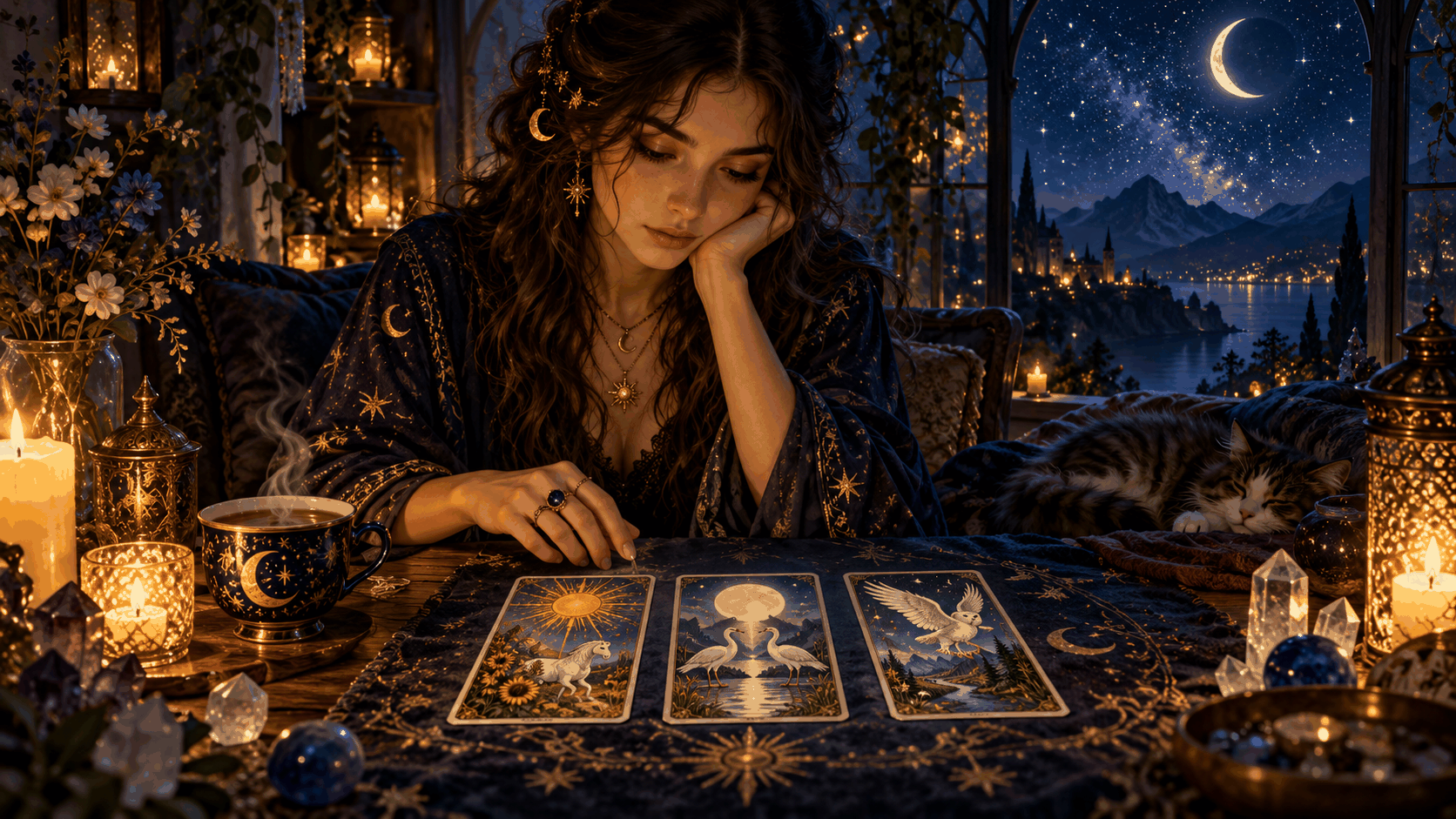
Should Beginners Memorize All 78 Tarot Cards?
Eventually, familiarity helps. But trying to memorize 156 separate upright and reversed definitions before doing a reading is usually unnecessary. A better approach is to learn each card in layers. Start with the core theme. Then look at the direction of the energy: is something opening, closing, accelerating, pausing, connecting, or withdrawing?
After that, apply the card to the question and spread position, then look at the other cards around it. Keywords are useful memory anchors. They are not the reading itself.
One Card vs. Multiple Cards
One-card readings are useful for learning because there is less noise. You can ask:
“What should I understand about this situation today?”
and spend time exploring how one card relates to the question. You can practice with the One Card Tarot Reading. Multiple cards teach a different skill:
combination.
Once several cards appear, the question is no longer simply:
“What does each card mean?”
It becomes:
“What story are these cards creating together?”
That is where spread positions and relationships between cards begin to matter much more.
How to Read a Tarot Card Without Looking It Up First
Before opening a reference guide, look at the card itself. Ask:
What is happening in the image?
Does the card feel active or still?
What appears to be beginning, ending, approaching, or being avoided?
Where is the figure looking?
Then connect those observations to your question. Only after that, check the traditional meanings. This prevents Tarot from becoming a vocabulary test. It also helps you understand why one traditional meaning fits the current reading better than another.
A Simple Formula for Reading Any Tarot Card
When you get stuck, use this sequence.
1. Question
What exactly did I ask?
2. Position
What role does this card have in the spread?
3. Core meaning
What does the card generally represent?
4. Direction
Is the energy moving, blocked, opening, closing, connecting, or withdrawing?
5. Context
How does that meaning apply to this real situation?
6. Surrounding cards
What do the other cards confirm, complicate, or change? That framework is usually more useful than repeatedly searching:
“What does this card mean?”
Start Reading the Cards in Context
Tarot card meanings are useful. But they are the vocabulary, not the whole conversation. The more readings you do, the less you will ask:
“What does The Hermit mean?”
and the more you will ask:
“Why did The Hermit appear here, in this position, for this question?”
That is the shift from memorizing Tarot to reading Tarot. If you already have a question in mind, you can draw your cards in a free Tarot reading and use this guide as a reference while you interpret them.
Final Thought
There are 78 Tarot cards. But there are far more than 78 possible interpretations. That does not mean anything can mean anything. Every card still has a symbolic center.
The Fool is still about entering something new. The Hermit is still about turning inward. The Tower is still about instability and disruption. The World is still about completion.
The question tells you:
new in what way?
withdrawal from what?
what structure is changing?
what exactly is completing?
The cards give you the language.
Context tells you what the sentence means.
FAQ
How many Tarot cards are there?
A standard Tarot deck contains 78 cards: 22 Major Arcana and 56 Minor Arcana.
What are the Major Arcana?
The Major Arcana are 22 cards that tend to represent larger themes, transitions, lessons, choices, and turning points. They run from The Fool at 0 to The World at 21.
What are the Minor Arcana?
The Minor Arcana contains 56 cards divided into Wands, Cups, Swords, and Pentacles. They tend to describe more everyday experiences, relationships, thoughts, actions, and practical situations.
Do reversed Tarot cards mean the opposite?
Not necessarily. A reversal may show a blocked, delayed, internalized, weakened, excessive, or releasing expression of a card rather than a simple opposite meaning.
Should beginners use reversed Tarot cards?
You do not have to. Many people learn upright meanings first and introduce reversals later.
Can one Tarot card have different meanings?
Yes. The core symbolism remains relatively stable, but interpretation changes according to the question, spread position, surrounding cards, and situation.
What is the best way to learn Tarot card meanings?
Learn the core themes first and then practice applying them to real questions. Keywords are useful, but context matters more than memorizing long definitions.
What does it mean if two Tarot cards contradict each other?
They may describe two different forces operating at the same time. Instead of choosing one card over the other, ask how both could be true within the situation.
Can Tarot cards predict the future?
Tarot can be used to explore likely patterns, movement, choices, and possible developments, but it should not be treated as a guaranteed fixed prediction.
Where can I try a Tarot reading?
You can start a free online Tarot reading, ask your own question, and draw cards to interpret in context.
GOOD TIMING RECOMMENDS
Continue Exploring
If you’d like to explore further, start with one of these three paths.