You already know the question.
When will they reach out? When will I meet someone? When will this situation finally move? When is the right time to act?
Tarot can be surprisingly useful for questions like these—but timing readings work best when you stop treating the cards like a calendar. A tarot card rarely means, with certainty, “this will happen on October 17.” What tarot often shows more clearly is pace, momentum, delay, readiness, and the conditions surrounding an event. In other words, tarot timing is usually less about predicting one fixed date and more about asking:
How close is this? What needs to happen first? Is the energy moving quickly, slowly, or not at all?
That shift makes timing readings much more useful.
Timing Is Not Just Prediction
Knowing what may happen is useful. Knowing when to move, when to wait, and what needs to happen first can be even more useful. A good timing reading is not only asking:
“When will this happen?”
It is also asking:
“Is this the right moment to act?”
Sometimes the reading shows that a situation is almost ready—and one small action could move it forward. Other times, it shows that pushing now may create more resistance, while waiting could actually save time. That is the deeper value of timing:
not watching the clock, but understanding the rhythm of the situation.
The point of timing is not to wait for fate.
It is to know when your action has the most leverage.
If timing is only one part of a much broader question, a free online Tarot reading can be a better place to begin.
Can Tarot Really Tell You When Something Will Happen?
Sometimes—but usually not in the way people expect. There are many different tarot timing systems. Some readers connect suits with seasons, numbers with days or weeks, or astrological correspondences with particular periods. But there is no single timing system universally used across tarot practice. Different traditions and readers work with different frameworks, so timing correspondences are better treated as tools rather than fixed laws.
A stronger timing reading usually combines several signals:
- whether the cards feel fast or slow
- whether movement is active or blocked
- how close the situation appears to completion
- what stage of the process you are in
- numbers, suits, or astrological correspondences
- the nature of the question
- what must happen before the outcome becomes possible
This becomes especially important when another person is involved.

If you ask:
“When will they contact me?”
the cards may show interest and emotional movement—but also hesitation or a decision that has not yet been made. In that case, the message may not be:
“Seven days.”
It may be:
“The potential is there, but the timing is not ready yet.”
That can be much more useful.
The Three Most Useful Things to Read in Tarot Timing
1. Is the energy moving or waiting?
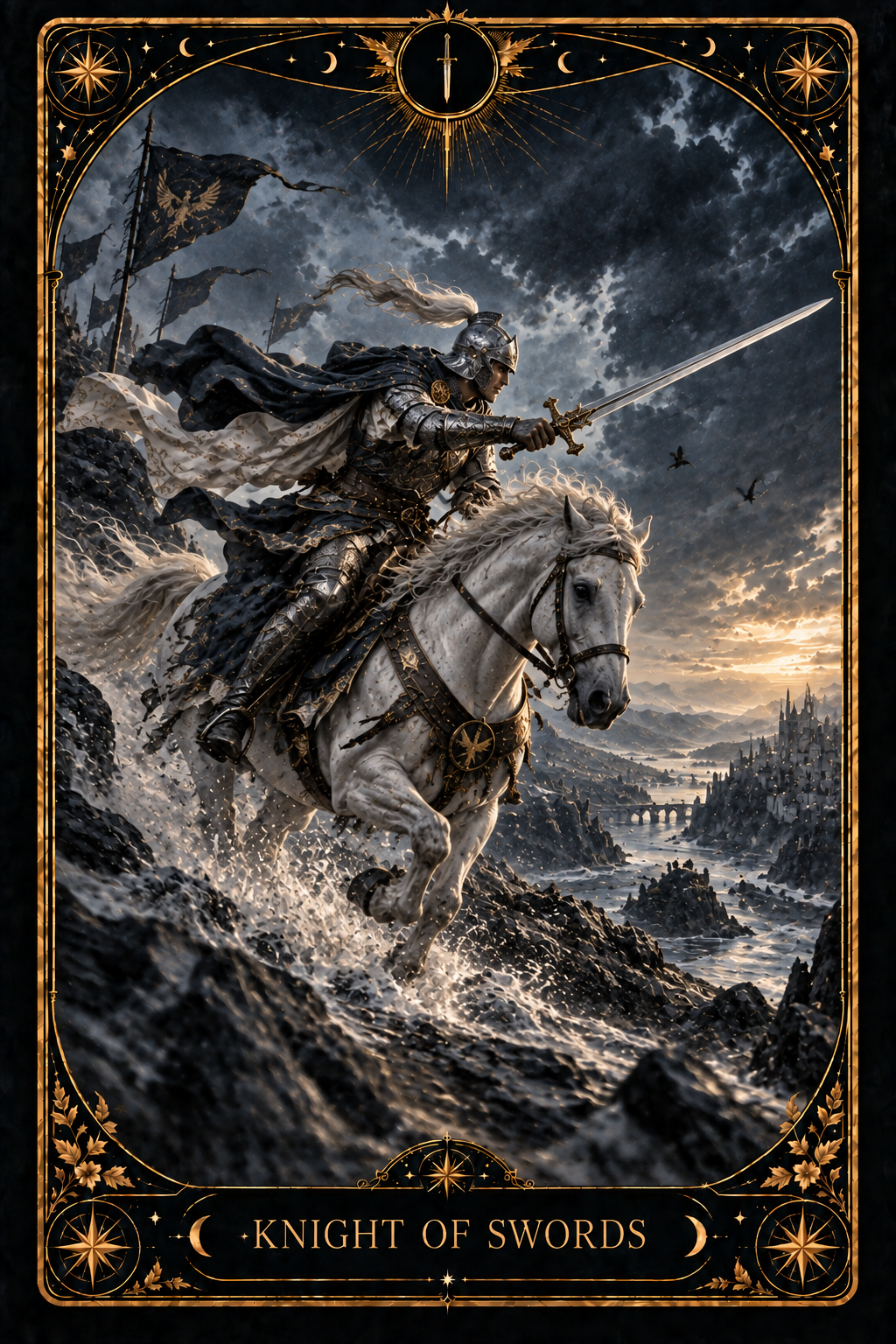
Some cards naturally suggest movement. The Eight of Wands, for example, is commonly associated with acceleration, messages, and rapid developments. The Knight of Swords may suggest sudden action or direct movement. Other cards feel slower.
The Seven of Pentacles suggests waiting for something to develop. The Hermit can indicate withdrawal or reflection. The Hanged Man often points to suspension, delay, or a change in perspective before progress resumes. Before assigning days or weeks, first decide whether the situation feels:
fast, gradual, delayed, or unresolved.
2. How close is the situation to completion?
Some cards suggest that a process is nearly complete. The World may indicate the end of a cycle. The Ten of Pentacles can show something becoming established. The Four of Wands often carries the feeling of arrival, milestone, or celebration.
By contrast, an Ace often represents the beginning of a process rather than its completion. If you ask when a relationship will become serious and draw the Ace of Cups, that may not mean “very soon.” It may mean:
the emotional beginning comes first.
There may still be several stages between that beginning and the outcome you asked about.
3. What needs to happen first?
This is one of the most overlooked parts of tarot timing. Sometimes a delay is not caused by time. It is caused by conditions. For example:
- Two of Swords — a decision has not been made
- Eight of Swords — fear or limitation is blocking movement
- Four of Swords — a pause or recovery period is needed
- Justice — a formal decision or agreement comes first
- Death — one phase must end before another can begin
In these cases, asking “How many weeks?” may miss the real message. The better question becomes:
What has to change before this can happen?
Fast Tarot Cards vs. Slow Tarot Cards
There is no single official timing system used by every tarot reader, but some cards naturally carry stronger signals of movement or delay.
Cards That Often Suggest Faster Movement
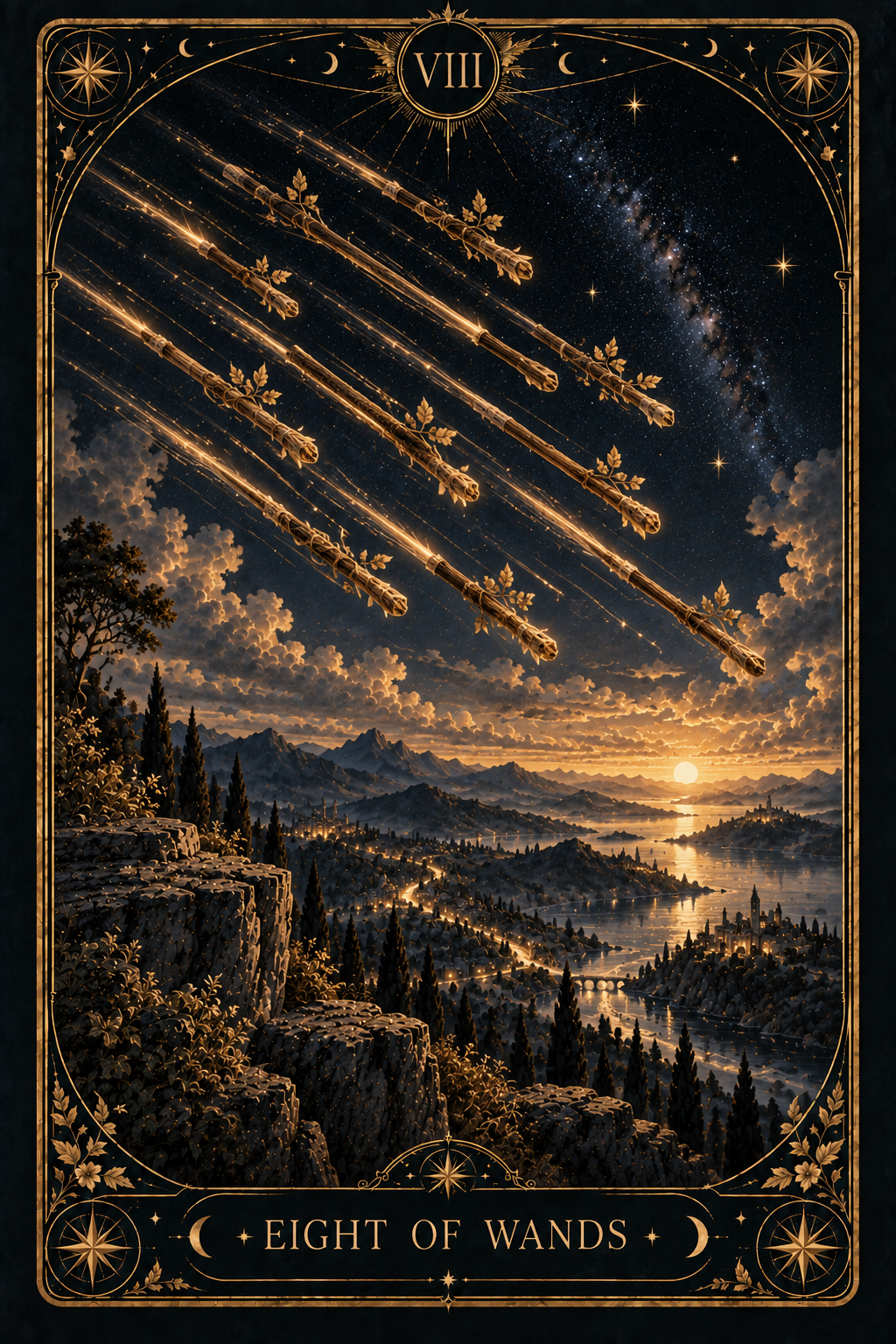
Eight of Wands
Messages, momentum, rapid developments.
Knight of Swords
Urgency, sudden action, direct movement.
The Chariot
Forward momentum and determination.
The Magician
Initiation and active creation.
Ace of Wands
A spark, opportunity, or fast-moving beginning.
The Tower
Sudden change—though not always the change you expected.
A “fast” card does not automatically mean tomorrow. It means the situation contains active momentum.
Cards That Often Suggest Slower Timing

Seven of Pentacles
Waiting for results after effort has already been made.
The Hermit
Reflection, distance, or withdrawal.
The Hanged Man
Suspension or a need for conditions to change.
Temperance
Gradual integration and patient development.
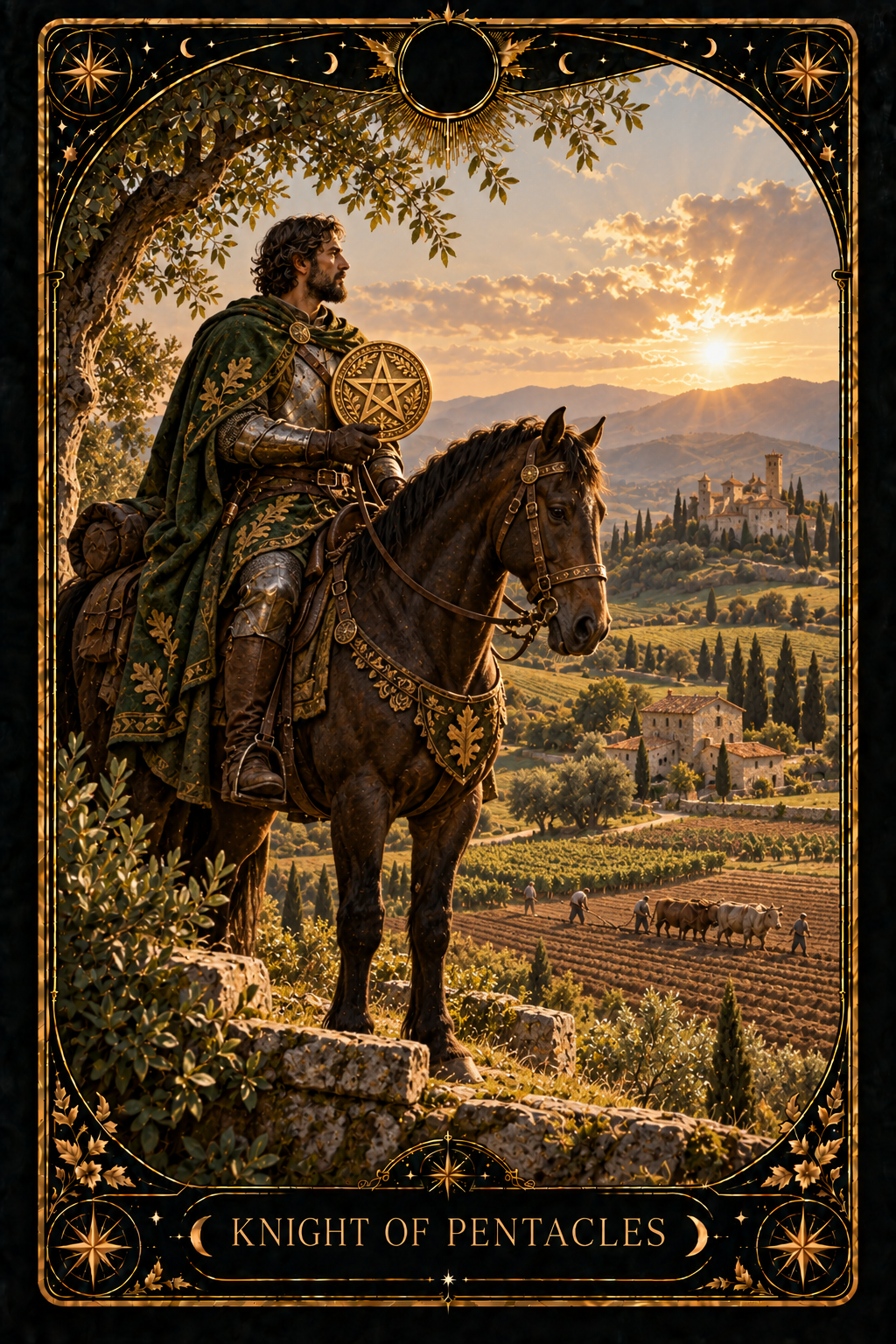
Knight of Pentacles
Reliable progress, but rarely rushed.
Four of Swords
Pause, recovery, or temporary inactivity.
Slow does not always mean no. Sometimes it simply means:
not yet.
How Far Ahead Should You Read?
This is where the method matters. Different divination systems often work best at different levels of distance and detail. There is no universal rule, but there are useful practical patterns.
Tarot: Broader Arcs and Developing Situations
Tarot is often used for broader patterns, emotional development, and processes unfolding over time. Many readers are most comfortable treating a Tarot reading as a view into the coming months rather than an unlimited forecast. A commonly used practical range is somewhere around six to twelve months, although this should be treated as a guideline rather than a fixed boundary. Tarot can still answer questions about next week or next month.
But it is especially useful when you want to understand questions like:
- Where is this relationship going over the next six months?
- What is developing in my career this year?
- What phase am I entering?
- What is slowing this situation down?
The farther you read into the future, the more decisions and changing circumstances can affect the path.
Lenormand: Nearer, More Concrete Developments
Lenormand is often used for more specific, concrete developments. Many Lenormand techniques deliberately work within a defined near-future window. Depending on the spread and reader, that might mean the next few weeks, the next month, or the next several months. For example, some Grand Tableau approaches interpret part of the spread as describing roughly the coming 8–12 weeks, while compact 3×3 readings are often used for a much nearer window.
Lenormand also benefits from explicitly defining the timeframe in the question:
“What is likely to happen between us over the next month?”
can often be more useful than:
“What happens between us eventually?”
That makes Lenormand particularly useful for questions like:
- Will I hear from them soon?
- What is likely to develop over the next few weeks?
- What concrete event should I expect next?
- What happens around this situation this month?
For a more concrete look at the nearer path, you can try a Lenormand reading.
Tarot or Lenormand for Timing?
A simple way to think about it:
Use Tarot when you want the wider arc.
Use Lenormand when you want to inspect the nearer path.
That does not mean Tarot cannot answer a question about tomorrow. And it does not mean Lenormand cannot look months ahead. The point is not to force either system into a rigid calendar. It is to choose a method that matches the distance and type of question.
And if your real question is simply:
“When will this move?”
a dedicated timing spread may be more useful than choosing a system only by calendar length.
Do Tarot Suits Represent Timing?
Some readers use suit-based timing systems. For example, one system might treat Wands as faster and Pentacles as slower. Others connect suits to seasons or specific time units. But these systems vary between traditions and readers.
So rather than treating:
Wands = days
Cups = weeks
Swords = months
Pentacles = years

as a universal law, it is better to treat suit timing as a framework. The context still matters. A Three of Pentacles in a work question may signal that practical collaboration is already beginning now—not that something will happen exactly three months later.
What Do Tarot Numbers Mean for Timing?
Numbers can sometimes provide a quantity clue. A Two may suggest two units of time. A Six may suggest six. But the number itself cannot tell you whether the unit is days, weeks, or months.
That is why:
“Six of Cups = six weeks”
is too simplistic. A better approach is:
Number = possible quantity
Card energy + context = likely pace
If the Eight of Wands appears in a situation already moving quickly, eight days may feel plausible. If the Eight of Pentacles appears in a process involving long-term work and repetition, the timing may be much slower. Neither should be treated as a guarantee.
Tarot Timing and the Major Arcana
Major Arcana cards often describe larger phases rather than precise time units. For example: The Fool — something begins when you are willing to step into the unknown. Wheel of Fortune — timing may depend on changing circumstances.
The Hanged Man — progress may remain suspended until conditions change. Death — one chapter must end first. The World — a cycle is approaching completion. This is why timing readings sometimes sound less like a date and more like:
“You are not there yet—but you are close.”
The cards may be describing the stage of the story, not the day on the calendar.
Why Exact Dates Are Difficult in Tarot
Imagine asking:
“When will I meet my future partner?”
That event may depend on:
- where you go
- who you meet
- choices you make
- choices another person makes
- whether you are actively dating
- whether you change jobs or cities
- events that have not happened yet
The closer an event already is to becoming real, the easier timing tends to be to read. That is why:
“Will I hear back from the company this week?”
is usually easier to time than:
“What exact date will I get married?”
The first question concerns a process already in motion. The second depends on many future decisions.
How to Ask Better Tarot Timing Questions
Instead of:
When will I get married?
Try:
What is the current timing around a serious relationship entering my life?
Instead of:
What exact day will they text me?
Try:
How close is communication between us, and what is affecting the timing?
Instead of:
When will I get a new job?
Try:
What is the timing around my next meaningful career opportunity?
These questions still explore timing. But they allow the cards to show:
pace, conditions, and movement
rather than forcing an arbitrary date.
A Simple Three-Card Tarot Timing Spread
You can use three cards.
Card 1 — Current Momentum
How much movement already exists? Is the situation active, stalled, developing, or only beginning?
Card 2 — What Affects the Timing
What is speeding things up or slowing them down? This is often the most important card.
Card 3 — Timing Direction
Is the event getting closer? Does the situation look immediate, gradual, delayed, or dependent on a change? This approach is often more useful than drawing one card and converting it directly into a number.
Example: “When Will They Reach Out?”
Imagine drawing:
Knight of Cups — Two of Swords — Eight of Wands


The Knight of Cups suggests emotional movement or an intention to approach. The Two of Swords shows hesitation or a decision not yet made. The Eight of Wands suggests rapid communication once that blockage breaks. The reading does not need to claim:
“They will text you in eight days.”
A more useful interpretation would be:
Communication looks capable of moving quickly, but hesitation comes first. The delay appears connected more to indecision than to lack of interest. Once that choice is made, the situation may accelerate suddenly.
That is still a timing answer. It simply explains the timing more clearly.
What If the Cards Show a Delay?
A delay is information. It does not automatically mean failure. If your reading shows the Hanged Man, Seven of Pentacles, or Four of Swords, ask:
What is this waiting period for?
Sometimes a delay prevents you from acting too early. Sometimes another person is not ready. Sometimes a project needs more structure. Sometimes progress is happening below the surface before anything becomes visible.
Timing is not only about asking:
“When will it arrive?”
It is also about understanding:
“Why has it not arrived yet?”
What If You Keep Asking the Same Timing Question?
Repeatedly asking the same question can make a reading less useful. If you ask every day:
“When will they message me?”
you may start reacting to tiny fluctuations rather than understanding the larger situation. A better time to ask again is when something meaningful changes:
- you receive new information
- the other person takes action
- an expected period passes
- your circumstances change
- you need guidance on a new decision
Tarot works best when it helps you understand a situation. Not when it becomes a countdown timer.
Try a Tarot Timing Reading Online
If your real question is not simply what will happen, but:
when is this situation likely to move?
a dedicated timing spread can help separate those signals. GOOD TIMING's Tarot Timing Reading looks at three things together:
current momentum, what is affecting the timing, and the direction the situation is moving toward.
It can be useful for questions such as:
- When will they contact me?
- When might this relationship progress?
- When is a career opportunity likely to move?
- Is this situation close, delayed, or still developing?
- What needs to happen before things change?

Final Thought
The most useful timing reading is rarely the one that gives you the most precise date. It is the one that helps you see:
where you are in the process.
Is the energy already moving? Is something still developing? Is there a decision, ending, or change that must happen first? And when the moment arrives, will you recognize it?
Tarot cannot turn an uncertain future into a fixed calendar. But it can help you understand the rhythm of a situation more clearly. And sometimes, knowing when not to force something is just as valuable as knowing when to move.
FAQ
Can tarot predict an exact date?
Tarot can sometimes suggest a time window or pace, but exact dates are less reliable because circumstances and people's choices can change.
How far ahead should a tarot reading look?
Many readers work within a period of several months, with roughly six to twelve months often used as a practical range rather than a strict rule. Shorter windows are generally easier to interpret because fewer variables can change.
Is Lenormand better for short-term timing?
Lenormand is often used for closer, more concrete developments. Depending on the spread, readers may focus on anything from the next few weeks to the next several months.
What is the fastest tarot card?
The Eight of Wands is one of the cards most commonly associated with speed, messages, and rapid developments, although context still matters.
Which tarot cards indicate delays?
The Hanged Man, Seven of Pentacles, Four of Swords, Hermit, Temperance, and Knight of Pentacles can all suggest slower development, waiting, or delay depending on the question.
Can tarot tell me when someone will contact me?
A timing reading may show whether communication looks close, blocked, delayed, or dependent on a decision. Reading momentum and conditions is usually more useful than promising an exact day.
How often should I ask the same timing question?
It is usually better to wait until circumstances meaningfully change rather than repeatedly asking the same question.
GOOD TIMING RECOMMENDS
Continue Exploring
If you’d like to explore further, start with one of these three paths.