You think of someone you haven't spoken to in years.
An hour later, their name lights up your phone.
Or a song you haven't heard since a difficult chapter of your life starts playing in a café, on the very day you finally decide to let that chapter go. A book falls open to the sentence you needed. The same image keeps finding you: a feather, a number, a word, a bird at the window.
Moments like these can make the world feel strangely responsive, as if something beneath the surface of ordinary life just tapped you on the shoulder.
There is a name for this experience: synchronicity.
But what is synchronicity, really? Is it a spiritual sign, a trick of the mind, or something in between? And when it happens to you, what are you supposed to do with it?
Let's explore where the idea comes from, how it differs from simple coincidence, the most common signs of synchronicity, and a gentle way to work with these moments without losing your footing.
What Is Synchronicity?
Synchronicity is the experience of two or more events lining up in a way that feels deeply meaningful, even though neither event appears to have caused the other.
The term was introduced by the Swiss psychiatrist Carl Gustav Jung, the founder of analytical psychology. Jung often described it simply as a meaningful coincidence. The APA Dictionary of Psychology summarizes his idea as the simultaneous occurrence of events that appear to have a meaningful connection when there is no explicable causal relationship between them.
The key word is meaningful.
Plenty of things happen at the same time without meaning anything to us. Two strangers on the same train wear the same color coat. That's chance.
Synchronicity is different because it usually connects something inside you, such as a thought, a dream, a feeling, or a question you've been carrying, with something that happens outside you. The outer event seems to answer, mirror, or echo the inner one.
In other words, synchronicity is less about the coincidence itself and more about what the coincidence touches in you.
Where Does the Idea of Synchronicity Come From?
Jung began thinking about meaningful coincidences in the 1920s, but he only set out his full theory decades later. He presented it at the Eranos conference in 1951 and published his essay Synchronicity: An Acausal Connecting Principle in 1952.

That essay appeared in a book he co-wrote with the Nobel Prize-winning physicist Wolfgang Pauli, The Interpretation of Nature and the Psyche. As the International Association for Analytical Psychology notes, their long correspondence helped shape the idea as a meeting point between psychology and physics.
The Golden Scarab
The most famous example comes from Jung's own consulting room.
A young patient was telling him about a dream in which she had been given a piece of golden jewelry shaped like a scarab beetle. Jung described her as highly rational and difficult to reach in therapy.
As she spoke, Jung heard a gentle tapping at the window behind him. He opened it and caught a flying insect trying to get in. It was a rose chafer, a beetle that is the closest thing to a golden scarab you would find in a Swiss garden.
He handed it to her and said, in effect: here is your scarab.
According to Jung, the moment broke through her defenses and became a turning point in her treatment. The scarab, an ancient Egyptian symbol of rebirth, arrived exactly when something in her was ready to change.
Archetypes and the Collective Unconscious
Jung connected synchronicity to his idea of archetypes: deep, shared patterns in the human psyche, such as the mother, the trickster, the journey, or rebirth. He believed synchronistic events were more likely to occur when an archetype was strongly active in someone's life, often during periods of transition.
Scholar Roderick Main, who has studied synchronicity for decades, explains that Jung linked these experiences to individuation, the lifelong process of becoming more whole.
That's one reason synchronicity so often seems to show up when you are standing at a threshold.
Synchronicity vs. Coincidence: What's the Difference?
Every synchronicity is a coincidence. But not every coincidence is a synchronicity.
Here is a simple way to tell them apart:
| Ordinary coincidence | Synchronicity | |
|---|---|---|
| What connects the events | Chance or timing | A shared meaning |
| Inner connection | Usually none | Mirrors a thought, dream, feeling or question |
| How it feels | "Huh, funny." | "Wait... this is about me." |
| Emotional impact | Fades quickly | Lingers and invites reflection |
| What it asks of you | Nothing | Attention, curiosity, sometimes change |
If you see the number 7 on a bus, that's a coincidence.
If you have been agonizing over whether to apply for a job, you finally say out loud, "I need a sign," and the next three things you see all point you toward that exact company, the experience starts to feel synchronistic. Whatever is "out there," it has clearly met something "in here."
Is Synchronicity Real? An Honest Look
It's worth being clear about this.
There is no scientific evidence that synchronicity is a real force connecting events in the world. Jung's theory is not something that can be tested in a laboratory, and many scientists consider it outside the reach of empirical research.
Psychology Today notes that most scientists believe these events are more likely to be coincidences that only seem meaningful because of how human thinking works. A few well-known effects play a role:
- Confirmation bias: we remember the hits and forget the misses.
- The frequency illusion: once something is on your mind, you start noticing it everywhere. Linguist Arnold Zwicky gave this effect its name.
- Pattern-seeking: the human brain is built to find patterns, and sometimes it finds them where none exist.
Does that mean synchronicity is meaningless?
Not necessarily.
Even if the coincidence itself is random, the meaning you find in it can still be real to you. A song does not need to be sent by the universe to remind you of something important. Its value lies in what it helps you notice.
So you can approach synchronicity in two healthy ways at the same time: with openness to what it might be showing you, and with common sense about what it can and cannot prove.
9 Common Signs of Synchronicity
Synchronicity doesn't follow a script, but certain experiences come up again and again. Here are nine of the most common signs people describe.
1. You Think of Someone, and They Reach Out
This is one of the most widely reported synchronicities. You remember a friend, an ex, or a family member for no clear reason, and soon after they call, text, or appear.
2. You Keep Seeing the Same Numbers
11:11 on the clock. 222 on a receipt. 444 on a license plate. Repeating numbers, often called angel numbers, are one of the most common forms of synchronicity. If this sounds familiar, our guide to what angel numbers mean explores each sequence in depth.

3. A Symbol Follows You Around
A butterfly, a feather, a particular animal, a color, or an image appears in dreams, conversations, and everyday places within a short period of time.
4. You Get an Answer Right After Asking a Question
You ask yourself what to do, and moments later you overhear a conversation, open a book, or see a message that seems to respond directly.
5. Your Dream Shows Up in Waking Life
Something you dreamed about, a person, a place, or an object, appears in real life soon afterward, much like Jung's scarab.
6. The Same Message Arrives From Different Directions
Three unconnected people recommend the same book. A word you just learned keeps popping up. Life seems to repeat itself until you listen.
7. You Meet the Right Person at the Right Time
A chance meeting leads to a job, a friendship, a relationship, or exactly the support you needed in a hard moment.
8. Doors Open or Close With Unusual Timing
Plans fall apart in a way that later turns out to protect you, or several small obstacles clear at once when you commit to a path.
9. You Feel a Quiet Sense of "This Means Something"
Perhaps the most important sign is internal. Synchronicity often comes with a feeling of awe, recognition, or calm, a sense of being briefly in step with your own life.
What Is the Spiritual Meaning of Synchronicity?
Across spiritual communities, synchronicity is interpreted in many ways. Some people see it as a message from God, the universe, their ancestors, or their spirit guides. Others see it as a conversation with their own intuition or the deeper self.
McGill University's Office of Religious and Spiritual Life describes paying attention to meaningful coincidences as an accessible way to cultivate spiritual meaning-making in everyday life.
Common spiritual interpretations include:
- Alignment: a sign that you are moving in a direction that fits who you are becoming.
- Invitation: a nudge to pay attention to something you have been avoiding.
- Reassurance: comfort during grief, uncertainty, or change.
- Transition: a signal that one chapter is closing and another is beginning.
- Reflection: a mirror that shows you what you are really thinking about.
None of these meanings is guaranteed. The most useful question is rarely "What does the universe want?" and more often "What is this moment asking me to notice?"
Synchronicity With Someone: Love, Reconnection and Timing
Some of the most intense synchronicities involve another person.
You keep running into the same person in unexpected places. You both reach for your phones at the same moment. A former partner's name appears in three different places on the same day you were thinking about them.
It's easy to read these moments as proof of destiny, a soulmate, or a twin flame. They may feel that way, and the emotion is real.
But it helps to stay grounded:
- A synchronicity can show you that a connection matters to you. It cannot tell you how the other person feels.
- Repeated encounters may reflect shared routines, mutual friends, or simply the fact that you are paying closer attention.
- A meaningful sign is not a reason to ignore clear, practical information about how someone treats you.
If a connection keeps coming back into your awareness, the most honest response is reflection. What are you hoping for? What would you do if the sign meant nothing at all?
For relationship questions, a focused reading such as a Love Lenormand Reading can help you explore the situation more clearly, and our guide to tarot timing looks at why "when" questions are so hard to answer with certainty.
What to Do When You Experience Synchronicity
Synchronicity is most helpful when you treat it as a starting point for reflection, not as an instruction. Here is a simple five-step practice.
Step 1: Pause and Notice
When something feels synchronistic, stop for a moment. Notice where you are, what you were thinking about, and how your body feels. Often the strongest clue is the inner state the event connected with.
Step 2: Write It Down
Keep a synchronicity journal. Record the date, what happened, what was on your mind, and what it reminded you of. Over weeks, patterns become easier to see, and so do the coincidences that turned out to mean very little.
Step 3: Ask What It Mirrors
Ask yourself:
- What question was I carrying when this happened?
- What does this symbol, number, or person mean to me?
- Is there a decision, feeling, or truth I have been avoiding?

Step 4: Check It Against Reality
Before acting on a sign, check it against common sense, facts, and your values. A meaningful coincidence can encourage you to explore a direction, but it shouldn't replace careful thinking about money, health, safety, or relationships.
Step 5: Take One Small, Aligned Action
If the reflection reveals something true, act on it in a small, reversible way. Send the email. Book the class. Have the honest conversation. Let the synchronicity open a door, and let your own judgment decide whether to walk through it.
Synchronicity and Angel Numbers
Repeating numbers are one of the most common ways people experience synchronicity. Many readers come to synchronicity after noticing 11:11, 333, or 555 over and over again.
From a Jungian point of view, the number itself matters less than the moment it appears in. Seeing 11:11 while you are worrying about a relationship may carry a different personal meaning than seeing it while you are making a career decision.
If a particular sequence keeps showing up, our article on why you keep seeing angel numbers explores what to notice and what to do next. You can also look up your number directly with the GOOD TIMING angel number finder.
Exploring Synchronicity With GOOD TIMING
Sometimes a synchronicity leaves you with a feeling you can't quite put into words.
You know something is asking for your attention. You just don't know what.
That is where symbolic tools can help. Oracle and tarot cards don't prove that a sign is real. What they offer is a structured way to reflect, a fresh image or message that helps you put your feelings into language.
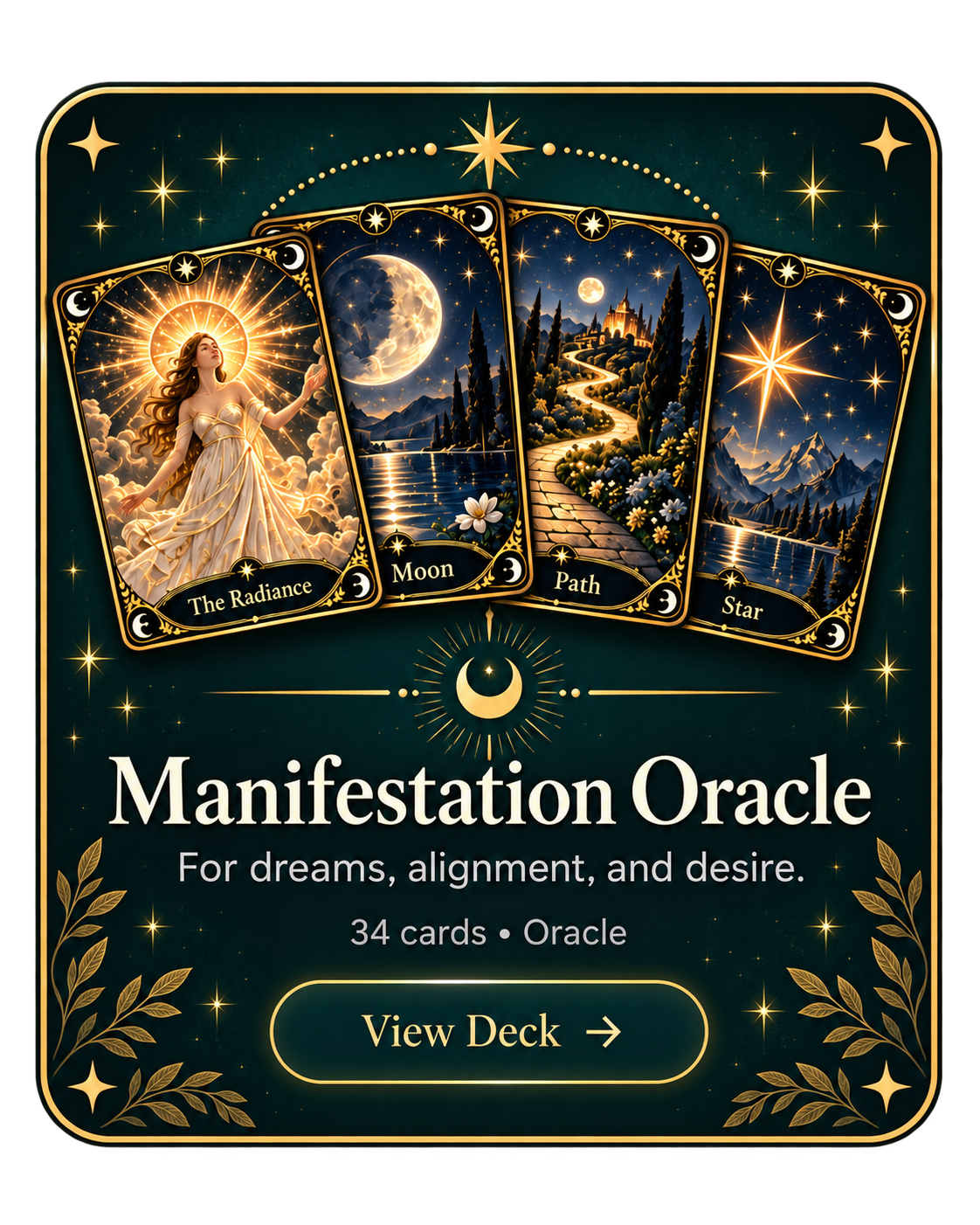
GOOD TIMING's Personal Guidance experience lets you draw from original oracle decks. Manifestation Oracle is designed for moments when you already sense a direction and want to explore what you are calling in.
If your synchronicity came with a clear question, such as Should I reach out? or Is this the right path?, a single card can be a simple place to begin. Learn how to frame it in our guide to asking better oracle card questions, then draw your card.
Start a One Card Tarot Reading →
Frequently Asked Questions
What is synchronicity in simple terms?
Synchronicity is a meaningful coincidence: two or more events that line up in a way that feels significant, without one clearly causing the other. The idea was introduced by psychiatrist Carl Jung.
What is an example of synchronicity?
A classic example is thinking of someone you haven't heard from in years and receiving a message from them shortly afterward. Jung's best-known example was a patient describing a dream about a golden scarab just as a scarab-like beetle tapped on his window.
What is the difference between synchronicity and coincidence?
A coincidence is any chance alignment of events. A synchronicity is a coincidence that connects with your inner world, such as a thought, dream, or question, and feels personally meaningful.
Is synchronicity scientifically proven?
No. There is no scientific evidence that synchronicity is a real force. Many psychologists explain these experiences through confirmation bias, the frequency illusion, and the brain's tendency to find patterns. Many people still find personal meaning in them.
What does it mean when you keep experiencing synchronicity?
In spiritual interpretations, frequent synchronicities are often linked to transition, alignment, or a call to pay attention. Practically, it may also mean you are going through a period of heightened awareness, when your mind is actively searching for answers.
Can synchronicity be a sign from the universe?
Many spiritual traditions interpret meaningful coincidences as signs from the universe, God, or spirit guides. This can't be proven, but you can still explore what a sign means to you through reflection, journaling, or a symbolic reading.
Is synchronicity a sign that I'm on the right path?
It can feel that way, and some people find it reassuring. A synchronicity is best treated as an invitation to reflect rather than confirmation. Your values, circumstances, and practical judgment are still your best guides.
Final Thoughts: The Meaning Is the Part You Bring
Maybe the universe really does wink at us from time to time.
Or maybe synchronicity is the moment our attention finally catches up with what we already knew.
Either way, these coincidences share something beautiful: they make you pause. They ask you to notice your own life a little more closely, to wonder, and to listen.
You don't have to decide what synchronicity is to receive what it offers.
Sometimes the sign isn't telling you what will happen. It's showing you what already matters.