Maybe someone gave you a deck as a gift. Maybe you saw a beautiful one in a shop, or a friend pulled a card for you and it landed a little too perfectly. Now you have a box of cards in your hands and one simple question: where do I start?
Good news first: oracle cards are one of the most beginner-friendly tools for reflection and intuition there is. There is no fixed structure to memorize, no 78-card system to learn, and no single "right" way to use them.
This guide to oracle cards for beginners walks you through everything you need for your first weeks: what oracle cards are, how they differ from tarot, how to choose your first deck, how to get to know it, how to shuffle and draw, simple beginner spreads, how to interpret a card when the guidebook does not quite fit, and how to build a gentle daily practice.
What Are Oracle Cards?
Oracle cards are decks of illustrated cards used for reflection, guidance and inspiration. Each card usually carries an image, a title or keyword, and a short message in the accompanying guidebook.
Unlike tarot, oracle decks do not follow one shared structure. Every deck is designed by its creator around a theme: angels, the moon, animals, flowers, goddesses, affirmations, the seasons, manifestation, shadow work, and countless others. A deck might have 36 cards or 60 or 80. Its messages might be soft and encouraging or bold and direct.
That freedom is exactly what makes oracle cards so approachable. You are not learning a system. You are learning a particular deck's voice, and listening to your own response to it.
How do oracle cards "work"? People explain it in different ways. Some see the cards as a way to receive spiritual guidance; others see them as a mirror that helps your intuition and subconscious speak in images. You do not need to settle that question to benefit. Either way, a card gives you a fresh angle on your situation and a quiet moment to listen to yourself.
People use oracle cards to:
- start the day with a single message or intention;
- reflect on a question or decision;
- journal or meditate around a theme;
- notice what deserves attention right now;
- check in during a manifestation practice or a new moon intention.
Oracle Cards vs. Tarot: What Is the Difference?
Oracle and tarot cards look similar and are often used in similar ways, but they are built differently.
| Tarot | Oracle cards | |
|---|---|---|
| Structure | 78 cards: 22 Major Arcana and 56 Minor Arcana in four suits | Set by each deck's creator, often 30–80 cards |
| Meanings | A shared tradition; most decks follow similar meanings | Unique to each deck, explained in its guidebook |
| Tone | Covers the full range of experience, including hard cards | Often gentle and encouraging, though some decks are direct |
| Learning curve | Takes time to learn the system | You can start reading straight away |
| Best for | Detailed situations, timelines, layered stories | Messages, themes, intuition and daily guidance |
Neither is better. Many readers use both: tarot to map a situation in detail and an oracle card to add a theme or piece of advice on top. If you want a deeper comparison, our guide to oracle card reading goes further into when each one fits.
How to Choose Your First Oracle Deck
The most important rule is simple: choose a deck you are drawn to. You will be looking at these images often, so they should feel inviting.
Here is what to consider:
- The artwork. Flip through sample images online or in a shop. Do you feel something when you look at them? Calm, curiosity, warmth? That reaction is your intuition already at work.
- The theme. Pick a theme that matches what you want from the practice. Gentle encouragement? Lunar cycles? Manifestation? Self-reflection? Nature?
- The words on the cards. Some decks print a keyword or a full message on each card; others are image-only. Beginners often find a keyword helpful, while some people prefer images that leave more room for intuition.
- The guidebook. A good guidebook explains the deck's intention and gives a clear meaning for each card. Look at a sample page if you can.
- The tone. Some decks are always uplifting. Others include challenging cards about shadows, endings or warnings. Both are valid; choose what you are ready for.
- Size and number of cards. Large cards show off artwork but can be harder to shuffle. A deck of 40–55 cards is very manageable for a beginner.
Do you have to be gifted your first deck? No. That is a popular superstition, but there is no rule. Buying your own deck is a perfectly good way to begin.
Getting to Know a New Deck
When you open a new deck, take a little time to get acquainted before you start asking big questions.
- Look through every card. Go slowly. Notice which images you love, which confuse you and which you would rather avoid. Those reactions are useful.
- Read the guidebook introduction. It tells you what the creator intended the deck for.
- Shuffle often. Handling the cards helps them feel familiar, and makes new cards easier to shuffle.
- Clear the deck if you like. Some people like to "cleanse" a new deck with a moment of intention, a breath, moonlight on a windowsill, or a crystal resting on top. None of this is required. Think of it as a ritual that helps you feel ready.
- Try a deck interview. Ask the deck a few questions as if meeting someone new: What is your main strength? What can you help me with? What are you not so good at? What can I expect from our work together? Draw one card for each.
How to Shuffle and Draw Oracle Cards
There is no single correct method. Choose whichever feels comfortable:
- Overhand shuffle: hold the deck in one hand and drop small groups of cards into the other.
- Riffle shuffle: split the deck and bend the halves together. This is quicker but harder on large or thin cards.
- Wash shuffle: spread the cards face down on a table and swirl them around gently. Great for large decks.
Then draw cards in whatever way feels right: from the top, from wherever your hand stops, or by fanning the cards out and choosing one that seems to call you.
What about "jumping" cards? Sometimes a card flies out while you are shuffling. Many readers treat a jumper as a message worth paying attention to; others simply put it back. Decide what you prefer and be consistent.
What about reversed cards? Most oracle decks are meant to be read upright, and many guidebooks do not include reversed meanings. If a card comes out upside down, you can simply turn it around, or read it as the same message in a quieter, blocked or internal form.

Simple Oracle Card Spreads for Beginners
You do not need complicated layouts. These four spreads cover almost everything a beginner needs.
One-Card Daily Draw
Ask: What do I need to know today? or What energy can I bring into today? Draw one card, read the message, and carry one word from it through your day. A single card is a complete reading.
Three-Card Spread
- What is happening now.
- What needs my attention.
- What may be unfolding.
This gives a short story with a direction, which suits most questions.
Situation, Challenge, Guidance
- The situation.
- The challenge or block.
- The guidance or next step.
Use it when something specific feels stuck.
Five-Card Weekly Check-In
- The theme of my week.
- What to focus on.
- What to let go of.
- Where support can come from.
- A message to remember.
Draw it on Sunday evening or Monday morning and look back at the end of the week.
How to Interpret an Oracle Card
The guidebook is a helpful starting point, but the best readings combine it with what you see and feel. Try this order:
- Look before you read. What do you notice first in the image? A color, a figure, a gesture, a symbol? What do you feel?
- Read the title or keyword. How does it relate to your question?
- Read the guidebook message. Which line stands out? You do not need to use all of it.
- Bring it back to your question. Ask: How does this message apply to my situation?
- Choose one action or reflection. What will you do, notice or think about differently?
If the guidebook meaning does not seem to fit, trust what the image tells you. Your first impression is information. Our guide on how to read oracle cards goes deeper into reading images, first feelings and messages that arrive without a question.
When a Card Feels Confusing or Uncomfortable
Sometimes a card seems to have nothing to do with your question, or its message feels unwelcome. Before you reshuffle, try these steps:
- Read the card literally. A card titled "Pause" in a reading about a new project may be telling you, quite simply, to wait a week.
- Look for one detail. Instead of the whole message, focus on one small part of the image: a door, a path, a hand, a color. What does that detail suggest?
- Ask what the card is protecting you from. Challenging cards are often about boundaries, rest or honesty.
- Sleep on it. Many readers find that a confusing card makes sense a day or two later.
If a card still feels off, draw one clarifying card and ask, "What do I need to understand about this message?"
Asking Better Oracle Questions
Oracle cards respond best to open questions that invite guidance rather than a verdict:
| Instead of… | Try… |
|---|---|
| Will I get the job? | What do I need to know as I go after this job? |
| Does he like me? | What can I understand about this connection right now? |
| Is something bad going to happen? | What deserves my care at the moment? |
| Should I move? | What would help me make this decision with clarity? |
A good oracle question often does one of three things: helps you understand something, points to what needs attention, or suggests a next step. For many more examples, see how to ask better oracle card questions.
A Worked Example: A Beginner's First Three-Card Reading
Imagine Sam, who bought a moon-themed oracle deck last week. Sam asks: "What do I need to understand about feeling unmotivated lately?" and draws three cards with the now, attention, unfolding spread:
- Now: a card showing a dark new moon, titled "Rest." The image is quiet and still. Sam's first feeling is relief.
- Needs attention: a card showing a tangled vine, titled "Release." The guidebook speaks of letting go of what drains you.
- Unfolding: a card showing a crescent moon over a field of seedlings, titled "Growth."
Reading them together: Sam is not lazy. They are in a natural low phase, like a new moon. Something draining needs to be released, perhaps an overcommitted schedule, and once that space is cleared, motivation can return in small, steady steps.
One action: cancel one optional commitment this week and use the time to rest.
Notice what happened: Sam began with the images and their own feeling, then used the guidebook to deepen it, and finished with something practical.
Building a Daily Oracle Practice
A short daily draw is the best way to build a relationship with your deck.

- Keep it short. One card, five minutes. Consistency matters more than length.
- Use a journal. Write the date, your question, the card, your first impression and one action. After a few weeks, patterns appear.
- Look back in the evening. How did the card's message show up in your day?
- Notice repeat cards. If the same card keeps appearing, it is worth spending time with. Many readers see it as a theme that is asking for attention.
- Pair it with the moon. New moons are natural moments for intention cards (see our new moon ritual guide); full moons suit release and reflection (see full moon rituals).
Journaling prompts for your daily card:
- What did I notice first in this image?
- Where in my life does this message apply today?
- What would change if I took this card seriously for one day?
- What am I resisting about this message?
Caring for your deck: keep it somewhere dry, ideally in its box or a cloth bag, handle it with clean hands, and do not worry if the edges wear. A well-loved deck is a sign of practice.
Common Beginner Mistakes
- Drawing again and again for the same question. One reading is enough. If you need clarity, draw one clarifying card, not a whole new spread.
- Treating the cards as fixed predictions. Oracle cards are best used for guidance and reflection, not certainty.
- Relying only on the guidebook. The images and your own response are just as important.
- Skipping the question. Even "What do I need to know today?" gives a reading direction.
- Feeling you have to read for others right away. Practice on yourself first. Confidence grows quickly.
- Thinking you are "not intuitive." Intuition is simply noticing your own response. Everyone can practice it.
Try an Oracle Reading With GOOD TIMING
If you would like to practice before you buy a physical deck, or just want a second voice, GOOD TIMING has two oracle decks you can draw from online.
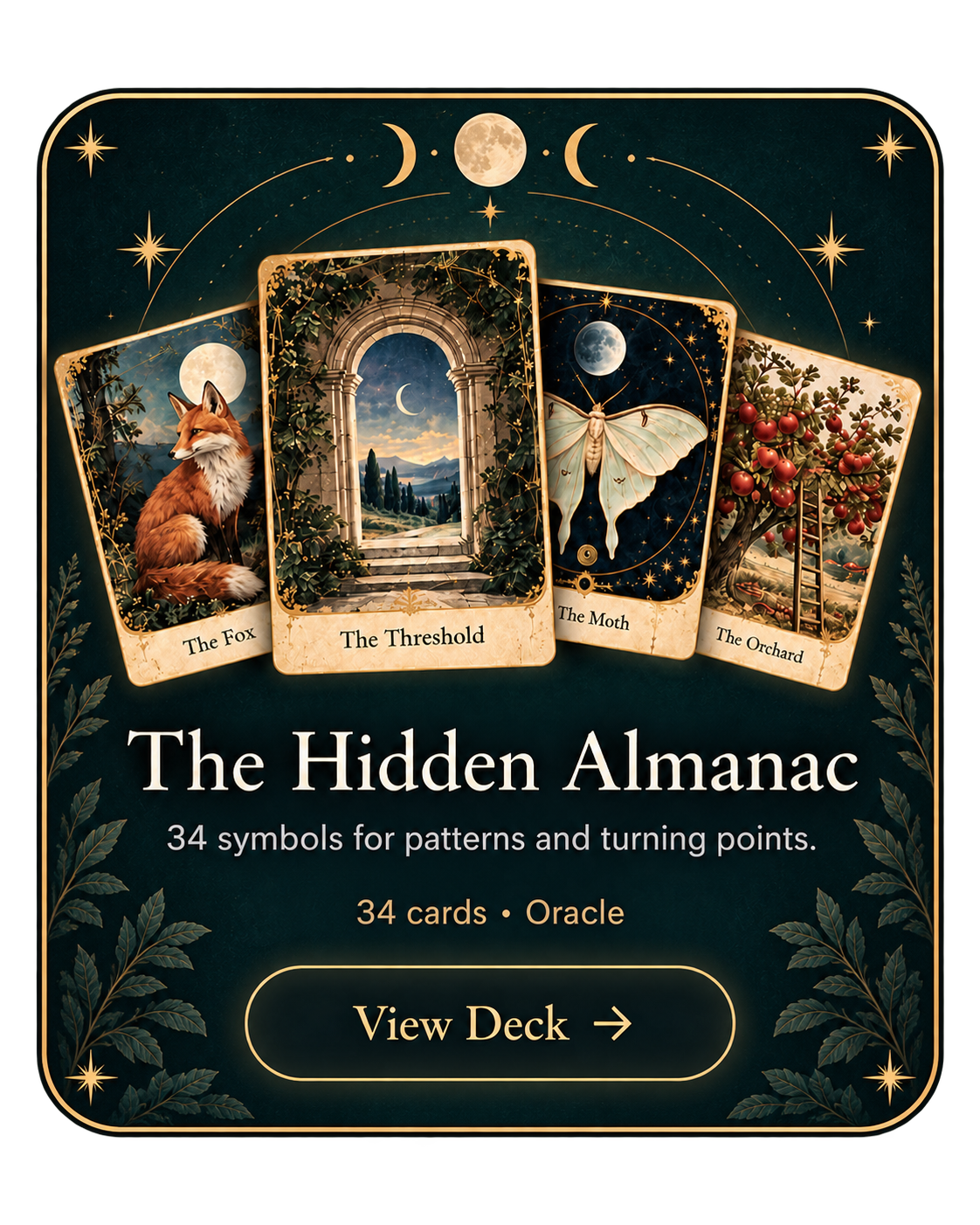
The Hidden Almanac is ideal for beginners who want to know what deserves attention right now, with a simple One Message daily card or a Three Signs reading.
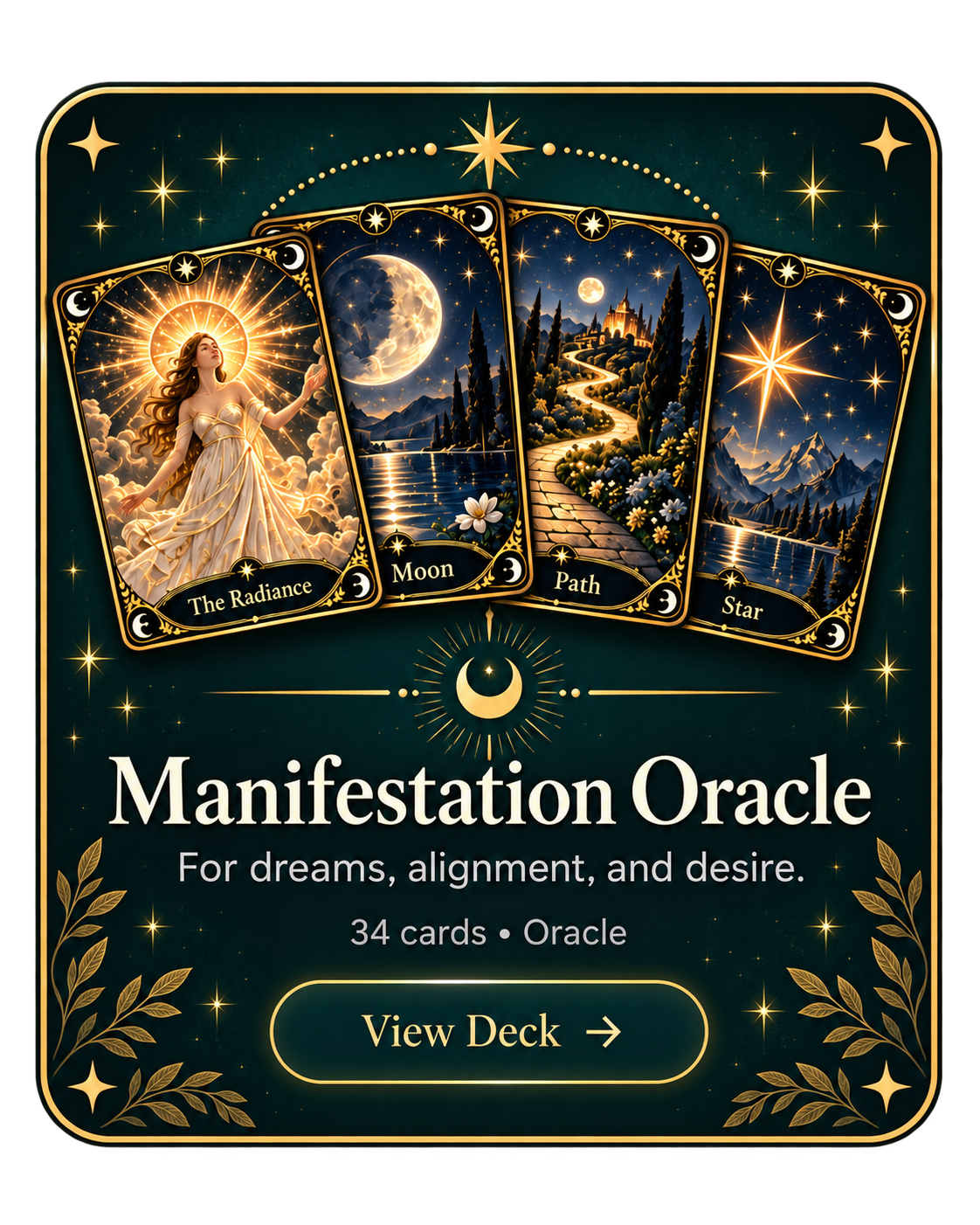
Manifestation Oracle is designed for when you already know what you want and are asking where you stand in your manifestation process.
Frequently Asked Questions
Are oracle cards good for beginners?
Yes. Oracle cards are often easier for beginners than tarot because there is no fixed system to learn. Each deck comes with its own guidebook, and you can start reading straight away using the images, the card titles and your own intuition.
What is the difference between oracle cards and tarot?
Tarot has a shared structure of 78 cards with 22 Major Arcana and 56 Minor Arcana in four suits. Oracle decks are designed freely by their creators around a theme, vary in size, and have meanings explained in their own guidebook.
How do I choose my first oracle deck?
Choose a deck whose artwork and theme you are drawn to. Consider whether you prefer cards with keywords or images only, whether you want a gentle or a direct tone, and whether the guidebook is clear. A deck of around 40–55 cards is easy to handle.
Do I need to cleanse my oracle cards?
No, it is optional. Some people like to clear a new deck with a moment of intention, a few breaths, moonlight or a crystal. It can help you feel ready, but it is not required to read the cards.
How many oracle cards should I draw?
For most beginners, one card is enough for daily guidance and three cards work well for a question. A five-card spread can be useful for a weekly check-in.
Can I read oracle cards reversed?
Most oracle decks are designed to be read upright. If a card appears upside down, you can turn it around, or read it as a quieter, internal or blocked version of the same message if your guidebook supports reversals.
How often should I use oracle cards?
A single daily card is a wonderful habit. For specific questions, give the situation time to develop before asking again rather than drawing repeatedly on the same question.
Final Thoughts: Start Small and Listen
You do not need to be psychic, spiritual in any particular way or an expert to begin with oracle cards. You need a deck you like, a question you care about and a few quiet minutes.
Start with one card a day. Look at the image before you read the guidebook. Write down what you notice. Over a few weeks, the deck will start to feel less like a box of cards and more like a familiar conversation.
Choose a deck you love, draw one card at a time, and trust what you notice.