Have you ever drawn a tarot card that seemed to describe exactly what you were going through? Maybe you were wondering whether someone would contact you again, and the cards brought up an unfinished connection. Or you asked about a career change and drew a card that captured the opportunity—and the uncertainty—perfectly.
It is natural to wonder: Does tarot really work? And why do some readings feel astonishingly accurate while others leave you with more questions?
In tarot traditions, the cards are used to explore the energy surrounding a situation, relationships between people, and the directions events may take. A good reading does more than give you a collection of keywords. It brings your question, the positions of the cards, and their meanings together into a clear interpretation.
Let's look at how that happens, what makes a question easier to read, and what a real tarot spread can reveal.
How Does Tarot Work?
A traditional tarot deck has 78 cards: 22 Major Arcana cards and 56 Minor Arcana cards. The Major Arcana often speak to major transitions and defining experiences, while the four Minor Arcana suits—Cups, Wands, Swords, and Pentacles—explore emotions, action, thought, and practical life.
In a reading, you begin with a question, draw cards, and place them in a spread. Each position has a purpose: your current situation, an obstacle, a hidden influence, or a possible development. The interpretation comes from reading these layers together.
Take The Lovers (Upright). In a love reading, it might suggest attraction, emotional alignment, or an important choice between two people. In a career reading, it may point toward choosing a path that fits your values. The card hasn't changed; the question and its position give it context.
For many readers, the act of drawing cards is also a moment of energetic connection: a quiet pause in which intention, intuition, and the symbols of the deck meet. Others experience tarot more as a language of symbols. You don't have to explain every reading in exactly the same way to appreciate how carefully the cards can be interpreted.
If you'd like to experience a spread yourself, start a tarot reading on GOOD TIMING.
Is Tarot Actually Accurate?
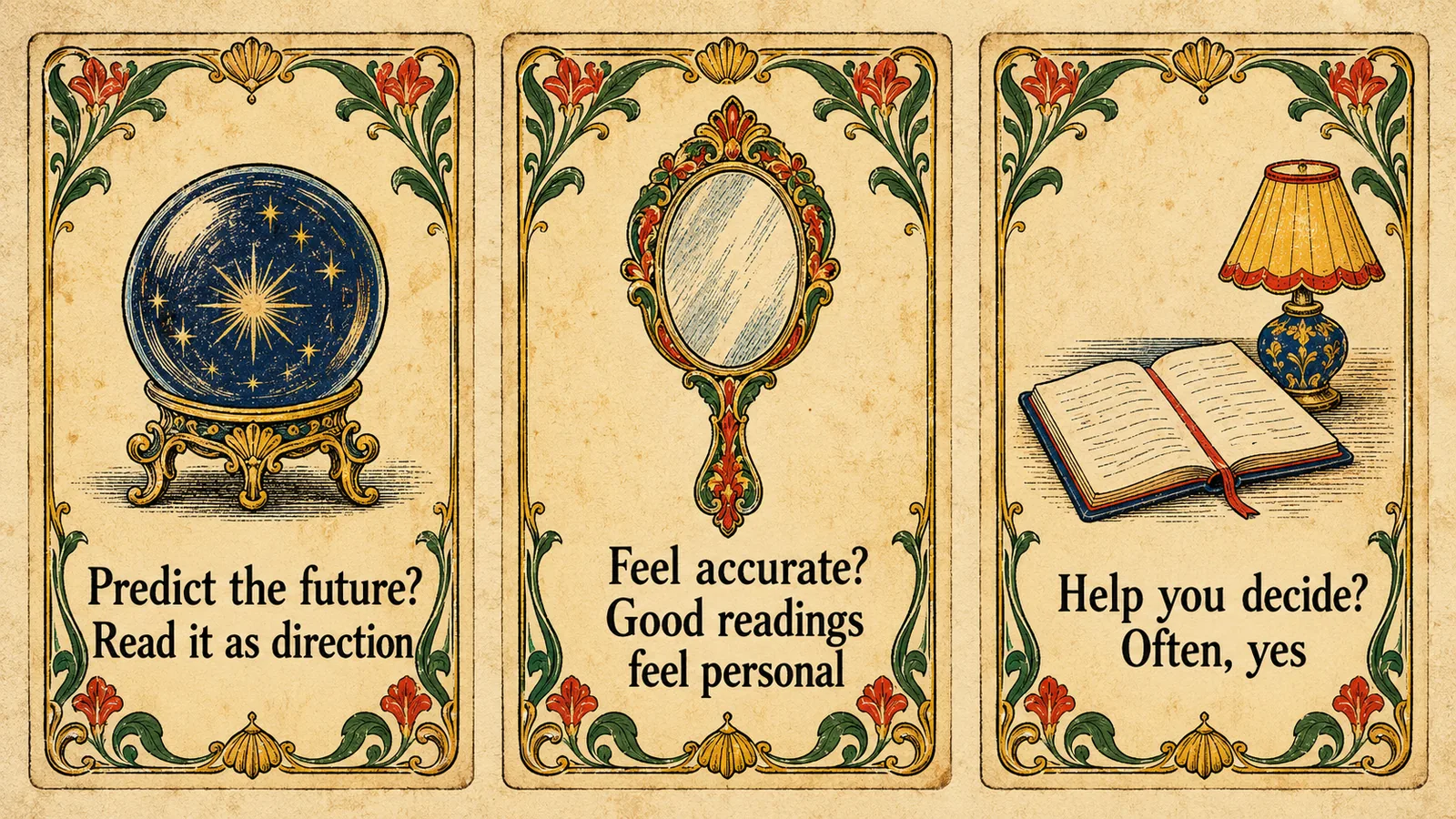
Tarot can feel remarkably accurate, especially when a spread speaks directly to a relationship, a difficult decision, or something you've been unable to put into words. In many tarot traditions, this is understood as a connection with the energy around your question.
But there's a reason one reading can feel precise while another seems frustratingly general: the way you ask matters.
Imagine asking, “How is my love life?” That's a huge question. It might include an ex, a current relationship, someone you haven't met yet, or your emotional life over the coming months. A reading may naturally touch on broad themes because you've left the focus wide open.
Now compare it with: “My ex and I haven't spoken for two months. Is there an opportunity for us to reconnect within the next month?”
You have named the relationship, the present circumstances, and the period you care about. A reader can now look more closely at the emotional connection, the obstacle to communication, and the direction things seem to be moving. In a spiritual approach to tarot, a clear intention can also help you focus more deliberately on the energy you're exploring.
Being specific doesn't guarantee a particular outcome. It does make the reading easier to interpret in a focused and meaningful way.
What if the answer still feels unclear?
Suppose you draw The Moon (Upright) in a relationship spread. The interpretation mentions uncertainty, emotions that haven't been fully expressed, or something you cannot yet see clearly. But now you want to know: does this describe your ex's hesitation, or your own uncertainty about the relationship?
You don't necessarily need to shuffle and draw again.
On GOOD TIMING Tarot, you can use Follow-up after your reading to ask more about the same cards. Follow-up does not draw a new spread. It keeps the original cards and their positions in view while exploring what they may mean in the context of your next question.
You could ask:
- “Does The Moon here speak more to their feelings or to an unresolved issue between us?”
- “How does this card affect the likely direction of our relationship?”
- “When read with the other two cards, what is the most important message?”
It's similar to sitting with a tarot reader and asking them to explain one part of a spread in more depth. Sometimes the first interpretation opens a door; your next question helps you see what's behind it.
Explore your own tarot reading.
A Love Reading Example: Will We Get Back Together?
Let's imagine someone asks: “My ex and I haven't spoken for several weeks. Is there still a chance of reconciliation?”
We use a three-card spread:
- Current emotional connection — Six of Cups (Upright)
- Main obstacle — Two of Swords (Upright)
- Possible direction — Judgement (Upright)
Six of Cups (Upright): The connection
This card often speaks of tenderness, familiarity, memories, and people from the past. In this position it suggests the relationship may still have emotional significance. A shared history can remain powerful even when there has been silence.
Two of Swords (Upright): The obstacle
The Two of Swords brings indecision, avoidance, and a standstill. In this spread, the barrier may not be an absence of feeling but a reluctance to make a choice or have the conversation that is needed. Nostalgia alone cannot move the relationship forward.
Judgement (Upright): The possible direction
Judgement is closely associated with reflection, accountability, awakening, and second chances. In a reconciliation spread, it can point toward revisiting the past, an important conversation, or a chance to decide whether the relationship deserves a different beginning.
What do the three cards say together?
This spread leans toward the possibility of renewed contact or a second chance, but the hesitation shown by the Two of Swords has to be addressed. The Six of Cups keeps the emotional history alive; Judgement asks both people to look honestly at what happened. If reconciliation does occur, it is unlikely to be sustained by nostalgia alone.
This is why reading the whole spread matters. One card offers a theme; the combination tells a story.
Illustrative spread based on traditional card meanings, not a prediction about a particular real-life couple.
Can Tarot Show What Might Happen in the Future?
Questions about the future have always been part of tarot. Will they reach out? Is a job opportunity approaching? Is a situation about to change?
A future-position card is often read as a direction or developing tendency, rather than a promise that events will unfold in exactly one way. Real situations involve decisions, other people, and circumstances that can shift.
For instance, Eight of Wands (Upright) often suggests movement, messages, momentum, or a sudden acceleration. In a question about contact, it may point toward communication or a situation beginning to move. The Hanged Man (Upright), by contrast, can indicate a pause, waiting, or the need for a new perspective before anything progresses.
Notice how much more informative this is than simply calling the first card “yes” and the second “no.” The cards describe different rhythms and conditions.
If timing is what you care about most, you can explore a tarot timing reading and ask what may be speeding up or delaying the situation.
Why Do Some Readings Feel So Uncannily Personal?
Tarot has a rich symbolic language. Cards speak of longing, grief, hope, beginnings, attraction, conflict, responsibility, and change—experiences that matter deeply to people. What makes a reading compelling is how those symbols connect to your particular question.
For example, Three of Swords (Upright) can speak to heartbreak or painful truth. When it appears beside The Star (Upright), the story may shift toward healing, renewed trust, and hope after disappointment. Neither card should be read in isolation.
In spiritual practice, some people describe a meaningful draw as synchronicity: the sense that a card appears at the right moment and speaks to what is unfolding inside or around them. Others connect with the imagery through personal reflection. You may find one perspective speaks to you more than another.
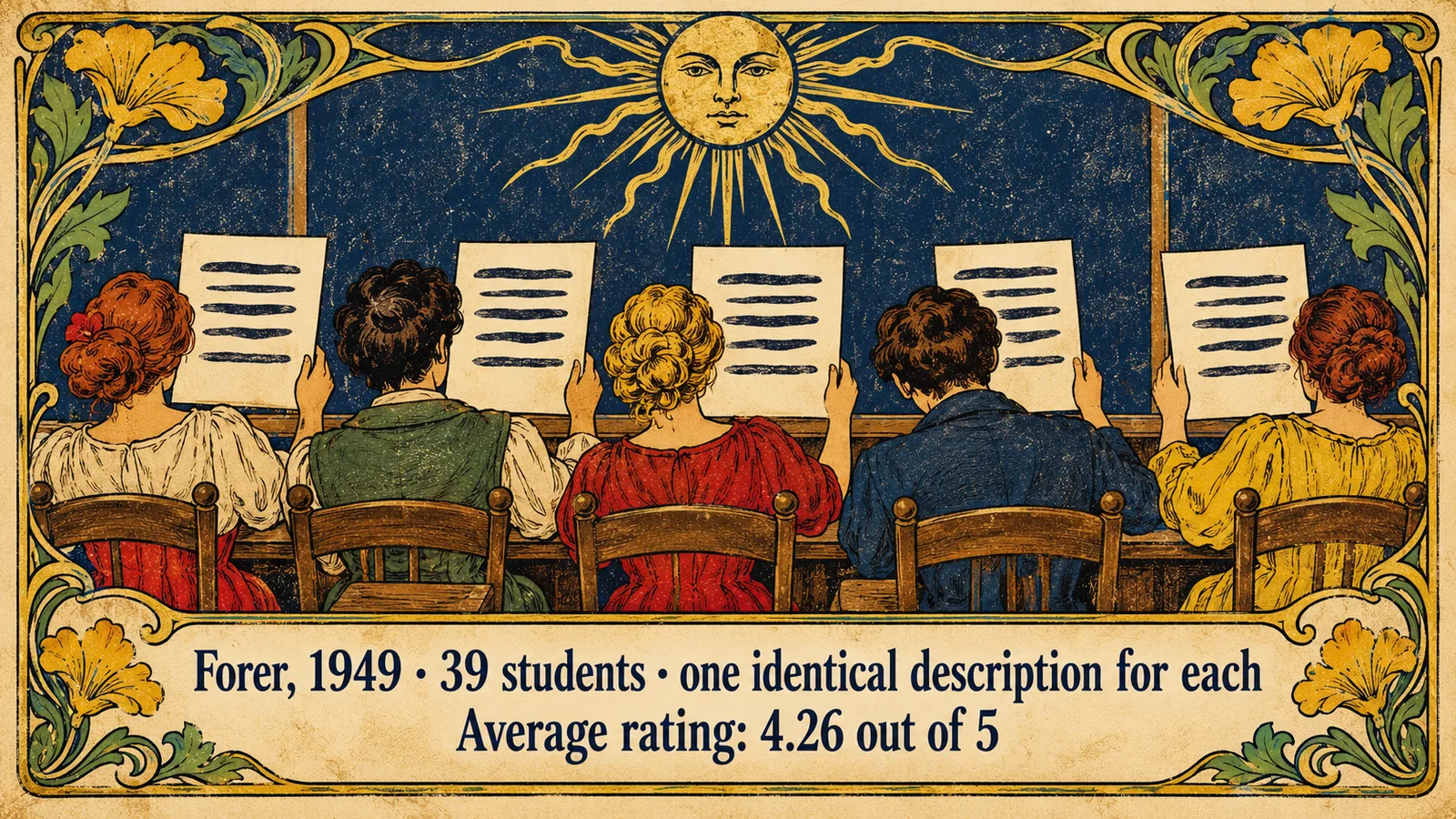
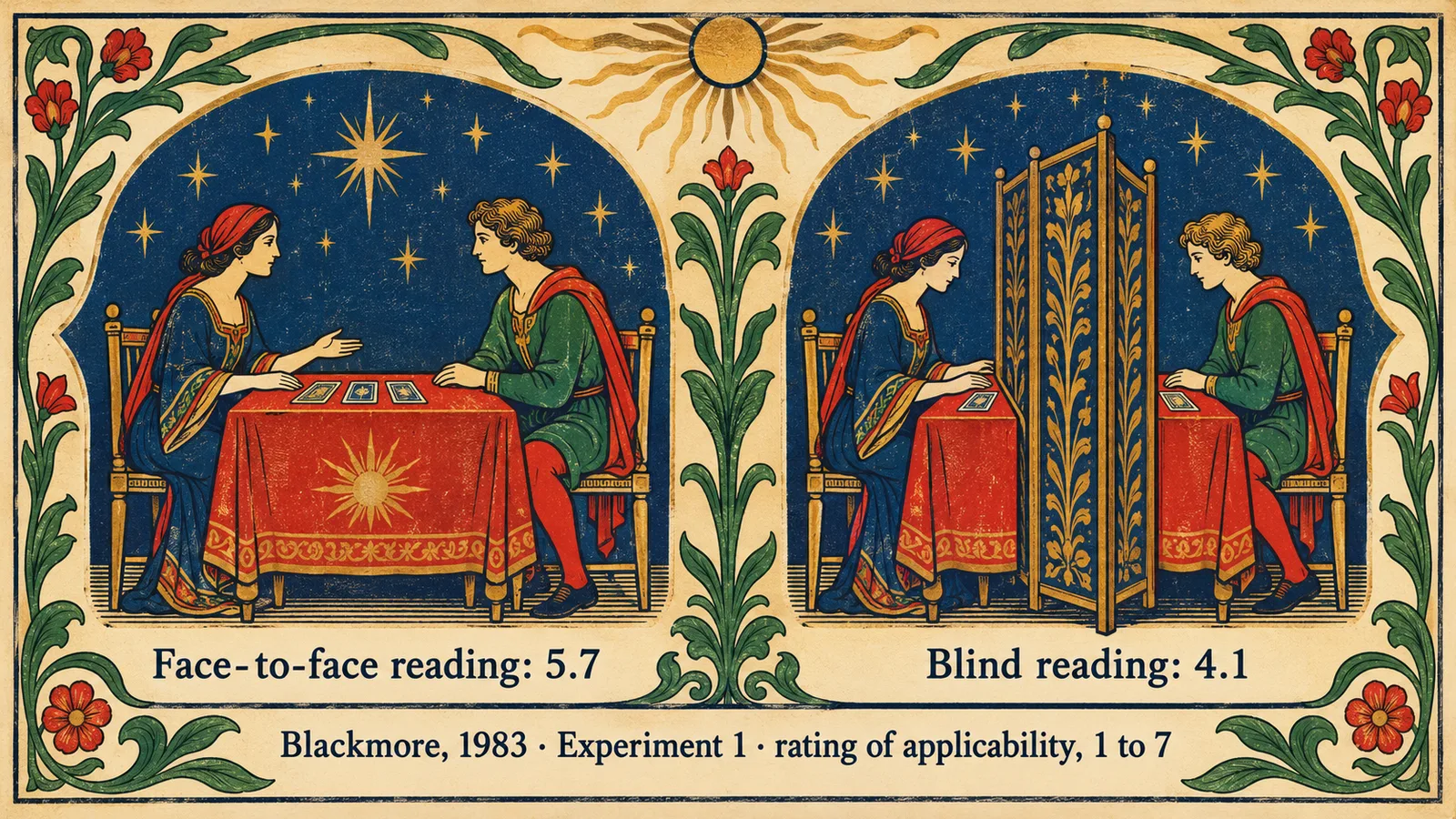
Whatever your approach, a thoughtful reading should explain why these particular cards, in these particular positions, lead to this interpretation. That is much more helpful than a vague message that could apply to almost anyone.
Another Example: Should I Take the New Job?
Imagine receiving a job offer that sounds promising, but you're uncertain whether leaving your current role is the right move. The cards are:
- The opportunity — Ace of Pentacles (Upright)
- The challenge — Two of Pentacles (Upright)
- Potential development — Three of Pentacles (Upright)
Ace of Pentacles (Upright) points toward a tangible beginning: a chance to build skills, income, or a more stable professional foundation. It gives the offer genuine potential within the language of the spread.
Two of Pentacles (Upright) is about juggling responsibilities and adapting to change. It needn't be a bad sign. Here, it suggests the transition may demand flexibility as you balance commitments and new expectations.
Three of Pentacles (Upright) highlights teamwork, craftsmanship, being recognized for your abilities, and growing through collaboration. In a future position, it makes the direction of the spread encouraging.
Overall reading: These cards lean in favor of exploring the new opportunity. They tell a coherent story of a practical opening, a period of adjustment, and professional growth. You would still want to check the salary, contract, team, and actual working conditions before deciding; tarot can help you explore the direction without replacing those details.
How to Get More From Your Tarot Reading
Start with what you really want to know. You don't have to disguise a question about an ex, a message, or the future as a question about “personal growth.” Direct questions are welcome. Just give them enough context to make the spread meaningful.
Choose a spread that suits your question. One card can provide a focused message; three can show how different influences relate; a larger spread can explore a complicated situation in greater depth. More cards aren't automatically better.
Most importantly, read the cards together. The Lovers (Upright) beside Ten of Cups (Upright) may emphasize emotional harmony and a shared future. Beside The Moon (Upright), the relationship may feel meaningful but uncertain. Beside The Devil (Upright), the reading may draw attention to attachment or unhealthy patterns. Each combination changes the story.
And if you want more detail, don't rush to start over. Return to the original cards and ask a focused Follow-up question about the position, symbol, or connection you don't understand. GOOD TIMING's Tarot reading allows you to continue exploring that same spread without drawing again.
You can also read our guide to asking better tarot questions.
Online Tarot and Physical Cards: Does the Experience Change?
With a physical deck, you shuffle, cut, and turn the cards by hand. Online, the draw happens digitally. The cards still have their traditional meanings, and a well-designed spread still gives each card a role.
For some people, the physical ritual is an important part of feeling connected to the reading. Others find that setting an intention, choosing a spread, and taking a quiet moment before an online draw creates a meaningful ritual of its own.
What matters after the draw is the interpretation: does it respect the cards and their orientations? Does it make sense of the spread as a whole? Does it actually address your question?
On GOOD TIMING, the reading continues beyond the first answer. If something about a card feels unfinished, you can use Follow-up to explore the existing spread more deeply, without replacing it with a new draw.
For a closer look at digital interpretations, see Are AI Tarot Readings Accurate?.
What If Your Reading Doesn't Make Sense?
It happens. Sometimes a question covers too many things at once. Sometimes one card feels difficult to place. And sometimes an interpretation simply doesn't resonate.
Rather than repeating the same draw until you see a card you prefer, go back to the original question. Look at the positions and how the cards interact. If The Hanged Man (Upright) appears as a future influence, for instance, you could ask whether the pause relates to external timing, an unresolved choice, or a perspective that needs to change.
You can disagree with a reading, too. The cards are an invitation to explore possibilities, not a requirement to ignore your own experience or the real-life information in front of you.
So, Does Tarot Really Work?
For many people, tarot offers a surprisingly resonant way to connect with a question. It can illuminate patterns, put a complicated feeling into words, and suggest what might be developing next. In spiritual traditions, that experience is often understood through energy, intuition, and the meaningful moment of drawing the cards.
A good reading rarely comes down to one dramatic card. It is the relationship between the question, the cards, and the unfolding interpretation that makes the experience feel personal.
Ask clearly, read the whole spread, and stay curious about what the cards are showing you. If the first answer leaves you with questions, keep the conversation going with a Follow-up rather than assuming the story is finished.
Start your tarot reading on GOOD TIMING.
Frequently Asked Questions
Does tarot really work?
Many people find tarot readings meaningful and sometimes strikingly relevant. In tarot traditions, the cards can be read as reflecting energy around a question, emotional patterns, and possible developments. The usefulness of a reading depends greatly on the question and the care taken in interpreting the whole spread.
Why does my tarot reading feel too general?
Your question may be too broad. “How is my love life?” covers many possibilities. Naming a person, situation, or time period can make the interpretation more focused. You can also ask a Follow-up about cards that remain unclear.
Can tarot tell me if my ex will come back?
A reconciliation spread can explore the emotional connection, obstacles, and possible direction of the relationship. Cards such as Six of Cups and Judgement can be meaningful in this context, but no single card guarantees another person's decision.
Should I ask the same tarot question again?
If you don't understand part of your reading, first revisit the original spread. On GOOD TIMING, Follow-up lets you ask more about the cards you already drew; it does not automatically draw new ones.
Can tarot predict when something will happen?
Tarot timing readings often interpret pace and conditions rather than fixed dates. Eight of Wands can suggest quick movement, while The Hanged Man may suggest waiting or delay. The question and other cards are essential to the interpretation.
Is online tarot different from a physical reading?
The drawing experience differs, but the symbolism and spread structure can remain the same. A useful online reading should interpret the specific cards, their positions, and their relationship to your question.
Continue exploring: Tarot Reading · Tarot Timing · AI Tarot Accuracy · Tarot Community
GOOD TIMING — Clarity, at the Right Time.